
How to Clear Deep Drain Clogs: 2026 Homeowner Guide
Table of Contents
- How to Tell a Deep Clog From a Simple Sink Blockage
- What You’ll Need Before You Start
- Step-by-Step: How to Clear Deep Drain Clogs
- Using a Plumbing Snake for Deep Clogs Without Damaging Pipes
- Signs of a Main Sewer Line Blockage You Should Not Ignore
- When to Call a Plumber for Drain Issues
- Common Mistakes That Make Deep Clogs Worse
- Preventing Deep Clogs Before They Start
- Frequently Asked Questions
Last Updated: September 28, 2026
How to Tell a Deep Clog From a Simple Sink Blockage
Knowing how to clear deep drain clogs starts with one question: where is the blockage sitting? A simple sink blockage sits close to the drain opening. A deep clog lives past the P-trap, inside the branch line, out in the main sewer line, or in the vent stack that serves the whole system.
Run the Fixture Map Test First
Before you touch a tool, map the problem. Turn on every fixture in the house one at a time and note which ones drain slow, which gurgle, and which back up. That single walkthrough tells you more than any product on the shelf.
- One fixture slow, everything else fine. The clog is local, at the stopper, in the tailpiece, or inside the P-trap for that fixture.
- Two or more fixtures on the same branch slow. The clog sits in the shared branch line that feeds those fixtures.
- Fixtures on different floors slow at once. The clog is in the main sewer line or the building drain.
- Every fixture drains fine but gurgles. The vent stack is likely blocked, not the drain itself.
Localize the Clog by Location
| Where the clog sits | What you will notice | What it usually is |
|---|---|---|
| Stopper or tailpiece | One fixture drains slow, water pools at the drain opening | Hair, soap scum, toothpaste |
| P-trap | One fixture backs up, no other fixture affected | Soap scum, grease, small debris |
| Branch line | Two or more fixtures on the same run drain slow | Grease, hair, paper buildup |
| Main sewer line | Multiple fixtures across the house back up, lowest fixture floods first | Tree roots, collapsed pipe, heavy grease |
| Vent stack | Fixtures gurgle but drain, sewer odor indoors | Nesting debris, frost, bird nests |
Symptoms That Point to the Main Sewer Line
- Multiple fixtures back up at once. Sinks, tubs, and toilets all drain slow.
- Gurgling sounds come from a drain you are not using.
- Standing water rises in the lowest fixture in the house.
- Sewage odor drifts from drains or floor drains.
- Slow drainage that returns within days of clearing.
Any two of those signs together suggest a main sewer line blockage, not a sink clog.
The Vent Stack Clue Most People Miss
Write down which fixtures are affected and in what order they back up. That pattern is the fastest way for a plumber to tell a branch clog from a main line clog over the phone.
What You’ll Need Before You Start
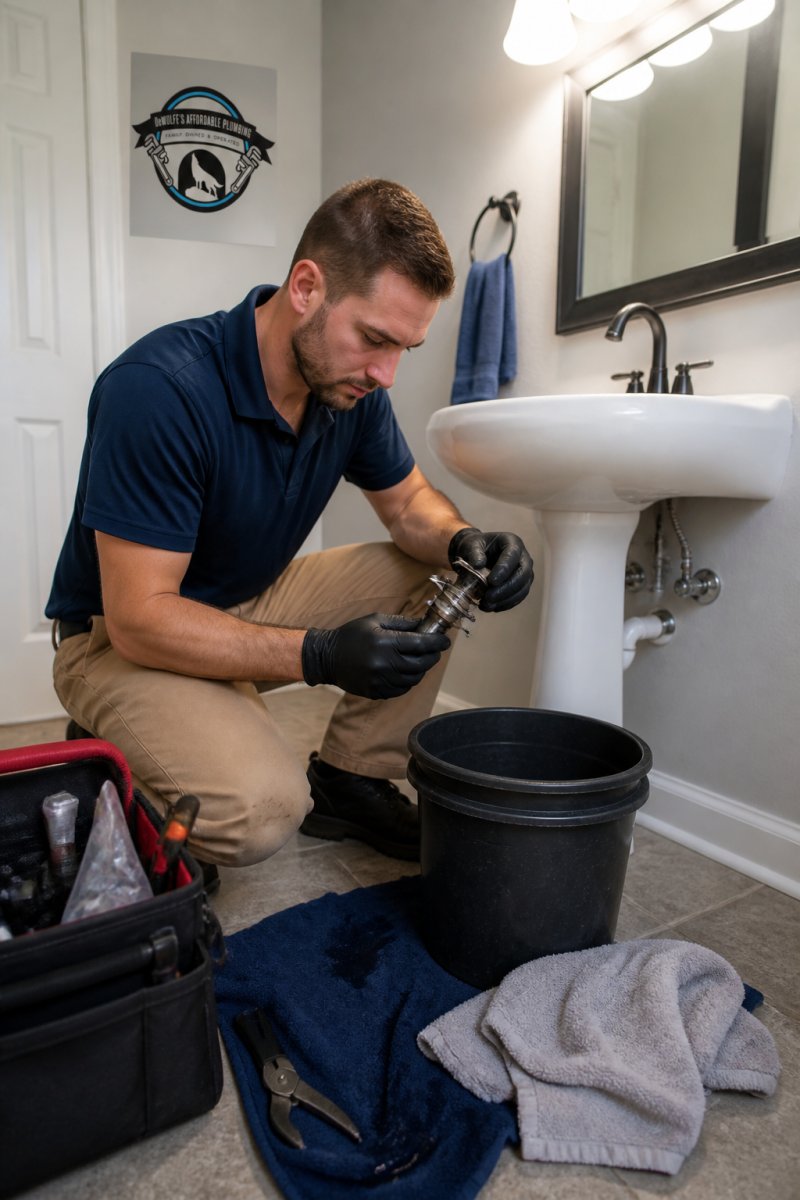
Gather your tools before you touch the drain. Standing water and a mid-job hardware run make a mess worse.
- Plunger with a tight cup
- Drain bladder (also called a water ram)
- Plumbing snake or drain auger
- Bucket and old towels
- Gloves and eye protection
- Adjustable wrench
- Boiling water, baking soda, white vinegar, dish soap
Never mix chemical drain cleaner with a plunger or snake. If the chemical sits in the line and you splash it back, you can burn your skin or eyes. If you already poured cleaner in, stop and call a pro.
Step-by-Step: How to Clear Deep Drain Clogs
Work through these steps in order. Stop when the water runs free.
Step 1: Remove Standing Water and Pull the Drain Stopper
Bail the standing water into a bucket first. Then lift out the drain stopper and clear any hair or soap scum wrapped around it. A hair clog at the stopper is the easiest fix you will ever make.
Step 2: Try a Plunger or Drain Bladder First
Seal the overflow hole with a wet rag, then plunge with firm, steady strokes for 15 to 20 seconds. A drain bladder works better on deep clogs: feed it into the pipe, turn on the water, and let the expanding rubber seal push the blockage through.
Step 3: Snake the Line, Then Flush and Retest
If plunging fails, run a plumbing snake down the drain until you feel resistance. Crank through it, pull the cable back, and flush with hot water. Run two fixtures at once to confirm the line is clear.
Mark your snake cable with tape at the point where it first meets resistance. That tells you how far down the clog sits, which is the single most useful detail to give a plumber if you end up calling one.
Using a Plumbing Snake for Deep Clogs Without Damaging Pipes
A plumbing snake for deep clogs works by reaching past the trap and breaking up or retrieving the blockage. The risk is force. Cranking hard against a stubborn clog can scratch pipe walls or crack older fittings.
Pick the Right Tool for the Depth
Not every snake reaches the same distance, and not every clog needs the same tool. Match the tool to where the clog sits.
| Tool | Typical reach | Best for | Watch out for |
|---|---|---|---|
| Hand snake (manual auger) | Up to about 25 feet | Sink, tub, and shower clogs past the P-trap | Hard to turn through tight bends |
| Drum auger (powered) | 25 to 50 feet | Branch lines and longer horizontal runs | Too much torque can crack older pipe |
| Drain bladder (water ram) | Depends on hose length | Soft clogs like grease and soap scum | Needs a sealed pipe to build pressure |
| Sectional sewer machine | 50 feet and beyond | Main sewer line clogs | A pro tool, not a homeowner rental |
How to Snake a Drain Without Damaging the Pipe
- Pull the stopper and remove the trap arm if you can. Reaching the clog directly beats fighting it through a bend.
- Feed the cable in slowly by hand until you feel resistance. Do not start the motor yet on a powered drum auger.
- Crank through the clog with steady pressure. Let the auger head do the cutting. If the cable stops cold, back it out and try again rather than forcing it.
- Run the cable back and forth through the clog a few times to break it up rather than just punching a hole through it.
- Pull the cable out slowly and wipe it down as it comes. A fast pull flings debris across the room.
- Flush with hot water and run two fixtures at once to confirm the line is clear.
When a Snake Is the Wrong Tool
A hand snake often is not enough for grease buildup or heavy organic matter. Grease coats the pipe wall in a layer, and a snake punches a channel through it that closes back up within days. For grease, a drain bladder or hydro-jetting does the job better because it scours the full pipe diameter.
Signs of a Main Sewer Line Blockage You Should Not Ignore
Signs of a main sewer line blockage go beyond one slow drain. Watch for sewage backing up into the lowest tub or shower in the house, water rising in a floor drain when you run the washing machine, or a toilet that gurgles when the sink drains.
Other red flags include:
- Repeated clogs in the same line within weeks
- Slow drainage across every fixture on one floor
- A soggy or unusually green patch in the yard
- Foul odor near the cleanout or vent stack
When to Call a Plumber for Drain Issues
Call a plumber for drain issues when two or more fixtures back up, when sewage backs into the house, or when DIY tools have failed twice. Those are the clearest signals that the clog sits in the main sewer line or a branch you cannot reach.
Also call if you notice:
- Gurgling from a fixture you are not using
- Water pooling near the foundation or cleanout
- A clog that returns within days
- Any sign of a slab leak, such as a warm spot on the floor or an unexplained water bill jump
The rule of thumb: one slow fixture is a DIY job. Two or more slow fixtures, or any sewage backup, means call a licensed plumber. Pushing a snake further will not fix a main line clog.
Common Mistakes That Make Deep Clogs Worse
The biggest mistake is reaching for chemical drain cleaner first. Caustic soda sits in the pipe, and if the clog does not clear, you have created a pool of corrosive liquid that a plumber then has to work around.
Other mistakes we see often:
- Plunging without sealing the overflow hole. The pressure escapes and nothing moves.
- Forcing the snake. Cranking hard cracks older pipes and turns a clog into a repair.
- Using boiling water on a PVC joint repeatedly. It can soften seals over time.
- Ignoring repeat clogs. A clog that returns is a symptom, not bad luck.
- Skipping the vent stack check. A blocked vent causes slow drainage that looks like a clog.
Preventing Deep Clogs Before They Start
Preventative maintenance is cheaper than an emergency call. A few habits keep your drainage system clear.
- Run hot water for 30 seconds after every kitchen sink use to move grease through.
- Never pour cooking grease, coffee grounds, or eggshells down the drain.
- Install hair catchers in every tub and shower drain.
- Flush each drain monthly with baking soda, white vinegar, and hot water.
- Schedule a professional drain cleaning once a year if you have older pipes.
Frequently Asked Questions
What do professional plumbers use to clear deep clogs?
Licensed plumbers typically start with a motorized drain auger or plumbing snake to break up the blockage mechanically, then follow with hydro-jetting, which uses high-pressure water to scour grease, scale, and organic matter from the pipe walls. For main sewer line blockages, they may also run a camera inspection to confirm the clog is fully cleared and check pipe integrity. Unlike store-bought caustic soda or chemical cleaners, these methods remove the clog instead of just shrinking it, so deep drain clogs are less likely to return within weeks.
Is it safe to use chemical drain cleaners for deep blockages?
Chemical cleaners are risky for deep clogs. Caustic soda and similar products generate heat and a chemical reaction inside the pipe, which can damage older pipes, worsen pipe corrosion, and harm a septic system. They also sit in standing water above the clog rather than reaching it, so they rarely clear a blockage that is far down the line. If you have already poured a chemical cleaner in, tell your plumber before they arrive, because snaking a line with chemical residue still in it can splash back and cause burns.
How can I tell if a drain clog is deep in the main line?
Watch for signs of a main sewer line blockage: multiple fixtures draining slowly at the same time, gurgling sounds from a tub or toilet when you run the sink, sewage odors, and standing water backing up into the lowest drain in the house. If plunging one fixture makes another one back up, the clog is likely past the P-trap and into the shared line. A single slow sink with no other symptoms usually means a fixture clog, not a main line problem.
When should you call a professional for a drain clog?
Call a licensed plumber when two or more fixtures are affected, when you see signs of a main sewer line blockage, or when a plumbing snake for deep clogs has not cleared the line after a reasonable attempt. Also call if you smell gas, notice water pooling near the foundation, or suspect a slab leak, since those need on-site diagnosis. DeWolfe’s Affordable Plumbing handles sewer clog repair and provides on-site estimates for residential customers, with 24/7 emergency service available.
A deep clog rarely fixes itself, and the longer it sits, the more damage it does to your pipes and your home. If plunging and snaking have not cleared the line, or if more than one fixture is backing up, it is time for a licensed professional. DeWolfe’s Affordable Plumbing offers same-day and 24-hour emergency response, transparent up-front pricing, and a full written warranty on all labor performed. Call (972) 632-9935 and get your drains running clear again.