
Best Water Filtration System for Hard Water 2026
Table of Contents
- Why Hard Water Needs the Right Water Filtration System
- Water Softener vs Water Filter: What’s the Difference?
- How to Test Water Hardness Before You Buy
- Best Water Filtration System Types for Hard Water in 2026
- Reverse Osmosis System for Hard Water: Where It Fits
- Well Water Filtration System for Hard Water
- Comparing Costs, Capacity, and Certifications
- Frequently Asked Questions
Last Updated: October 21, 2026
Why Hard Water Needs the Right Water Filtration System
The right water filtration system for hard water depends on what you need removed. Hard water is water carrying dissolved calcium and magnesium, and those minerals are what leave white crust on faucets and soap scum in showers.
That distinction matters more than most shopping guides admit. According to the U.S. Geological Survey’s water hardness overview, hardness is measured in grains per gallon, and roughly 85% of American homes fall into at least the moderately hard range.
Here’s the part most guides get wrong. You don’t automatically need the biggest system on the shelf. You need the one matched to your measured hardness, your household size, and your water source.
Water Softener vs Water Filter: What’s the Difference?
A water softener removes hardness minerals through ion exchange, while a water filter removes contaminants like sediment, chlorine, and lead.
Water softening is the process of exchanging calcium and magnesium ions for sodium or potassium ions. Water filtration is the physical or chemical removal of particles and dissolved contaminants from water.
Salt-based softeners use a resin tank and a brine cycle to regenerate. Salt-free conditioners change how minerals behave so they don’t stick to pipes, but they leave the minerals in the water.
Buying a whole-house carbon filter to fix hard water is a common and costly error. It will improve taste and reduce chlorine, but scale will keep building inside your water heater and pipes. Match the system to the problem you actually measured.
How to Test Water Hardness Before You Buy
Test hardness before you shop, not after. A test strip or a lab sample tells you the number in grains per gallon that determines which system you need.
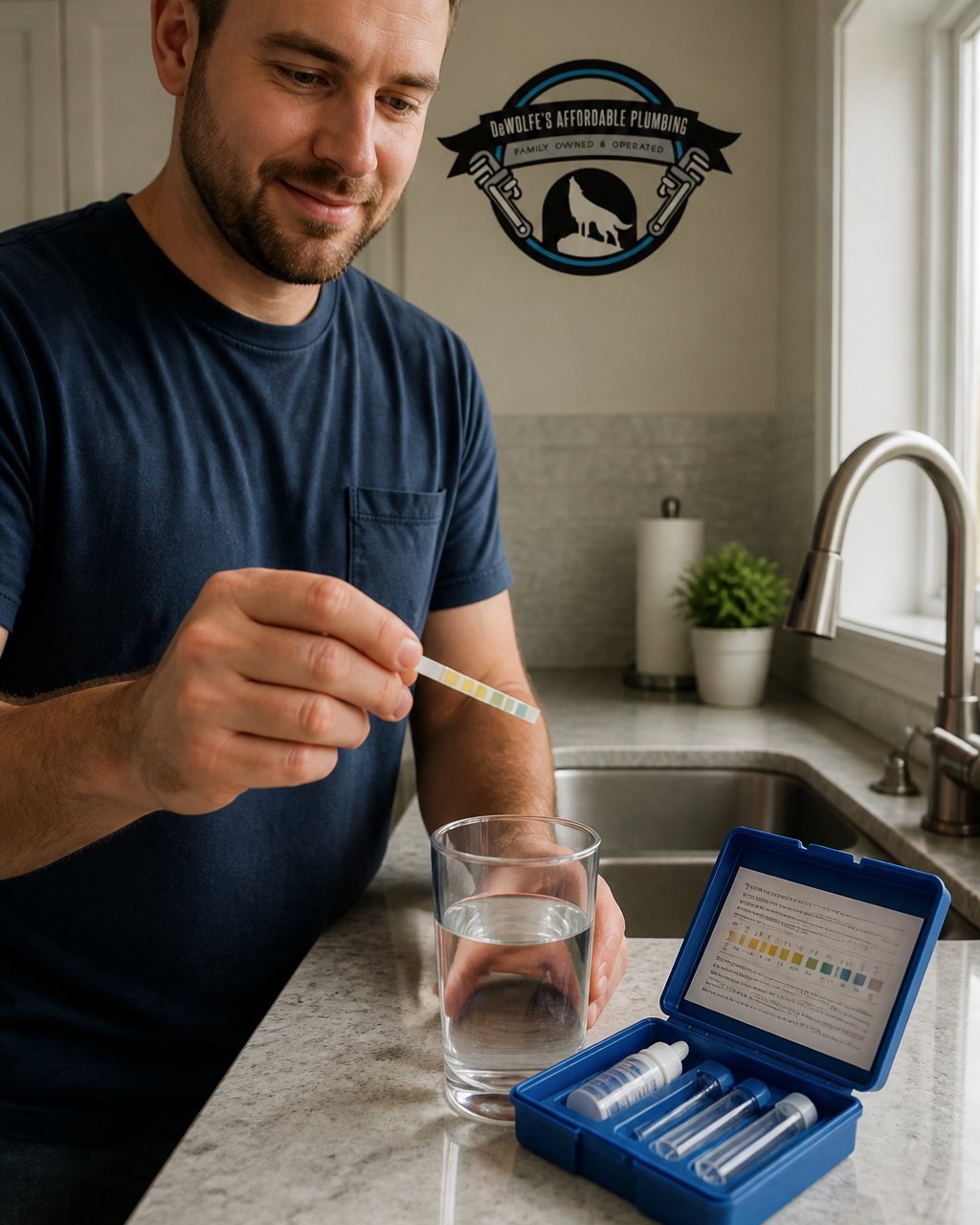
Three testing options, ranked by reliability:
- Test strips: fast and cheap, accurate to within a few grains, good for a first read
- Drop-count kits: more precise, takes about ten minutes
- Certified lab analysis: the most complete picture, and the only way to catch iron, manganese, or sulfur alongside hardness
Pull your sample from a cold tap that hasn’t run for several hours. If you’re on well water, test twice, since hardness can shift with the season.
Best Water Filtration System Types for Hard Water in 2026
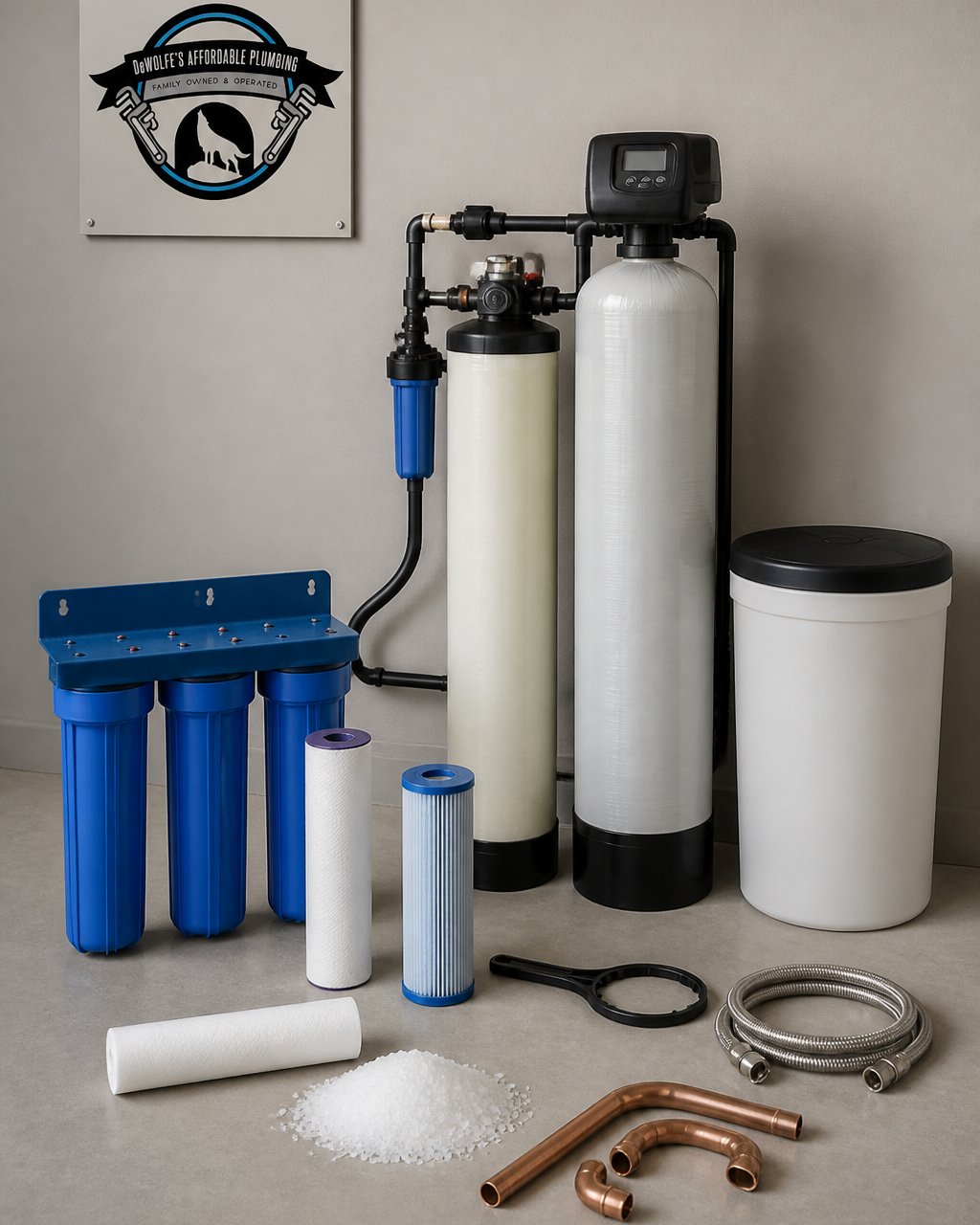
The best system for hard water is a salt-based softener for whole-house scale protection, paired with carbon filtration if you also want better-tasting drinking water. Everything else is a compromise on one of those two jobs. The table below is the short version; the subsections that follow explain the mechanism, the trade-offs, and the hardness thresholds that should drive your choice.
| System Type | Removes Hardness | Best For | Maintenance |
|---|---|---|---|
| Salt-based softener | Yes | Whole-house scale protection | Salt refills, periodic service |
| Salt-free conditioner | No, prevents scale | Low-maintenance households | Minimal |
| Whole-house carbon filter | No | Chlorine, taste, odor | Cartridge changes |
| Sediment filter | No | Well water debris | Cartridge changes |
| Reverse osmosis | Partial | Drinking water only | Filter changes |
Match the System to Your Measured Hardness
Hardness is not one problem, so one recommendation does not fit every home. Use your grains-per-gallon number to narrow the field before you compare brands or prices:
- Under 3 grains per gallon (soft): softening is optional. A whole-house carbon filter for taste and chlorine, plus point-of-use RO if you want cleaner drinking water, is usually enough. Skip the softener unless you see scale.
- 3 to 7 grains per gallon (moderately hard): a metered salt-based softener sized to your household is the cost-effective fix. Scale builds slowly at this level, so the payoff is protecting the water heater and fixtures over years, not solving an immediate visible problem.
- 7 to 10 grains per gallon (hard): softening is the default. Size capacity for peak occupancy, not average, because hardness this high exhausts resin faster and regeneration frequency climbs.
- Above 10 grains per gallon (very hard): softening is essential, and you should size up. A unit rated for a family of four at 10 grains will cycle constantly in a six-person home at 18 grains. Pair with sediment filtration ahead of the resin if you are on a well.
If iron, manganese, or sulfur show up on your lab report, treat those before the softener. Iron fouls resin quickly, and a softener alone will underperform until the iron is handled.
Salt-Based Softeners and Salt-Free Conditioners
Salt-based softeners are the only proven way to actually remove hardness from every tap in the house. They regenerate on a set schedule, and modern units meter water use so they only cycle when needed.
Salt-free conditioners appeal to homeowners who don’t want to haul salt or add sodium to their water. They change how minerals behave so they are less likely to stick to pipes, but they leave the calcium and magnesium in the water.
Size a softener by hardness and household occupancy, not by price. A unit rated for a family of four at 10 grains per gallon will exhaust quickly in a six-person home at 18 grains. Oversizing slightly costs less than regenerating constantly.
Whole-House Carbon and Sediment Filters
Carbon filters handle chlorine, taste, and odor across the whole house. Sediment filters catch sand, rust, and grit, which matters most on well water. Neither removes calcium or magnesium, so neither is a hard-water fix on its own.
These are best treated as partners to a softener, not replacements. A common setup puts a sediment filter first to protect the softener resin, then carbon, then the softener. If you’re noticing scale on fixtures, a carbon filter alone won’t solve it, and a sediment filter alone won’t either, no matter how often you change the cartridge.
Combined Filtration-and-Softening Setups
Most hard-water homes need two jobs done: reduce contaminants and remove hardness. The cleanest way to get both is a treatment train rather than a single box. A typical city-water train runs sediment filtration, then carbon for chlorine and disinfection byproducts, then a metered softener.
Integrated systems that combine carbon and softening in one cabinet save floor space and simplify plumbing, but they can be harder to service and you replace the whole unit if one stage fails.
Reverse Osmosis System for Hard Water: Where It Fits
A reverse osmosis system for hard water is a point-of-use solution, not a whole-house fix. It reduces a share of hardness minerals at the drinking tap, but it does nothing for your shower, washing machine, or water heater.
RO shines for drinking and cooking water. It also reduces dissolved contaminants that carbon misses.
Pair RO with a whole-house softener if scale is your main complaint. Use RO alone only if your water is already reasonably soft and you want cleaner-tasting drinking water.
Well Water Filtration System for Hard Water
A well water filtration system for hard water usually needs more stages than a city-water setup. Private wells can carry hardness plus iron, manganese, sediment, and sometimes sulfur odor, and each needs its own treatment step.
Test for all of these before buying. Iron and hardness often travel together, and a softener alone will foul quickly if iron isn’t handled first.
City water users face a different profile: hardness plus chlorine and disinfection byproducts. Carbon handles the chlorine; the softener handles the minerals.
Comparing Costs, Capacity, and Certifications
Cost of ownership separates good systems from cheap ones. Purchase price is only part of the picture; salt, cartridges, membranes, and service add up over a system’s life. Compare on four numbers, and compare them over several years rather than at the register.
Capacity: Calculate It From Hardness and Occupancy
Capacity is the number that decides whether a softener keeps up. A unit’s rated capacity is expressed in grains removed between regenerations. To size it, multiply your household’s daily water use by your hardness in grains per gallon, then multiply by the days you want between regenerations.
A common planning figure is about 75 gallons per person per day. A family of four at 10 grains per gallon uses roughly 300 gallons a day, or about 3,000 grains of hardness daily. If you want to regenerate about once a week, you need a unit rated near 21,000 grains.
Flow Rate: Protect Peak Demand
Flow rate is measured in gallons per minute at peak demand. Showers, laundry, and irrigation can run at the same time, and an undersized unit starves fixtures and appliances. Match the unit’s service flow to your peak household demand, not your average use. A softener that is correctly sized on capacity but undersized on flow will still disappoint at the shower.
Certification: Know What the Claim Covers
Look for independent testing to NSF/ANSI standards, and read the scope of the certification rather than the logo. Softening performance is covered under NSF/ANSI 44, which verifies hardness reduction claims. Carbon filtration claims are covered under NSF/ANSI 42 for aesthetic effects like chlorine, taste, and odor, and NSF/ANSI 53 for health-related contaminants. A unit certified for one does not automatically carry the other. If a manufacturer claims hardness removal, the certification should say so explicitly.
Operating Cost Over Several Years
Annual consumables are where cheap units lose. Salt, replacement cartridges, RO membranes, and service visits recur every year, and a low purchase price often hides a high consumables bill. Build a simple multi-year estimate: purchase price plus installation, plus salt or media per year, plus filter and membrane changes per year, plus any service calls.
The cheapest unit on the shelf often costs the most over ten years. Compare capacity, certification, and annual consumables side by side before you decide.
Sizing comes down to household size and measured hardness. A single person at 5 grains and a family of five at 15 grains need very different units. Get the number first, then match capacity to it, and confirm the certification covers the specific claim you are buying the system for.
If hard water has already damaged fixtures, a water heater, or supply lines, treatment is only half the job. Our team handles residential plumbing service and repairs and water heater replacement when scale has done its damage.
Frequently Asked Questions
Do water filters remove hardness minerals?
Most standard carbon and sediment filters do not remove calcium and magnesium, the minerals that make water hard. They target chlorine, sediment, and taste issues instead. To actually reduce hardness, you need a salt-based water softener or a salt-free conditioner. A reverse osmosis system can remove some hardness minerals at the point of use, but it is not a whole-house softening solution. Test your water first to confirm what you are dealing with before buying any water filtration system.
Is a water softener or a whole-house filter better for hard water?
They solve different problems. A water softener removes hardness minerals to stop scale buildup in pipes and appliances. A whole-house filter removes sediment, chlorine, and other contaminants but leaves hardness minerals in place. For hard water, softening is the priority; filtration handles taste and contaminant concerns. Many homes benefit from combining both, with a softener as the primary treatment and a carbon filter for polishing. Match the setup to your tested hardness level and household size.
Can reverse osmosis remove hard water minerals?
Yes, a reverse osmosis system for hard water removes a large share of calcium and magnesium at the point of use, typically under the kitchen sink. The limitation is scope: it treats drinking and cooking water at one tap, not the whole house, so scale can still build up in pipes, the water heater, and appliances. For whole-home protection, pair reverse osmosis with a softener. Check the system’s certified contaminant reduction list before buying.
Should I test my water before buying a filtration system?
Always test first. Hardness is measured in grains per gallon, and the result decides whether you need a softener, a conditioner, or just filtration. City water and well water also carry different concerns, from chlorine and disinfection byproducts to iron and sediment. A lab test or certified test kit gives you numbers to size treatment capacity and flow rate correctly. Skipping this step often leads to overspending on the wrong equipment or undersizing a system for peak demand.
Hard water doesn’t fix itself, and the wrong system wastes money while scale keeps building. DeWolfe’s Affordable Plumbing offers on-site estimates for residential customers, transparent up-front pricing, and a full written warranty on all labor performed. We’re family owned and operated, licensed and insured, with 24/7 emergency service available. Call (972) 632-9935 to get your water tested and sized correctly.