
Common Plumbing Issues in Old Homes: A 2026 Guide
Table of Contents
- Why Old Homes Have Plumbing Problems
- Corroded and Aging Pipes: The Most Common Issue
- Low Water Pressure and Mineral Buildup
- Sewer Line Failure and Tree Root Intrusion
- How to Safely Thaw Frozen Pipes Without Bursting
- Plumbing Inspection Checklist for Older Homes
- When to Repair vs. Replace Your Plumbing
- Frequently Asked Questions
Last Updated: September 27, 2026
Why Old Homes Have Plumbing Problems
Older homes charm us with character, but their plumbing systems often come with hidden complications. The pipes that delivered water reliably for decades are now approaching or past their expected lifespan. Common plumbing issues in old homes stem from a combination of aging materials, mineral accumulation, and structural shifts that newer construction rarely experiences.
The real problem isn’t that old pipes fail, it’s that they fail unpredictably. A 50-year-old galvanized steel line might work fine one day and corrode catastrophically the next. Tree roots don’t care about your budget. Mineral buildup doesn’t announce itself until your shower becomes a trickle. Understanding what’s happening behind your walls is the first step toward protecting your home from water damage, mold growth, and expensive emergency repairs.
Understanding what’s happening behind your walls is the first step toward protecting your home from water damage, mold growth, and expensive emergency repairs. The issues often fall into predictable categories, and knowing which ones affect your home helps you prioritize repairs strategically rather than reactively.
Corroded and Aging Pipes: The Most Common Issue
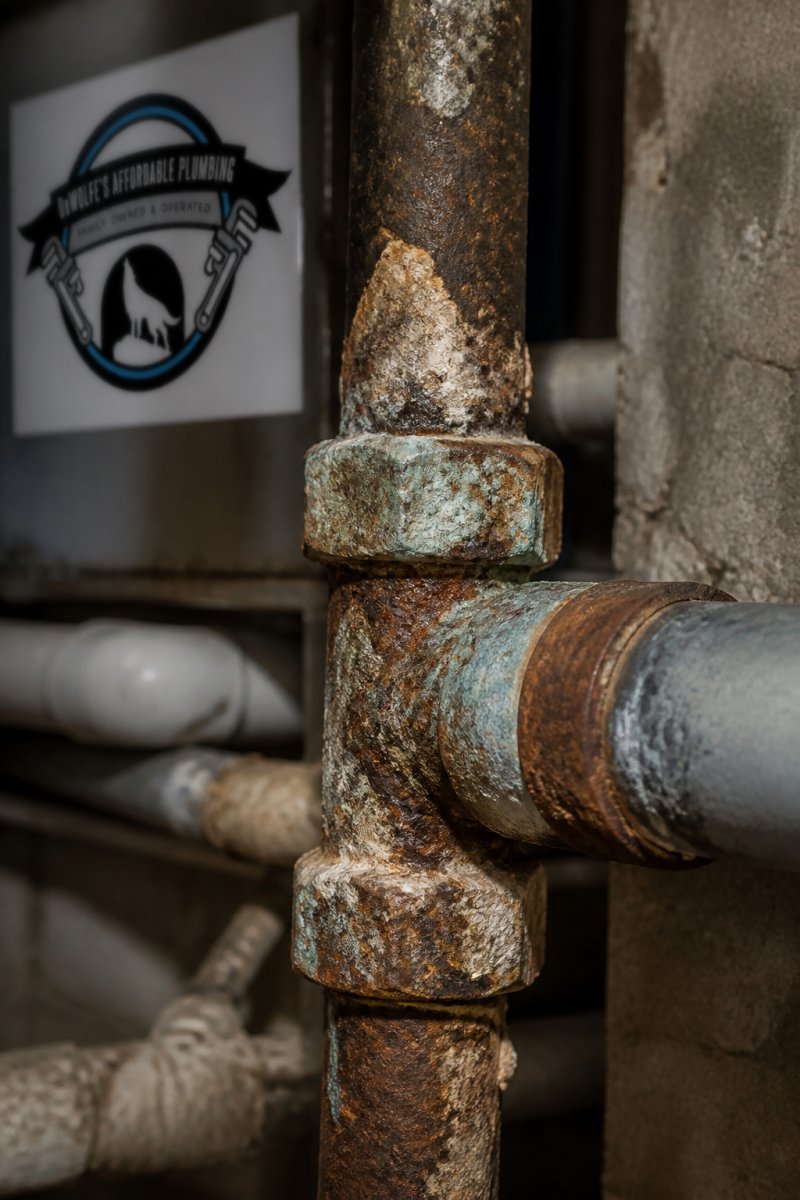
Corroded pipes are the signature problem of older homes. When pipes corrode, they don’t just leak, they contaminate your water, reduce pressure, and eventually fail completely. This is where most old plumbing problems begin.
Galvanized Steel and Cast Iron Deterioration
Galvanized steel dominated residential plumbing from the 1950s through the 1980s. The zinc coating protected the steel underneath, but that coating only lasts 40-60 years. Once it wears through, the steel corrodes rapidly. Cast iron pipes, common in homes built before the 1960s, face a different problem: they rust from the inside out as the protective lining deteriorates.
The telltale signs appear gradually. Water that once flowed at normal pressure slows to a trickle. Discoloration appears in your water, a rusty or brownish tint that indicates iron particles entering your supply. Some homeowners notice a metallic taste. In advanced cases, pinhole leaks develop inside walls, causing water damage before you even realize there’s a problem.
Galvanized and cast iron pipes corrode faster in areas with acidic water or high mineral content. If your home sits in an older neighborhood with acidic groundwater, your pipes may have deteriorated faster than homes just a few miles away. Professional water testing can reveal whether your water chemistry is accelerating corrosion.
Signs of Polybutylene Pipe Failure
Polybutylene pipes were installed in millions of homes from 1978 to 1995 as a cheaper alternative to copper. They failed spectacularly. The material degrades when exposed to chlorine in municipal water supplies, becoming brittle and prone to cracking. Polybutylene pipe failure often happens without warning, a pipe that looked fine last year ruptures this year.
The challenge with polybutylene is that failure is difficult to predict. Some homes with polybutylene pipes have experienced failures within 10 years of installation. Others have lasted 30 years with no problems. The degradation happens at the molecular level, invisible from the outside.
If your home has polybutylene pipes, you’re living with a ticking clock. The pipes might fail tomorrow or in five years, but they will fail. A professional plumbing inspection can confirm whether your home uses this material. If it does, planning a re-piping project, either now or as part of a phased replacement strategy, protects you from emergency failures.
Low Water Pressure and Mineral Buildup
Low water pressure in an old home rarely means a simple problem. Unlike a clogged aerator, which you can clean in minutes, pressure loss in older homes usually points to systemic issues inside your pipes.
Mineral buildup accumulates gradually. Hard water deposits scale accumulation on the interior walls of pipes, narrowing the passages water travels through (Hardness of Water). Over decades, this buildup can reduce water flow to a fraction of its original capacity. A shower that once delivered strong pressure becomes a weak spray. Faucets take longer to fill containers. The problem worsens over time as more mineral deposits accumulate.
Mineral buildup is particularly severe in regions with hard water. If your area has high calcium and magnesium content in the water supply, scale accumulation accelerates. Professional hydro-jetting can remove some buildup, but it’s a temporary solution. The minerals return. Once buildup reaches a certain point, re-piping becomes more economical than continuous maintenance.
Low water pressure can also indicate leaks within your system. Water escaping through corroded sections means less water reaching your fixtures. A professional plumbing inspection with pressure testing can distinguish between mineral buildup and leaks, guiding your repair strategy.
Sewer Line Failure and Tree Root Intrusion
Sewer line problems are among the most expensive plumbing issues in older homes. The main drain that carries waste away from your house may be 50, 75, or even 100 years old. Unlike supply lines that deliver fresh water, sewer lines experience constant pressure and chemical exposure that degrades materials.
Tree root intrusion is the most common sewer line problem. Roots seek out moisture and nutrients in sewer lines, penetrating small cracks and growing into the pipe. As roots expand, they block the pipe and damage its structure. A sewer scope, a camera inspection of your main drain, reveals the severity. Small root intrusion might be cleared with hydro-jetting. Severe damage requires sewer line repair or replacement.
Pipe belly is another signature sewer problem in older homes. A section of the main drain sags below its proper grade, creating a low spot where waste and solids collect. This reduces flow and causes frequent clogs. Sewer line repair addresses the structural issue, restoring proper slope and drainage.
If you notice recurring clogs, slow drainage throughout your home, or sewage backing up into lower-level fixtures, your main drain needs professional evaluation. Early intervention prevents catastrophic failures that require excavation and expensive sewer line replacement.
How to Safely Thaw Frozen Pipes Without Bursting
Frozen pipes in old homes present a specific risk. Older pipes are often more brittle due to corrosion and age. Thawing them incorrectly can cause them to burst, turning a frozen pipe problem into a water damage emergency.
The safest approach is gradual heat application. Wrap the frozen section with heat tape or heating cables, which warm the pipe slowly. If you use a heat gun or hair dryer, keep it moving and maintain distance, concentrated heat can cause rapid expansion and rupture. Never use an open flame near plumbing.
If the frozen section is accessible, you can also apply warm (not boiling) water-soaked towels around the pipe. Change the towels as they cool. This method takes longer but provides gentler, more controlled warming.
For frozen pipes inside walls or inaccessible locations, opening faucets downstream of the frozen section helps reduce pressure as the ice melts. Water can escape through the open faucet instead of building pressure that ruptures the pipe.
Prevention is far more effective than thawing. Insulate exposed pipes in unheated spaces like basements, crawl spaces, and attics. Seal air leaks that allow cold air to reach pipes. Let faucets drip slowly during extreme cold, moving water resists freezing better than static water.
If you’re uncomfortable thawing frozen pipes yourself, professional help prevents costly mistakes. Many emergency plumbing services offer rapid response for frozen pipe situations.
Plumbing Inspection Checklist for Older Homes
A comprehensive plumbing inspection reveals the actual condition of your system. This checklist helps you understand what professionals evaluate and what you should prioritize.
Start with visible supply lines in your basement or crawl space. Look for discoloration, corrosion, or signs of leaking. Check the material, galvanized steel, copper, or polybutylene tells you about potential failure risks. Inspect visible joints and connections for corrosion or dripping water.
Test water pressure at multiple fixtures. Low pressure at one location suggests a localized problem. Low pressure throughout the home indicates systemic issues like mineral buildup or corroded supply lines. A simple pressure gauge (available at hardware stores) gives you a baseline reading.
Run water in different fixtures simultaneously and observe whether pressure drops significantly. This reveals whether your home’s supply lines can handle simultaneous demand, a common issue in older homes with undersized pipes.
Examine drainage by running water in sinks, showers, and toilets. Note whether water drains quickly or slowly.
When to Repair vs. Replace Your Plumbing
Deciding between repair and replacement requires understanding your pipe’s remaining lifespan and the cost-benefit analysis. A single leak in a 40-year-old galvanized steel line might seem like a simple repair, but it’s often a sign that failure is imminent throughout the system.
When you get repair estimates, ask the plumber about the pipe material and age. If they recommend repair for a 50-year-old galvanized line that’s showing corrosion, ask why they’re not recommending replacement. A good plumber explains the reasoning clearly.
Frequently Asked Questions
What type of plumbing do old houses have that’s bad?
Older homes often contain galvanized steel, cast iron, or polybutylene pipes. Galvanized steel corrodes from the inside out, reducing water flow and quality. Cast iron develops rust and cracks over decades. Polybutylene, common in homes built from the 1970s through 1990s, becomes brittle and fails without warning. These materials deteriorate faster than modern copper or PVC alternatives, making them a serious concern in homes over 40 years old.
How can I tell if my home’s plumbing needs to be replaced?
Signs include persistent low water pressure, discolored or cloudy water, frequent clogs, visible leaks, or water damage on ceilings and walls. If your home was built before 1980, have a professional perform a sewer scope and pipe inspection. Polybutylene pipes often fail without warning, so if your home contains them, replacement should be a priority. A licensed plumber can identify the pipe material and condition during an on-site inspection.
What are the signs of hidden water leaks in older plumbing systems?
Watch for unexplained increases in water bills, soft spots in flooring or drywall, musty odors, mold growth, or water stains on ceilings and walls. Older homes with corroded pipes are especially prone to slow leaks that damage foundations and create mold. If you suspect a leak, professional leak detection can locate the problem before it causes structural damage. Early detection prevents costly water damage and health hazards.
How often should I have a professional inspect plumbing in an older home?
Homes over 30 years old should be inspected annually, and before any major renovation or sale. A plumbing inspection checklist should cover pipe material, corrosion, water pressure, drainage, sewer line integrity, and fixture condition. Annual maintenance catches problems early, prevents emergencies, and helps you plan repairs strategically. Professional inspections provide documentation that protects your home’s value and your safety.