
How to Find Reliable Local Plumbers in 2026
Table of Contents
- Why Finding Reliable Local Plumbers Matters
- How to Check a Plumber’s License and Insurance
- Questions to Ask a Plumber Before Hiring
- How to Compare Plumbing Estimates
- Emergency Plumber Checklist: What to Do Right Now
- Red Flags and Scam Prevention When Hiring Local Plumbers
- Frequently Asked Questions
Last Updated: October 16, 2026
Why Finding Reliable Local Plumbers Matters
Finding reliable local plumbers is the difference between a small repair and a flooded floor. A burst pipe or failed water heater does not wait for a convenient moment, and the contractor you call at 2 a.m. shapes whether the next week is an inconvenience or a disaster.
Here is the uncomfortable truth most directories skip: a license number on a website proves almost nothing on its own. Anyone can type digits into a footer.
Below, we’ll show you how to verify credentials in minutes, what a written estimate must contain, and the specific red flags that signal a scam before you hand over a deposit.
How to Check a Plumber’s License and Insurance
A plumber’s license is a state-issued credential that confirms the holder passed trade exams and meets continuing education requirements. Insurance is separate, and it protects you if a worker is injured or damages your property. Both need verification before work begins.
Where to Verify Credentials in Your State
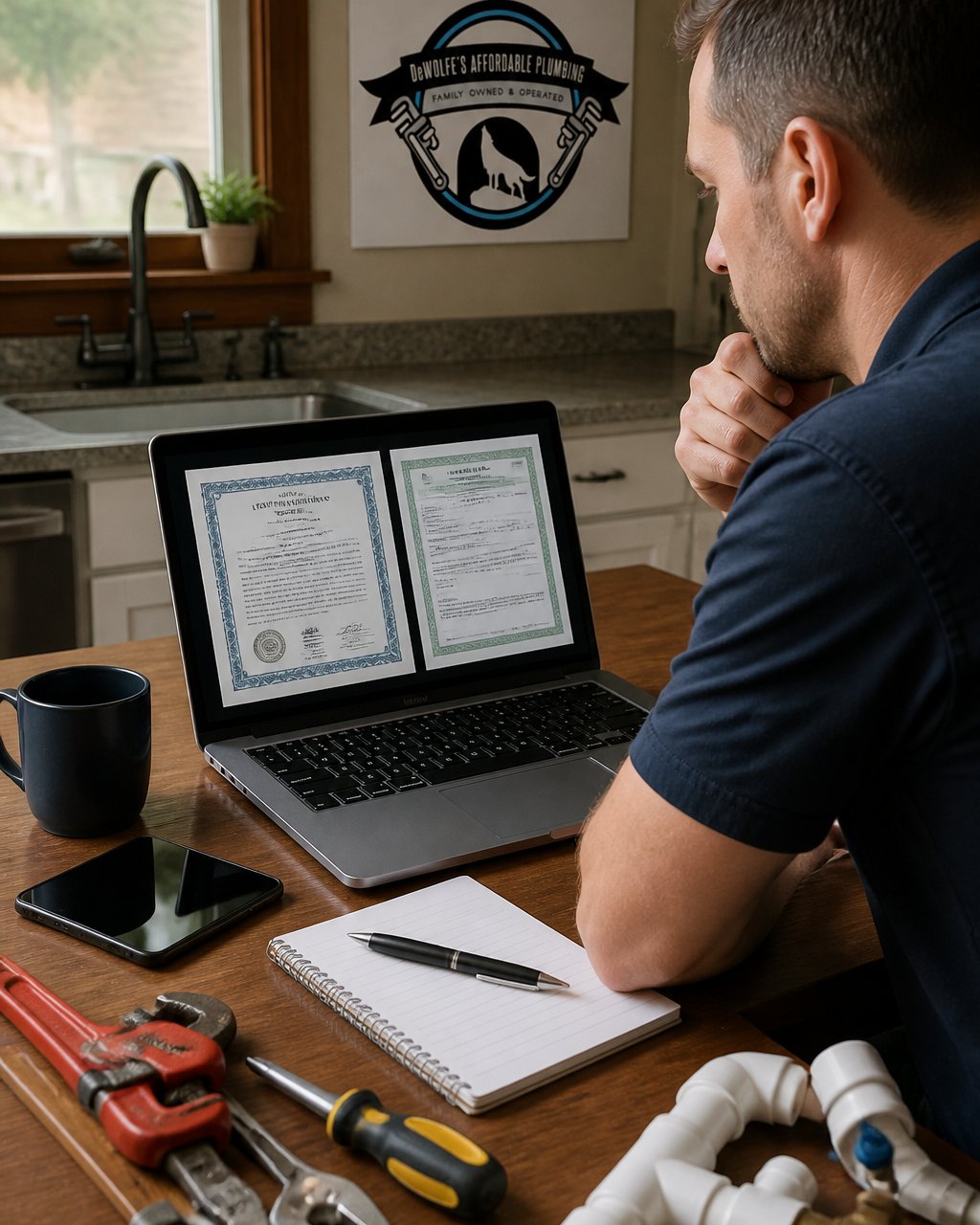
Most states run a public license lookup through a licensing board or consumer protection office. Search the business name and the individual technician’s name, not just the company. Confirm three things: the license is active, it covers the type of work you need, and the name matches the person showing up at your door.
Ask for the license number in writing before the visit. If someone deflects or says the office handles that, treat it as a warning sign.
What Insurance Coverage Protects You
Two policies matter. General liability covers property damage, such as a cracked slab or ruined flooring. Workers’ compensation covers injuries to the crew while they are inside your home.
Request a certificate of insurance and call the insurer listed on it to confirm the policy is active. Certificates are easy to fake; a two-minute phone call is not.
Never let work start before you have confirmed an active license and both insurance policies. If an uninsured worker is injured on your property, your homeowner’s policy can become the primary payer, and many insurers exclude unlicensed contractor work entirely.
Questions to Ask a Plumber Before Hiring
The right questions can help you evaluate a plumber. Ask them before you approve any work, and write down the answers so you can compare providers fairly.
Questions About Cost and Scheduling
Start with the service call itself. Ask whether there is a diagnostic fee, whether it is credited toward the repair if you proceed, and what the hourly rate covers. Confirm the response window in hours, not vague phrases like “sometime today.”
- Is the estimate free, or is there a diagnostic fee?
- What is your typical arrival window for urgent repairs?
- Do you charge overtime rates for nights and weekends?
Questions About Warranty and Workmanship
A written warranty on labor indicates that a contractor stands behind the work. Ask what it covers, how long it lasts, and whether it transfers if you sell the home. Get it in writing on the invoice, not just in conversation.
Ask the warranty question twice: once on the phone and once when the technician arrives. If the two answers differ, that gap can provide insight into the company.
How to Compare Plumbing Estimates
Comparing estimates means comparing scope, not just totals. Two quotes for the same repair can differ by hundreds of dollars simply because one excludes parts, permits, or cleanup.
What a Written Estimate Should Include
A complete written estimate lists the diagnosis, the specific repair or replacement, parts and labor broken out separately, the permit cost if one is required, and the warranty terms. It should also state whether the price is fixed or subject to change if the technician finds additional problems.
| Estimate Element | What to Look For | Why It Matters |
|---|---|---|
| Diagnosis | Named problem, not “pipe issue” | Prevents scope creep later |
| Parts and labor | Listed separately | Lets you compare line by line |
| Permit fees | Stated or marked not required | Avoids surprise charges |
| Warranty | Length and coverage in writing | Protects you after the crew leaves |
| Price type | Fixed or hourly | Determines your exposure |
Spotting Hidden Fees and Red Flags
Watch for estimates that quote a low headline number and bury the rest. Common additions include disposal fees, after-hours surcharges, and “unforeseen condition” clauses that let the price float. Ask directly: “What could make this number go up?” A clear answer names specific scenarios.
Emergency Plumber Checklist: What to Do Right Now
Most plumbing problems are urgent, not emergencies. The distinction matters because after-hours calls typically carry overtime rates, and a provider who senses panic has little incentive to quote carefully. Use the decision rules below before you dial.
Is It Actually an Emergency?
Treat it as an emergency if any of these are true:
- Water is actively escaping and you cannot stop it at a fixture valve or the main shut-off.
- Sewage is backing up into the home, especially into more than one drain.
- You smell gas, or a carbon monoxide alarm is sounding.
Everything else, a slow drain, a dripping faucet, a running toilet, a single clogged fixture, can usually wait for a scheduled visit during normal business hours, when rates are lower and scheduling is easier. That is also the right time to line up routine work like faucet repair or replacement, or a water heater service, rather than paying emergency rates for a job that could have been booked in advance.
Step 1: Stop the Water
Know your shut-off points before you need them. Every adult in the home should be able to find:
- The main shut-off valve, usually where the water supply enters the home, a basement wall, a crawlspace, a utility closet, or an exterior wall near the water meter.
- The fixture shut-off valves under each sink and behind each toilet.
- The water heater supply valve on the cold line entering the tank.
Turn the valve clockwise until it stops. If it will not budge, do not force it, a broken valve turns a repair into a flood. Call the water utility and ask them to shut off at the meter.
Step 2: Handle Gas and Electrical Hazards First
If you smell gas, leave the building immediately and call your gas utility from outside. Do not flip switches, use a phone indoors, or light anything. If water is pooling near an electrical panel or outlet, do not wade in, shut off power at the breaker from a dry location if you can reach it safely, then call for help.
Step 3: Limit the Damage
- Move furniture, rugs, and electronics away from the affected area.
- Put towels or buckets under active drips.
- If the ceiling is bulging, poke a small drain hole over a bucket rather than letting it collapse on its own.
Step 4: Call and Vet in One Pass
When you call, confirm these things before you agree to anything:
- The response window in hours, not phrases like “sometime today.”
- Whether the after-hours rate applies and how it is calculated.
- The technician’s name and license number.
- Whether the diagnostic fee is credited toward the repair if you proceed.
Step 5: Get the Scope in Writing Before Work Starts
Even at 2 a.m., a legitimate provider can text or email a scope and price. If someone refuses to put anything in writing until the work is done, that is your signal to call the next provider on your list.
Keep a short emergency card on the refrigerator: main shut-off location, water utility number, gas utility number, and two vetted plumbers with their license numbers. In a real emergency, nobody wants to search a phone in the dark.
Do not sign a blank work authorization or a tablet screen you have not read. Some after-hours scams rely on a signature captured before the price is filled in.
Red Flags and Scam Prevention When Hiring Local Plumbers
Plumbing scams follow recognizable patterns. Once you know the mechanics, they can be easier to spot before money changes hands.
The Most Common Patterns
The storm-chaser inspection. Someone knocks after a freeze, flood, or hail event and offers a free inspection.
The lowball quote that grows. The headline number is well below every other bid.
The upsell on a simple job. A clogged drain becomes a full repipe.
The disappearing warranty. The company that answers the phone today is unreachable in six months.
How to Verify Reviews
Reviews are easy to fake in bulk. Look for these signals:
- Specific detail: a named technician, a described repair, a timeline.
- A spread of dates rather than a cluster in one week.
- Responses from the business that address problems rather than only thanking five-star reviewers.
Read the one- and two-star reviews first. How a company responds to a complaint tells you more than how it responds to praise.
Payment and Contract Practices That Protect You
- Pay by card or check when possible. Cash leaves no paper trail.
- Never pay the full amount before the work is complete and inspected.
- Get the warranty terms on the invoice, not just in conversation.
- Ask for a lien waiver or a paid-in-full receipt on any job involving subcontractors or suppliers.
If You Have Already Paid and Something Is Wrong
Start with a written demand to the company: describe the problem, reference the invoice and warranty, and set a reasonable deadline for a response. If that fails, your options depend on the amount and the nature of the dispute:
- Report the business to your state licensing board or consumer protection office.
- File a complaint with your state attorney general’s consumer division.
- For small amounts, small claims court is often the fastest route.
- If the work was unpermitted or unlicensed, contact your local building department, they can advise on inspection and remediation.
Document everything: photos, texts, emails, invoices, and the license number you verified. A paper trail is what turns a complaint into a resolution.
Key checks include an active license lookup, a live insurance confirmation call, and a written estimate with warranty terms. Reading one-star reviews before you call can also be helpful. Skipping these steps may increase your risk.
Frequently Asked Questions
What should I ask a plumber before hiring them?
Ask about their license number and insurance, whether they provide written estimates, and how they handle unexpected findings. Confirm their warranty on labor and parts, their availability for emergencies, and whether they charge a diagnostic fee. A reliable plumber will answer these clearly and put key terms in writing before work begins.
How can I check whether a plumber is licensed and insured?
Start by asking for their license number, then verify it through your state or local licensing board’s online lookup. For insurance, request a certificate of insurance and call the insurer to confirm the policy is active. This step protects you from liability if an injury or property damage occurs during the job.
How do I know if a plumber’s online reviews are trustworthy?
Look for reviews that mention specific details like punctuality, estimate accuracy, and how problems were resolved. Check across multiple platforms and watch for patterns rather than one-off complaints. A mix of mostly positive reviews with a few detailed negative ones can often be more credible than a page of perfect ratings.
Should I get more than one plumbing estimate?
Yes. Getting at least two or three written estimates helps you compare pricing, scope of work, and professionalism. Ask each plumber to itemize labor and parts separately. If one estimate is far lower than the others, ask what is excluded, because the difference may show up later as added charges.
What should a written plumbing estimate include?
A solid written estimate lists the specific work to be done, parts and labor broken out separately, any diagnostic fee, the timeline, and warranty terms. It should also state whether the price is fixed or subject to change if hidden issues are found. Get this in writing before any work starts.
What should I do if I need a plumber for an urgent repair?
Shut off the water supply if there is an active leak, then call a licensed plumber who offers 24/7 service. Confirm the response time and ask about emergency rates before they arrive. If the issue involves gas, leave the home and call your gas utility first, then a plumber qualified for gas line work.
How often should plumbing be inspected?
Most homes benefit from a professional plumbing inspection once a year, especially if you have older pipes or a water heater over ten years old. Annual checks can catch small leaks, corrosion, and pressure issues before they become expensive repairs. Homes with known problem areas may need inspections more often.