
How to Unclog a Main Sewer Line: Step-by-Step
Table of Contents
- Main Sewer Line Clogged Symptoms: How to Identify a Blockage
- Common Causes of Main Sewer Line Blockages
- Locating Your Sewer Cleanout Pipe Safely
- Tools and Materials You’ll Need
- How to Snake a Main Sewer Line: Step-by-Step Instructions
- When to Call a Plumber for a Clogged Sewer Line
- Preventing Future Main Drain Line Blockages
- Frequently Asked Questions
Last Updated: October 18, 2026
Main Sewer Line Clogged Symptoms: How to Identify a Blockage
Learning how to unclog a main sewer line is essential, as a clogged main sewer line is one of the most serious plumbing problems a homeowner can face. Unlike a single drain backing up, a main sewer line blockage affects your entire home’s drainage system at once.
The most obvious sign is multiple drains clogging at once: your toilet, shower, and sinks all back up or drain slowly together. You may also hear gurgling when water runs elsewhere, or smell foul odors near your drains or yard.
Watch for these specific warning signs:
- Multiple toilets or drains backing up at once
- Slow drainage throughout the entire house
- Gurgling sounds from toilets or drains
Branch Drain vs. Main Sewer Line: A Quick Diagnostic
Before you grab a snake, confirm you are dealing with the main line and not a single branch drain. Treating an isolated fixture problem as a main-line clog wastes time and pushes you toward tools that are too aggressive. Work through this flow:
- Test one fixture at a time. Run the bathroom sink, then the shower, then flush a toilet, stopping between each. Note which fixtures drain slowly and which drain normally.
- Watch for cross-talk. Flush a toilet and listen at the nearest floor drain or tub. Gurgling at an unused fixture is a strong sign the shared main line is venting pressure.
- Check the lowest fixture first. A floor drain or basement slop sink is usually the lowest point. If it backs up when upstairs fixtures run, the restriction is downstream, in the main line.
- Look at the pattern. One slow sink with everything else fine points to a branch drain or fixture trap. Two or more fixtures on different floors backing up together points to the main line.
- Check the cleanout. If the cleanout in the yard or basement holds standing water or overflows when fixtures run, the blockage is in the main line between the house and the street.
A single toilet that clogs repeatedly while sinks and showers drain fine is usually a fixture or branch-drain issue, not a main-line clog. Try a plunger and a closet auger before escalating to a sewer snake.
Symptom-to-Cause Cheat Sheet
| What you observe | Most likely location | First move |
|---|---|---|
| One sink or tub slow, others fine | Branch drain or trap | Plunge, then hand snake the trap arm |
| One toilet clogs repeatedly, drains fine elsewhere | Toilet or branch drain | Closet auger, check for foreign objects |
| Multiple fixtures slow on the same floor | Branch line feeding that floor | Snake the branch through the nearest cleanout |
| Fixtures on multiple floors back up together | Main sewer line | Locate cleanout, snake the main line |
| Gurgling at unused fixtures when water runs | Main line or vent stack | Check cleanout for standing water |
| Sewage odor plus slow drains throughout | Main line with partial blockage | Snake main line, then camera inspect |
| Wet spot or sinkhole in yard over the line | Main line, possibly collapsed | Stop DIY, call for camera inspection |
If your observations land in the bottom three rows, the blockage is likely in your main drain line, not a branch drain. When everything backs up together, the problem is downstream in the main line.
Common Causes of Main Sewer Line Blockages
Understanding what causes main sewer line blockages helps you prevent them. The most common culprit is tree roots, which are attracted to moisture and nutrients in wastewater.
Grease buildup is another major cause. Cooking grease, soap, and oils accumulate on pipe walls and, mixed with toilet paper and debris, form blockages that restrict or stop flow.
Other frequent causes include:
- Tree roots penetrating pipe cracks or joints
- Grease and soap buildup on pipe walls
- Toilet paper and personal hygiene products
Older homes with clay or cast-iron pipes are especially vulnerable; these materials deteriorate over decades, creating cracks where roots enter or debris collects.
Locating Your Sewer Cleanout Pipe Safely
Before you can clear a sewer cleanout, you need to find it.
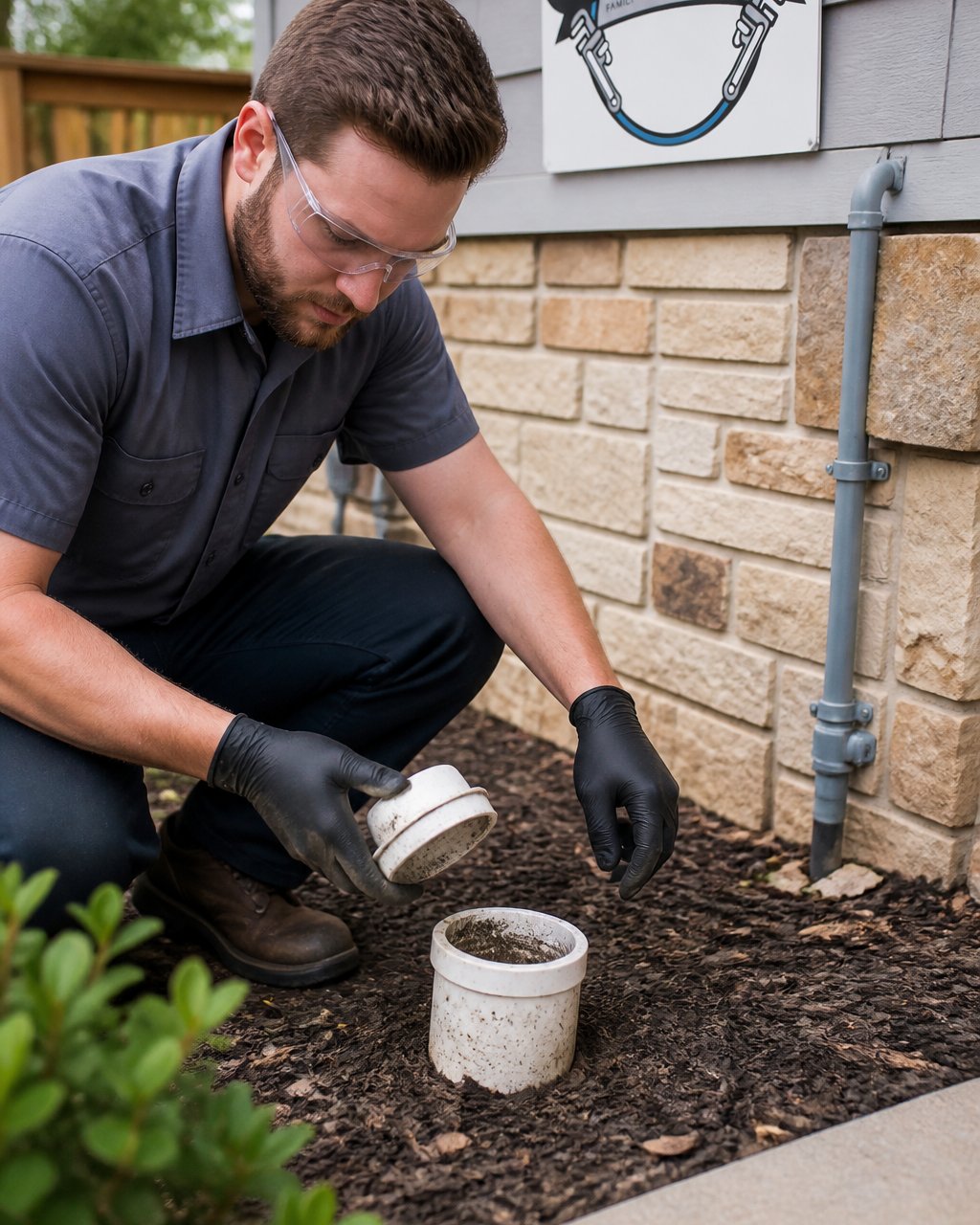
Look for a 4-inch PVC or cast-iron pipe with a removable cap.
The cap might be buried under soil or grass.
Opening the cleanout safely is critical. Pressure from backed-up sewage can pop the cap off suddenly, so loosen it slowly.
Have a bucket and towels ready under the cap opening.
Tools and Materials You’ll Need
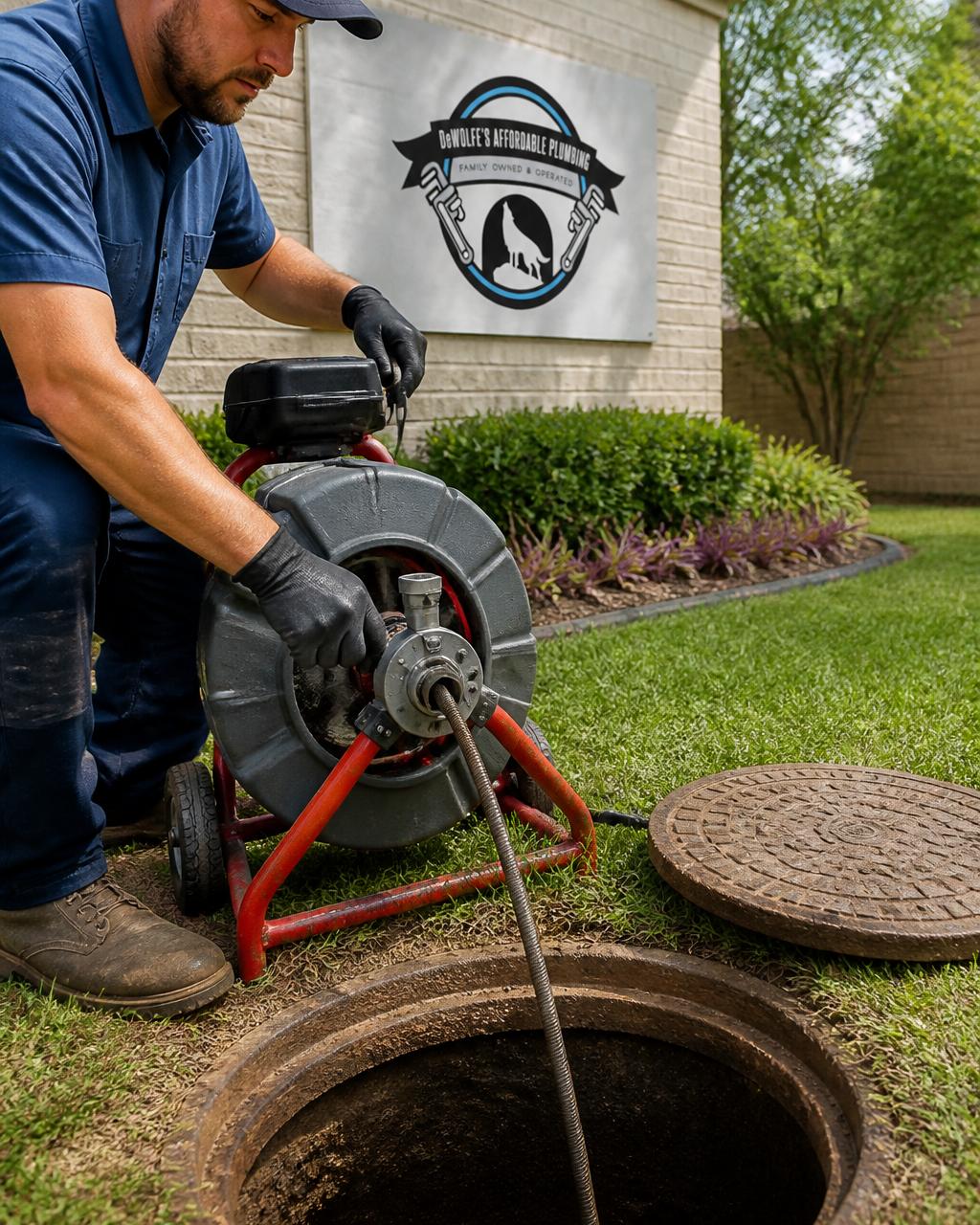
Clearing a main sewer line requires specific tools. A drain snake or sewer auger is essential. Hand-cranked snakes work for smaller blockages. Motorized snakes handle tougher jobs but are harder to control.
You’ll also need:
- Drain snake or sewer auger (hand-crank or motorized)
- Bucket for collecting debris
- Work gloves and eye protection
Optional items that help:
- Camera inspection tool (to see inside the pipe)
- High-pressure water jetter (for stubborn debris)
- Wet/dry shop vacuum (to remove loosened debris)
Hand Snake vs. Motorized Auger vs. Hydro Jet: What Each One Actually Does
| Tool | Best for | Typical reach | Main risk |
|---|---|---|---|
| Hand-crank drum auger | Small blockages, branch drains, short runs | 25-50 ft | Too little torque to clear roots; cable can kink |
| Motorized drum auger | Main line blockages, grease, light roots | 50-100 ft | Can damage older cast-iron or clay pipe if forced |
| Sectional sewer machine | Long runs, heavy root masses | 100+ ft | Requires training; rental units are heavy |
| Hydro jetter | Grease, sludge, sand, soft roots | Full line | High pressure can damage fragile or cracked pipe |
| Sewer camera | Diagnosis before and after clearing | Full line | None, but does not clear anything by itself |
A hand-crank drum auger is the right starting point for most homeowners: light, cheap to own, and forgiving on older pipe. A motorized auger clears what a hand snake cannot reach. Hydro jetting is a professional tool, the pressure that clears a grease-packed line can also turn a crack in a 60-year-old clay pipe into a full break.
Realistic Cost Comparison
Pricing for plumbing services and equipment can vary widely based on the specific job, required tools, and market rates. For professional services, costs depend on factors like the complexity of the blockage, the length of the pipe, and the time of service. Many homeowners find that renting specialized equipment or hiring a professional plumber can be a cost-effective solution for a one-time issue.
If you expect to clear the line once, renting a motorized auger or calling a plumber is usually cheaper than buying equipment you will not use again. If you have recurring root problems, a camera inspection is the better first spend than another round of snaking.
Tools That Can Damage Your Pipes
Not every tool is safe for every pipe:
- Chemical drain cleaners. Caustic and acidic cleaners generate heat and can soften or crack PVC, accelerate corrosion in cast iron, and are dangerous to use near a cleanout where splashback is possible. They also do not remove roots or collapsed-pipe blockages, so they treat the symptom and leave the cause.
- Excessive snaking force. Forcing a motorized auger through a hard stop can kink the cable, spin the machine, or crack brittle clay and cast-iron pipe. If the cable stops dead, back off and reassess rather than pushing harder.
- High-pressure jetting on fragile pipe. Hydro jetting at full pressure on old clay, Orangeburg, or already-cracked cast iron can turn a partial blockage into a full collapse. A plumber should assess pipe condition with a camera before jetting.
If you do not know your pipe material or age, assume it is fragile until a camera inspection says otherwise. DeWolfe’s Affordable Plumbing has professional-grade equipment available if you decide the job is beyond DIY.
How to Snake a Main Sewer Line: Step-by-Step Instructions
Snaking a main sewer line is physically demanding but manageable with proper technique. These steps apply to hand-crank snakes; motorized snakes follow similar logic but require more caution.
Step 1: Prepare the Work Area
Clear the area around the cleanout so you have room to maneuver the snake and handle debris. Lay towels around the opening to catch spillage.
Put on gloves and eye protection and position your bucket within reach.
Loosen the cleanout cap slowly. If pressure is high, sewage may spray out, so keep your face clear of the opening. Once the cap is off, let any backed-up water drain into the bucket.
Step 2: Insert and Feed the Snake
Insert the snake head into the cleanout opening. Push it forward slowly, cranking the handle as you go; the snake travels down the line, following the path of least resistance.
Feed the snake gradually and do not force it. If you feel resistance, crank the handle to break through the blockage or work around it.
Keep feeding until you feel solid resistance that won’t give, you’ve hit the blockage or the end of the accessible line.
Step 3: Break Up and Remove Debris
Once the snake reaches the blockage, crank the handle firmly. The spinning motion breaks up grease, roots, and debris.
You may feel the blockage loosen and collapse. Keep working the snake to break everything into smaller pieces that can flow downstream.
Slowly pull the snake back out while continuing to crank. Debris will come out with it, so have your bucket ready to catch roots, grease, and other material.
Step 4: Flush and Verify Clearance
Once the snake is out, flush the line with a garden hose. Run water down the cleanout opening for several minutes. Listen for normal drainage sounds.
Go inside and run water in sinks, showers, and toilets. They should drain normally without gurgling or backing up.
Repeat the snaking process if needed; some blockages require multiple passes. If the line still won’t clear after two or three attempts, the blockage may be too severe for DIY tools.
When to Call a Plumber for a Clogged Sewer Line
Some situations require professional help. If sewage is actively backing up into your home, call a plumber immediately. Raw sewage is a serious health hazard (the CDC).
Call a professional if:
- Sewage is backing up into your basement or home
- The blockage won’t clear after multiple snake attempts
- You suspect tree roots are the cause
A professional plumber can use specialized equipment like camera inspection and high-pressure hydro jetting.
DeWolfe’s Affordable Plumbing offers same-day or 24-hour response to sewer emergencies. We provide transparent, up-front pricing before any work begins.
Preventing Future Main Drain Line Blockages
Prevention is far easier than dealing with a clogged main sewer line.
Never flush anything except toilet paper and human waste.
Avoid pouring grease down drains.
Plant trees away from your sewer line. If you already have trees near your line, monitor them.
Run your garbage disposal sparingly. It adds unnecessary debris to your system.
Keep gutters and yard drains clean so rainwater doesn’t overwhelm your sewer system.
Frequently Asked Questions
How can I tell if my main sewer line is clogged?
The most obvious signs are multiple drains backing up at once, gurgling sounds from toilets and drains, sewage odors in your yard or basement, and slow drainage throughout your home. If only one drain is slow, the blockage is likely in a branch drain. When the main sewer line is clogged, wastewater has nowhere to go, affecting all fixtures. Slow drains combined with toilet backup or multiple fixtures draining slowly simultaneously are strong indicators of a main line issue.
Can I snake my own main sewer line?
You can attempt to snake a main sewer line if you have basic plumbing experience and the right equipment, but it carries risks. Improper technique can damage the pipe, push debris deeper into the line, or cause sewage overflow. If you’re uncertain about the blockage location, the severity, or your ability to handle the job safely, calling a professional plumber is the safer choice. They have camera inspection tools to diagnose the problem and commercial-grade equipment to clear it without causing damage.
What’s the strongest thing to unclog a main sewer line?
A motorized drain snake or sewer auger is the most effective tool for clearing main sewer line blockages caused by debris, grease buildup, or tree roots. Hydro jetting, which uses high-pressure water jets, is even more powerful and can scour the entire pipe clean. Chemical drain cleaners are ineffective on main lines and can damage pipes. For stubborn blockages caused by tree roots or pipe collapse, professional camera inspection and specialized equipment are necessary to avoid pipe damage.
When should I stop trying to clear a sewer line and call a plumber?
Stop immediately if you encounter sewage overflow, can’t locate the cleanout safely, or the snake meets solid resistance that won’t budge. If the blockage returns within weeks, the problem may be tree roots, a collapsed pipe section, or a structural issue requiring professional diagnosis. Also call if you’re unsure whether the blockage is in a branch drain or the main line, or if DIY attempts haven’t cleared the clog after 30 minutes of effort. Professional plumbers can inspect with cameras to identify the exact problem and recommend the right solution.