
Licensed Gas Leak Repair Services Wylie: 2026 Guide
Table of Contents
- Signs of a Natural Gas Leak in Home: What to Watch For
- Gas Leak Safety Protocols for Homeowners: Step-by-Step
- Hiring a Certified Gas Plumber: Credentials That Matter
- Gas Line Pressure Testing Services and Leak Diagnostics
- Gas Line Repair and Installation: Permits, Codes, and Cost Factors
- Preventing Future Gas Leaks in Your Home
- Frequently Asked Questions
Last Updated: September 30, 2026
Signs of a Natural Gas Leak in Home: What to Watch For
Natural gas leaks announce themselves through three senses: smell, sound, and sight. Utility companies add mercaptan, a sulfur-based odorant, to natural gas so leaks smell like rotten eggs before they become dangerous. If you notice that smell, hear a hissing sound near a gas line, or see dead grass in a perfect circle above a buried pipe, treat it as a real leak until a professional proves otherwise.
Smell, Sound, and Sight: The Three Warning Signs
Your nose is the first detector. Mercaptan gives natural gas its distinct rotten-egg smell, and the U.S. Pipeline and Hazardous Materials Safety Administration’s gas safety guidance notes that odorant is added specifically so leaks are detectable at low concentrations.
Beyond smell, watch for:
- Hissing or whistling near gas appliances, meters, or exposed piping
- Dead or discolored grass in a ring shape above an underground line
- Dust blowing from a small hole in the ground
- A gas meter dial that spins when no appliances are running
- Headaches, dizziness, or nausea that ease when you leave the house
Never use a lighter, match, or phone near a suspected leak to “test” it. A spark can ignite accumulated gas. Leave the area first, then call from outside.
Gas Leak Safety Protocols for Homeowners: Step-by-Step
What you do in the first five minutes of a suspected gas leak matters more than anything a technician does later. The goal is simple: get people out, avoid every possible ignition source, and call from a safe distance. Everything else can wait.
The First Five Minutes: A Step-by-Step Evacuation Protocol
Follow this sequence in order. Do not improvise.
- Leave immediately. Do not stop to open windows, unplug appliances, or grab belongings. Opening a window does not ventilate a leak fast enough to matter, and moving through the house keeps you inside longer.
- Do not touch anything electrical on your way out. That includes light switches, garage door openers, doorbells, thermostats, and even a phone charger. A flip of a switch or the spark from a garage opener can ignite accumulated gas. If a light is already on, leave it on.
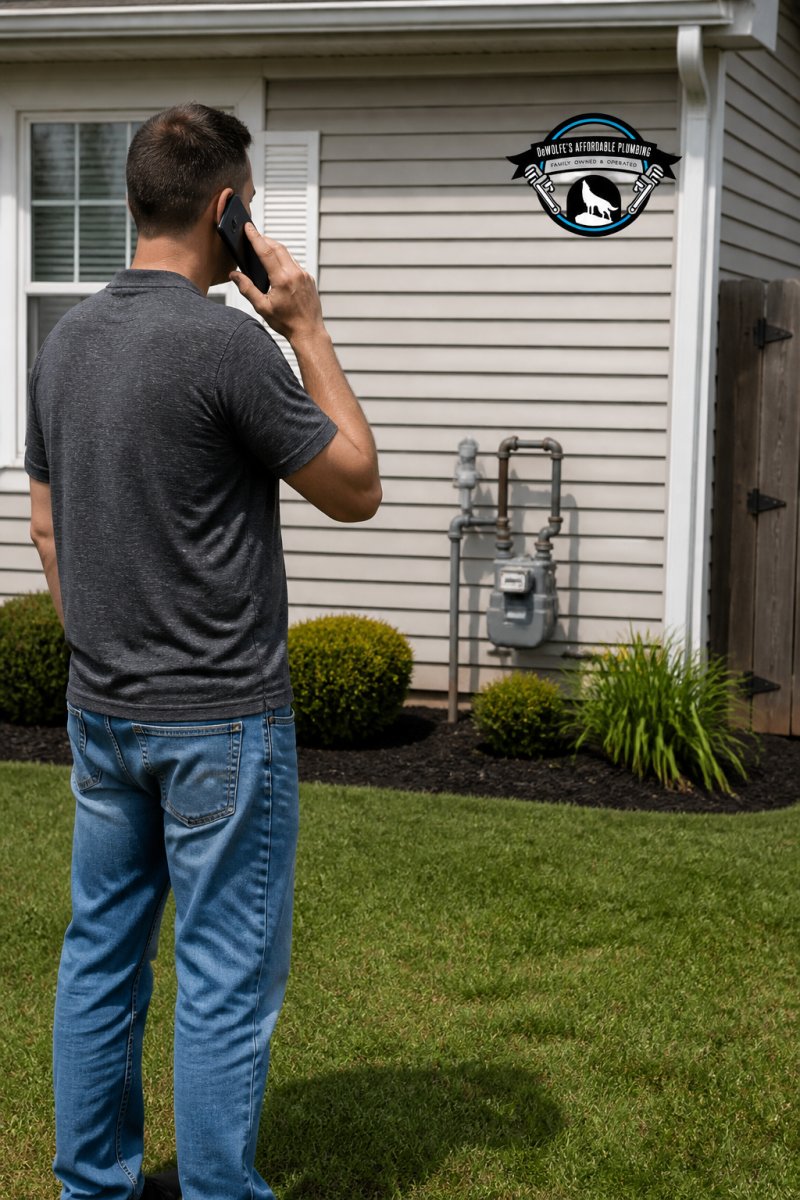
- Do not use your phone inside. Cell phones and landlines can produce a spark. Wait until you are outside and away from the building.
- Get to fresh air and put distance between you and the structure. A common rule of thumb is to move well beyond the property line or at least to a neighbor’s yard before making any call. If you can still smell gas, you are not far enough away.
- Call from outside. Dial 911 or your gas utility’s emergency line. Tell the dispatcher your address, that you smell gas, and whether anyone is still inside. Do not hang up until they tell you to.
- Shut off the gas meter only if it is outside and you can reach it safely. The valve is usually a quarter-turn ball valve on the meter riser. Turn it a quarter turn so the valve handle is perpendicular to the pipe. If the meter is inside, in a crawlspace, or behind a locked gate, leave it alone and let the utility handle it.
- Keep others away. If neighbors come outside, tell them to stay back and not to approach the house. Do not let anyone re-enter for pets, phones, or paperwork.
- Do not re-enter until a licensed professional clears the home. A utility or fire department technician will use a combustible gas detector to confirm the structure is safe. Until they say so, the house is off-limits.
If you smell gas and cannot reach the meter safely, call 911 or your gas utility’s emergency line first. A CDC fact sheet on carbon monoxide and gas safety recommends treating any suspected leak as an emergency until proven otherwise.
What Never to Do During a Suspected Leak
- Never try to find the leak yourself. Soapy water on a fitting is a technique for a technician, not a homeowner standing in a gas cloud.
- Never shut off a gas appliance on your way out. The valve is often near the appliance, which keeps you inside longer and may create a spark.
- Never assume the smell is gone because you opened a door. Mercaptan can fade as it disperses, but gas can still be accumulating.
- Never re-enter to open windows after you have left. Ventilation is the utility’s job once the source is controlled.
After the All-Clear: What Happens Next
Once a technician confirms the home is safe, they will typically locate the leak, isolate the affected section, and either repair or replace it. Before the gas is turned back on, the line is usually pressure-tested and the appliance connections are checked. Ask for the test results in writing. If the technician cannot explain what failed and what was fixed, get a second opinion before the meter is reopened.
Program your gas utility’s emergency number into your phone now. In a leak, you will not want to search for it.
Hiring a Certified Gas Plumber: Credentials That Matter
A certified gas plumber holds a state-issued license, carries liability insurance, and can pull the permits your jurisdiction requires. In Texas, gas work falls under the Texas State Board of Plumbing Examiners licensing rules, which requires a licensed master plumber to oversee gas piping work. Ask for the license number, verify it, and confirm the technician who shows up is working under that license.
Licensing, Insurance, and Warranty Questions to Ask
Before you book anyone, get answers to these:
- What is your master plumber license number?
- Are you insured for gas line work specifically?
- Will you pull the required permit, or is that on me?
- What does your warranty cover, and for how long?
- Do you provide a written on-site estimate before starting?
DeWolfe’s Affordable Plumbing holds Master License #M39597 and is fully licensed and insured. Every job comes with a full written warranty on labor, and residential customers get an on-site estimate before work begins. That combination is what separates a real gas contractor from a handyman with a wrench.
Ask for the license number and look it up yourself before the truck arrives. It takes two minutes and filters out most of the risk.
Gas Line Pressure Testing Services and Leak Diagnostics
Pressure testing confirms whether a gas line holds under load. A technician isolates a section of piping, pumps it to a specified pressure, and watches the gauge. If pressure drops, there’s a leak somewhere in that segment. From there, non-invasive location tools like acoustic sensors and combustible gas detectors pinpoint the source without tearing up walls or floors.
Leak diagnostics typically move through three stages:
| Stage | What Happens | Why It Matters |
|---|---|---|
| Pressure test | Line is isolated and pressurized | Confirms a leak exists |
| Detection | Sensors and acoustic tools trace the source | Avoids unnecessary demolition |
| Repair and retest | Damaged section is fixed, then re-pressurized | Verifies the fix holds |
Gas Line Repair and Installation: Permits, Codes, and Cost Factors
Gas line work is permitted work in nearly every jurisdiction, and the inspection that follows is what confirms the installation meets the plumbing and fuel gas codes your city has adopted. Skipping the permit saves a little up front and creates real problems at resale, during an insurance claim, or if a leak causes damage later. A licensed plumber pulls the permit, schedules the inspection, and stands behind the work.
How the Permit and Inspection Process Works
For most residential gas line work, the sequence looks like this:
- The licensed plumber applies for the permit with the city’s building or plumbing department before any work begins. In most jurisdictions, the permit must be pulled by the licensed contractor, not the homeowner.
- The work is performed to the adopted fuel gas code, which in most areas is a version of the International Fuel Gas Code or the International Residential Code.
- A rough-in inspection is scheduled before walls are closed or trenches are backfilled, so the inspector can see the piping, supports, and joints.
- A pressure test is witnessed or documented. The line is isolated, pressurized, and monitored to confirm it holds.
- A final inspection confirms the installation, appliance connections, and venting are complete and code-compliant.
- The utility reopens the meter only after the inspection is passed and the permit is closed.
What Drives the Cost of Gas Leak Repair
Pricing depends on several factors, so any honest estimate starts with an on-site assessment. The main drivers are:
- Location of the leak. An exposed line in a garage or attic is simpler to reach than one buried under a slab or behind a finished wall.
- Access. Lines behind drywall, under concrete, or in a crawlspace take longer to expose and restore. Restoration (drywall, paint, landscaping) is often a separate line item.
- Extent of damage. A single fitting or a short nipple is different from a corroded run of black iron pipe or a failed CSST section.
- Pipe material. Black steel, corrugated stainless steel tubing (CSST), and copper each have different repair methods and fitting costs.
- Permit and inspection fees. These are set by the jurisdiction and vary by scope.
- Repair versus replacement. Sometimes a section is patched; sometimes the whole run needs replacing, especially if corrosion is widespread.
- Time and after-hours rates. Emergency and overnight calls typically carry a higher labor rate than scheduled work.
The cheapest gas repair quote is rarely the cheapest job. Ask what is included: permit, inspection, pressure test, and warranty. Those four items are where cut-rate bids cut corners.
Code Compliance and Why It Matters at Resale
Even if your area does not require a permit for a minor repair, the work still has to meet the adopted fuel gas code. Common code points that show up in inspections include proper pipe support spacing, protection of CSST from lightning-induced damage, correct sediment trap installation at appliances, and approved shut-off valve locations. A licensed plumber works to these standards by default. A handyman may not know they exist.
Preventing Future Gas Leaks in Your Home
Most gas leaks start small: a fitting loosens, a section of pipe corrodes, or an appliance connection wears out. Routine maintenance catches these before they become emergencies. Schedule a professional inspection of your gas lines and appliances every few years, and immediately after any renovation that disturbs buried lines or gas appliances.
A few habits that help:
- Keep the area around your gas meter clear of landscaping and debris.
- Have gas appliances serviced on the manufacturer’s schedule.
- Install and test carbon monoxide alarms monthly.
- Know where your emergency shut-off valve is and how to use it.
- Call before you dig. Utility line location is free in most areas.
Frequently Asked Questions
What are the immediate steps to take if I smell gas in my home?
Leave the building right away and take everyone with you, including pets. Do not flip light switches, use a phone, or start a car until you are clear of the property. Once outside, call 911 and your gas utility from a safe distance. Then call a licensed gas leak repair service to find and fix the source. Never re-enter the home until a certified technician confirms it is safe.
How can I verify if a plumber is licensed for gas line repairs?
Ask for the license number and check it against your state’s plumbing licensing records. In Texas, gas work must be performed under a Responsible Master Plumber, and the company should carry both licensing and insurance. A legitimate provider will share credentials without hesitation. DeWolfe’s Affordable Plumbing operates under Master License #M39597 and is fully licensed and insured.
How do professionals detect hidden gas leaks in walls or underground?
Technicians combine several tools: electronic gas detectors that sense combustible gas in the air, non-invasive location tools that trace piping behind walls and under slabs, and pressure testing that confirms whether a line holds its charge. If a section fails, the technician isolates it to pinpoint the leak. This approach avoids unnecessary demolition and speeds up the repair.
Is it safe to stay in the house while waiting for gas leak repair?
No. If you smell gas, suspect a leak, or a carbon monoxide alarm sounds, evacuate immediately and stay out until a professional clears the property. Gas can accumulate quickly in enclosed spaces, and a spark from an appliance, switch, or phone can ignite it. Call 911 and your gas utility first, then arrange emergency repair from a licensed provider before returning.
A gas leak is one of the few home problems where the wrong first move can be catastrophic. When you need licensed gas leak repair services in Wylie, DeWolfe’s Affordable Plumbing brings licensed and insured technicians, transparent up-front pricing, a full written warranty on all labor, and 24/7 emergency availability to every call. Call (972) 632-9935 to schedule an on-site estimate or emergency response.