
Residential Plumbing Maintenance Tips for 2026
Table of Contents
- Why Residential Plumbing Maintenance Matters
- How to Detect a Water Leak at Home
- How to Prevent Clogged Drains
- Water Heater Maintenance Tips
- Home Plumbing Maintenance Checklist
- When to Call a Professional Plumber
- Frequently Asked Questions
Last Updated: October 12, 2026
Why Residential Plumbing Maintenance Matters
A leak hidden behind your walls can cause thousands in structural damage and mold remediation before you spot the first sign. That’s why residential plumbing maintenance isn’t optional, it’s insurance against expensive emergencies.
At DeWolfe’s Affordable Plumbing, we’ve seen countless homes where routine maintenance would have prevented costly repairs. A small drip becomes a rotted subfloor in six months; a slow drain becomes a backed-up sewer line next year.
Think of your plumbing like a vehicle: you wouldn’t skip oil changes and expect the car to run well. Regular inspections catch problems early, extend the life of your water heater, protect your foundation, and keep your water bill reasonable.
This guide shows you exactly what to check, when to check it, and when to call a professional.
How to Detect a Water Leak at Home
The best time to find a leak is before it causes visible damage. Most leaks start small and hidden, so hunt them down systematically.
Visible Leak Inspection
Start with the places you can see. Water always leaves clues.
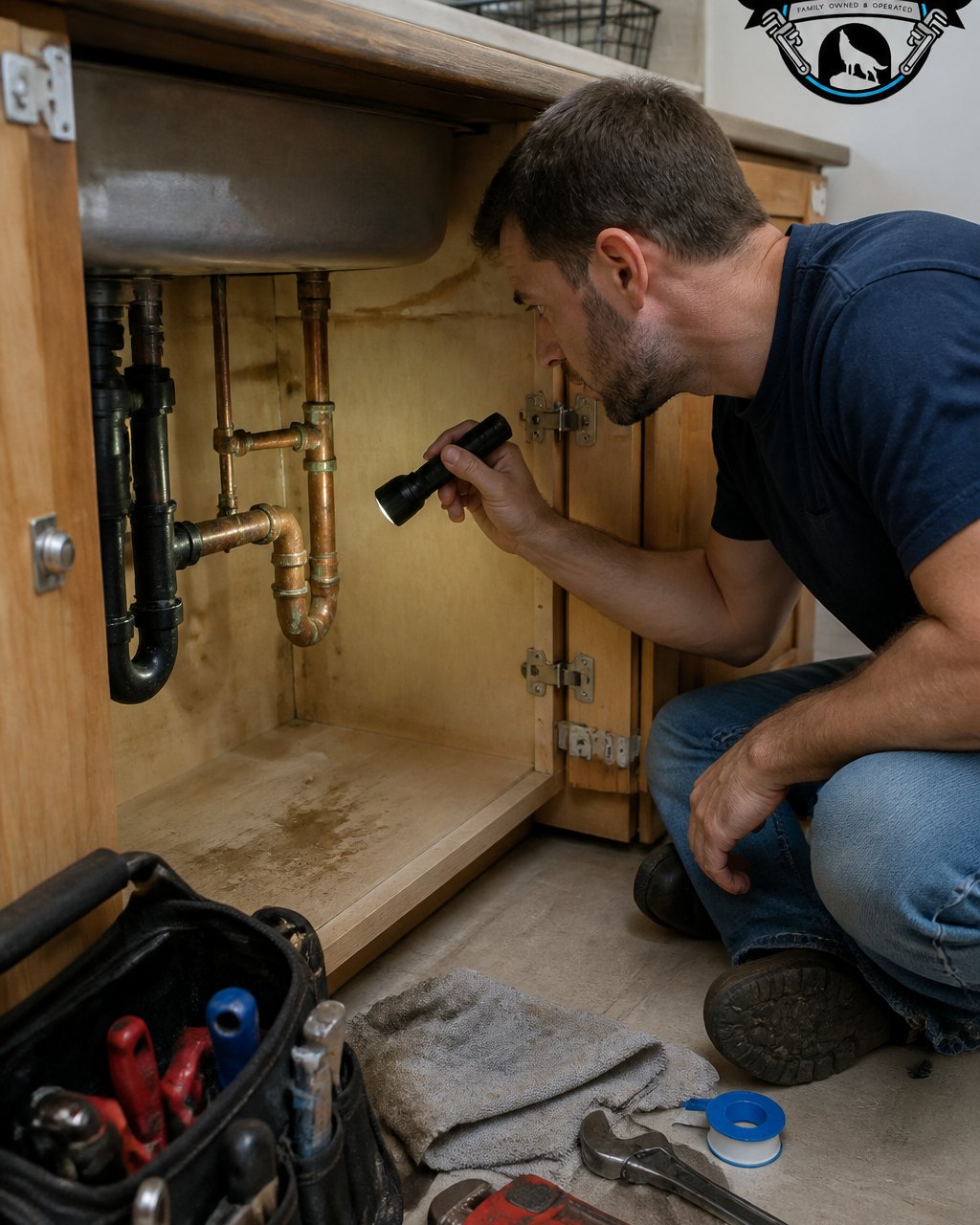
Check under every sink in your home. Look for:
- Wet spots or water stains on the cabinet floor
- Soft or discolored wood
- Mold or mildew smell
- Drips or puddles
Grab a flashlight and look closely, many leaks hide in plain sight.
Check behind toilets, where the water line meets the tank. Feel the floor around the base; if it’s soft or squishy, you have a leak.
Inspect visible pipes in basements and attics. Look for:
- Rust or corrosion
- Water stains on surrounding surfaces
- Puddles or dampness
- Discolored or warped insulation
Outdoor faucets and hose connections freeze and crack in winter, check them each spring.
Silent Leak Testing
Some leaks happen inside walls or under your foundation. You won’t see them, but you can test for them.
The toilet leak test is easiest: put food coloring in the tank, wait 15 minutes without flushing, and if color appears in the bowl, your toilet is leaking.
Check your water meter. This reveals leaks you can’t see. Here’s how:
- Turn off all water in your home
- Note the meter reading
- Wait 2 hours without using water
- Check the meter again
If the reading changed, you have a leak somewhere in your home plumbing system. Call a professional to locate it.
Watch your water bill. A sudden spike versus the same month last year often signals a hidden leak worth investigating.
How to Prevent Clogged Drains
Clogs rarely appear overnight. Hair, soap scum, grease, and food particles build up on pipe walls for months until the opening narrows to a trickle. The habits below are organized by effort level, so you know when a slow drain has crossed from nuisance to urgent.
Daily Habits (Seconds Per Day)
- Use drain screens in every sink and shower. A basic mesh or basket strainer catches hair and debris before it enters the trap. Empty it into the trash weekly, not the sink.
- Never pour grease, oil, or butter down any drain. Grease cools and solidifies on pipe walls, then traps everything that follows. Pour it into a can, let it harden, and throw it away.
- Scrape plates into the trash before rinsing. Even a garbage disposal struggles with fibrous or starchy scraps.
- Run hot water for 30 seconds after each use of a kitchen sink to move residue through the trap.
Weekly and Monthly Tasks (Minutes Per Month)
Flush each drain with hot water. Pour a full kettle slowly down kitchen and bathroom drains to melt light grease and soap film.
Run a baking-soda-and-vinegar treatment monthly on heavily used drains: half a cup of baking soda, half a cup of white vinegar, wait 15 minutes, then flush with hot water.
Clean pop-up stoppers and strainers. Pull each bathroom stopper and rinse off the hair and soap scum on the stem, two minutes prevents the most common bathroom clog.
What Never Goes Down a Drain
- Coffee grounds (they pack like sediment)
- Eggshells and pasta or rice (they swell and bind)
- Fibrous vegetables and potato peels
- Dental floss and cotton swabs
- Paper towels, facial tissues, and “flushable” wipes, which do not break down and are a leading cause of municipal sewer blockages
- Cat litter, even the “flushable” kind
If your household has long hair, a $5 hair catcher in the shower drain is the single highest-return purchase you can make. It prevents the most common and most stubborn bathroom clog.
Clearing a Slow Drain (10 to 30 Minutes)
A drain that is slow but still moving is a warning. Act now, before it stops completely.
Step 1: Boiling water. Pour a full kettle down the drain in two or three stages. This alone clears many slow kitchen drains.
Step 3: Drain snake. Feed a hand-crank snake in until you feel resistance, then crank and pull. This is the right tool for hair clogs in bathroom drains.
Skip Chemical Drain Cleaners
Caustic and acidic drain cleaners can crack older pipes, damage disposals, and burn skin if they splash. They also rarely clear the root cause, they punch a channel that refills within weeks. Mechanical methods are safer and more effective.
Know the Risk Level
- Routine: Slow single drain, no odor, no backup. Use the steps above.
- Urgent: Multiple slow drains, gurgling sounds, or a faint sewer smell. Call a plumber within a day or two.
- Emergency: Sewage backing up into a tub or floor drain, or water rising in a basement drain. Stop using water in the home and call immediately.
Prevention is cheap and fast: screens, no grease, and a weekly hot-water flush. When a drain does slow down, work through boiling water, plunger, and snake before reaching for a chemical cleaner, and treat multiple slow drains as a main-line warning.
Water Heater Maintenance Tips
Your water heater runs every day, and a small maintenance habit prevents catastrophic failure, a ruptured tank can release dozens of gallons before you notice. The tasks below are ordered by risk.
Routine Tasks (Do These Yourself)
Flush the tank annually. Sediment settles on the tank floor and insulates the burner or heating element, forcing the unit to run longer. Most manufacturers recommend a yearly flush; budget 30 to 45 minutes.
- Turn off the power at the breaker (electric) or set the gas valve to pilot (gas).
- Let the water cool for at least 30 minutes.
- Attach a garden hose to the drain valve at the bottom and run it to a floor drain or outside.
- Open the valve and let water run until it comes out clear.
- Close the valve, disconnect the hose, and refill the tank before restoring power or relighting the pilot.
Never drain a tank while the power or burner is still on. A dry heating element or empty tank can crack or overheat within seconds.
Check the temperature setting. Many units ship near 140°F; the U.S. Department of Energy recommends 120°F for most households, reducing standby heat loss and scalding risk while still supplying plenty of hot water. If anyone has a compromised immune system, consult a professional before going below 120°F.
Inspect the anode rod every year. This sacrificial metal rod corrodes in place of the tank lining; once it’s heavily pitted or coated in calcium, the tank starts rusting from the inside.
Test the temperature-and-pressure relief valve. Lift the lever briefly and let it snap back. You should hear water discharge into the drain tube.
Urgent Signs (Act Within Days)
- Rumbling or popping during heating means sediment is trapping water against the burner. Flush immediately; ignoring it shortens tank life.
- Moisture or rust streaks around the base or fittings. A slow weep can become a full rupture.
- Discolored hot water that clears after a minute often points to a failing anode rod or internal corrosion.
- A pilot that keeps going out on a gas unit can indicate a failed thermocouple, a cheap part but one that requires gas-line work.
When to Call a Professional
Do not attempt these yourself:
- Replacing the anode rod if the fitting will not budge
- Any work on gas supply lines, the burner assembly, or the flue
- Replacing the T&P relief valve
- Moving or re-piping the unit
- Any repair on a tank that is leaking from the shell itself, replacement is the only safe option
Document What You Find
Log the model number, serial number, installation date, and each flush date. That record tells the technician whether the unit is still under warranty, most tank warranties run 6 to 12 years and require proof of annual maintenance for a full claim.
A 30-minute annual flush and a quick anode-rod check are the two habits that most extend tank life. Everything involving gas, the relief valve, or a leaking shell belongs to a licensed plumber.
Home Plumbing Maintenance Checklist
Print this checklist and post it on your refrigerator, checking items off as you complete them.
Seasonal Maintenance Tasks
Spring:
- Inspect outdoor faucets for winter damage
- Check hose connections for leaks
- Run water through outdoor drains
- Test sump pump if you have one
- Check for water stains in basement or crawl space
Summer:
- Monitor water usage for unexpected spikes
- Test toilet for silent leaks (food coloring test)
- Inspect visible pipes for corrosion
- Check under sinks for moisture
Fall:
- Drain and store garden hoses
- Shut off outdoor water if you live in a freezing climate
- Insulate exposed pipes in unheated areas
- Clean gutters and downspouts
Winter:
- Let faucets drip slightly on freezing nights to prevent frozen pipes
- Open cabinet doors under sinks to allow warm air circulation
- Check for leaks after freezing temperatures
- Inspect basement for new moisture
Annual Inspection Points
| Task | Frequency | Time Required |
|---|---|---|
| Flush water heater | Once per year | 30-45 minutes |
| Inspect anode rod | Once per year | 15 minutes |
| Test toilets for silent leaks | Once per year | 10 minutes |
| Check visible pipes for corrosion | Once per year | 20 minutes |
| Inspect under-sink areas | Once per year | 15 minutes |
| Review water bill for spikes | Monthly | 5 minutes |
Mark these dates on your calendar. Consistency prevents emergencies.
When to Call a Professional Plumber
Some jobs belong in professional hands. Knowing when to call saves time and prevents costly mistakes.
Call a professional if you find:
- Active leaks anywhere in your home
- Soft or squishy floors near plumbing
- Persistent mold or mildew
- Water stains on ceilings or walls
- Frozen pipes
- Backed-up drains that don’t respond to a plunger or snake
- No hot water
- Extremely low water pressure
- Gas smell near water lines
DeWolfe’s Affordable Plumbing offers 24/7 Emergency service, with on-site estimates for residential customers before work begins.
Don’t attempt slab leak detection on your own. These leaks run under your foundation and require professional equipment to locate.
Residential plumbing maintenance prevents emergencies that disrupt your life and drain your wallet.
When you need professional help, DeWolfe’s Affordable Plumbing is ready.
Frequently Asked Questions
How often should you inspect your home’s plumbing?
A comprehensive residential plumbing inspection should happen annually, ideally before winter or spring when stress on systems peaks. Check visible pipes, fixtures, and water heater monthly for leaks or corrosion. Test toilets for silent leaks quarterly using food coloring. If you notice changes in water pressure, slow drains, or moisture stains, inspect immediately rather than waiting for your scheduled check.
What plumbing maintenance can homeowners do themselves?
Homeowners can safely perform leak inspections, drain cleaning with screens and plungers, water heater flushing (if you follow manufacturer instructions), outdoor faucet winterization, and pipe insulation in unheated areas. Avoid chemical drain cleaners; use mechanical methods or hot water instead. For gas line work, slab leaks, water line repairs, or pressure issues, contact a licensed plumber to prevent safety hazards and code violations.
How can you tell if your home has a hidden water leak?
Check your water meter before and after two hours of no water use; any change indicates a hidden leak. Look for unexplained increases in your water bill, soft spots in flooring, discoloration on ceilings or walls, or musty odors in basements and attics. Listen for running water sounds when all fixtures are off. Inspect under sinks, behind toilets, and around the water heater for moisture. If you suspect a slab leak under your foundation, professional leak detection equipment is necessary.
What do plumbers recommend to keep drains clean?
Avoid pouring grease, food scraps, and non-flushable items down drains. Use drain screens to catch debris. Run hot water after each use and flush drains weekly with boiling water. For slow drains, a plunger or plumbing snake works better than chemical cleaners, which can damage pipes. Regular drain maintenance prevents clogs and extends the life of your drainage system. Professional drain clearing removes stubborn blockages safely.