
Signs of Slab Leak Under Foundation: Detection Guide
Table of Contents
- What Is a Slab Leak and Why It Matters
- Common Signs and Symptoms of a Slab Leak
- How to Tell If Your Water Bill Is High From a Leak
- Slab Leak Detection Methods You Can Use
- Foundation Water Damage Symptoms to Watch For
- Why Slab Leaks Occur: Common Causes
- What to Do If You Suspect a Slab Leak
- Frequently Asked Questions
Last Updated: October 4, 2026
What Is a Slab Leak and Why It Matters
A slab leak occurs when water pipes beneath your home’s concrete foundation develop cracks or holes, allowing water to escape into the soil below. Unlike leaks you can see under a sink or behind a wall, slab leaks happen out of sight, which makes them especially dangerous. Water seeping into the ground can weaken your foundation, damage structural integrity, and create ideal conditions for mold growth.
Detecting a slab leak early saves thousands in foundation repairs. This guide covers the telltale signs of slab leak under foundation, detection methods you can try yourself, and when to call a professional.
Common Signs and Symptoms of a Slab Leak
Many signs are subtle at first, but when multiple warning signs appear together, the signs of slab leak under foundation become clear and a professional inspection is needed. Here are the most common indicators:
The Sound of Running Water
Hearing water running through pipes when no one is using water is a clear sign. Listen near walls, basements, or crawl spaces. This sound indicates water flowing through a cracked pipe beneath the concrete. Consistent noise, especially at night, signals a problem.
Warm or Damp Spots on Flooring
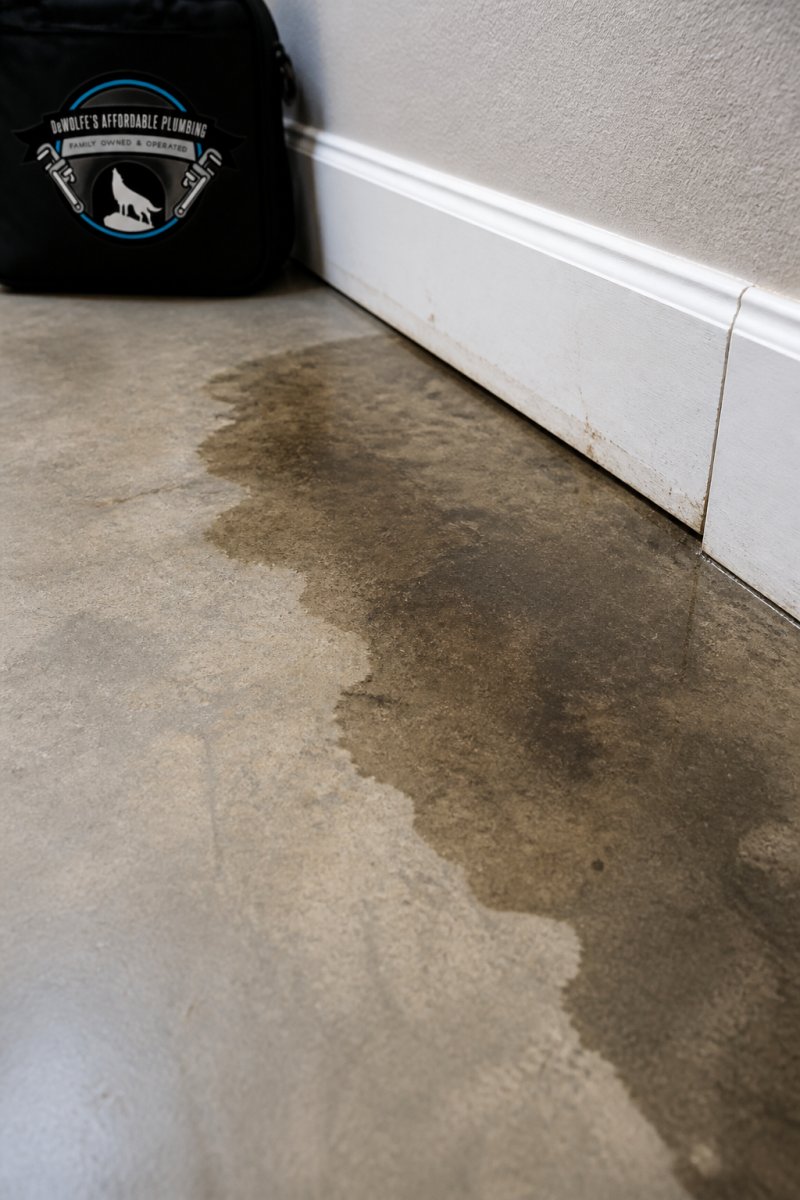
A slab leak often creates warm patches on tile, carpet, or hardwood, especially where hot water lines run. Damp spots, wet carpet or discolored tile, are even more telling, as water pools beneath the concrete and works upward through the slab.
Cracks in Walls or Foundation
As water erodes soil beneath your foundation, the concrete settles unevenly, creating stress cracks in drywall, tile grout, and the foundation. Look for horizontal cracks in basement walls, diagonal cracks spreading from corners, new cracks appearing rapidly, and separation between walls and baseboards. A slab leak creates a pattern of multiple cracks developing over weeks or months.
How to Tell If Your Water Bill Is High From a Leak
A sudden spike in your water bill is often the first clue that something is wrong.
Confirming a Leak via Water Meter
Turn off all water and close the main shut-off valve. Wait 30 minutes, then check the meter. If it has changed, water is leaking somewhere. Compare your bill to previous months, a continuous leak can add 1,000+ gallons monthly. Look for increases that can’t be explained by seasonal changes or new appliances. When a high bill appears alongside other signs, damp floors, cracks, or running water sounds, a slab leak is likely.
What a Slab Leak Costs You (and What Insurance May Cover)
Detection and repair costs vary depending on the location and method required. Most homeowners policies do not cover slab leaks from normal wear or corrosion, though coverage may apply for sudden accidental events. Check your policy or contact your insurer. Early detection prevents compounding foundation damage that could multiply repair costs.
Comparing Your Usage to Establish a Baseline
Review 12 months of prior bills to establish your average monthly usage. An unexplained increase suggests a leak; a significant spike almost always indicates active water loss. Document these comparisons when calling a plumber, it helps prioritize detection and confirms repairs worked.
Slab Leak Detection Methods You Can Use
Before calling a professional, you can try a few detection approaches yourself. These won’t pinpoint the exact location, but they help confirm whether a leak exists.
DIY Detection Approaches
Listen for water movement. Turn off all appliances and faucets, then listen near different areas. Moving water creates a hissing or rushing sound. Check for moisture. Look for soft soil spots, unusually green yard patches, or damp ground outside, these often sit above a leaking pipe. Monitor your water meter. A rising meter with no water use confirms a leak. Inspect visible pipes. Water stains, mineral deposits, or dripping in basements, crawl spaces, or under sinks indicate problems, though these are usually not slab leaks.
Professional Detection Tools
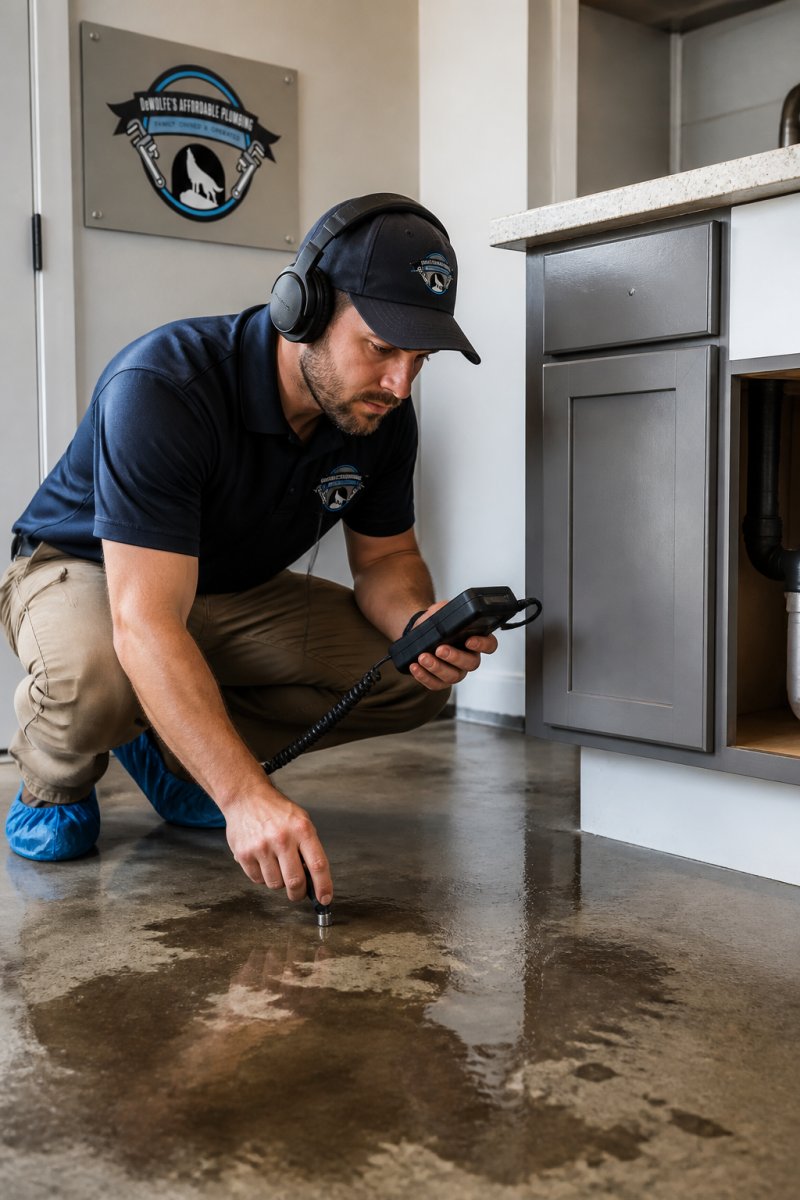
Professionals use specialized equipment: Thermal imaging cameras detect temperature differences in flooring to pinpoint problem zones. Acoustic leak detection amplifies water sounds to narrow down location. Pressure tests measure system pressure to isolate affected pipe sections. Dye testing confirms whether water is leaking into the foundation. DeWolfe’s Affordable Plumbing uses these tools to locate leaks accurately and plan repairs with precision.
Foundation Water Damage Symptoms to Watch For
Beyond the immediate signs of a leak, watch for broader foundation damage. This is where a slab leak becomes truly serious, and where understanding the mechanics helps you grasp why speed matters.
How Water Erodes Foundation Support
Your concrete slab rests on a base of compacted soil. When a pipe leaks, water saturates that soil, weakening its ability to support weight. Over weeks or months, this erosion creates voids, empty spaces, beneath the slab. The concrete, no longer fully supported, begins to settle unevenly.
This uneven settling is the root cause of most secondary damage. One section of your home may drop 1-2 inches while another remains stable. This differential movement stresses every structural element connected to the foundation: walls, beams, door frames, and the connections between floors.
Visible and Structural Warning Signs
Heaving or settling. Your foundation should stay level. If one section of flooring is noticeably higher or lower than another, the foundation is shifting. Walk across your home with a marble or ball, it should not roll. If it does, uneven settling is occurring.
Doors and windows that stick or jam. As the foundation settles unevenly, door and window frames shift out of square. Doors that once opened smoothly suddenly bind. Windows become hard to close or won’t seal properly.
Visible foundation cracks. Small cracks are normal in concrete. But a slab leak creates a specific pattern: multiple new cracks developing over weeks or months, often radiating from a central point above the leak. Look for:
- Horizontal cracks in basement walls (indicating lateral pressure from soil movement)
- Diagonal cracks spreading from corners (classic sign of differential settling)
- Cracks wider than 1/8 inch (indicates active movement, not just age)
- Cracks that grow visibly week to week (measure with a ruler and date them)
Separation between walls and baseboards or trim. As the foundation shifts, walls move independently of the slab. You’ll see gaps appearing where the wall meets the floor, or baseboards pulling away from walls. These gaps often appear first in corners and along exterior walls.
Warped or buckling flooring. Wood floors cup (edges higher than center) or buckle (visible humps). Tile becomes loose and may crack. Laminate or vinyl separates at seams. These changes happen because moisture from the leak is affecting the subfloor, causing it to expand unevenly.
Mold or musty odors. Moisture beneath your home creates the perfect environment for mold growth. If you smell a damp, earthy odor in your basement or lower levels, moisture is present.
Why Timing Matters: The Compounding Damage Curve
A slab leak that goes undetected for 3-6 months typically causes minor cosmetic damage: a few cracks, slightly damp carpet, a sticky door. But the same leak left untreated for 12+ months can cause:
- Structural settling severe enough to require foundation underpinning (jacking and re-supporting the slab), which costs $10,000-$30,000+
- Subfloor rot that requires replacement of joists and flooring
- Mold remediation if colonies have established in crawl spaces or wall cavities
- Potential condemnation if settling becomes severe enough to compromise load-bearing walls
The cost to repair a slab leak detected early is typically significantly less than the cost to repair the same leak after months of foundation damage. This is why professionals emphasize early detection, it’s not just about stopping the water; it’s about preventing a minor repair from becoming a major structural project.
Any of these symptoms warrant a professional inspection. Foundation damage compounds quickly once water infiltration begins, and the longer you wait, the more expensive and invasive the repairs become.
Why Slab Leaks Occur: Common Causes
Understanding what causes slab leaks helps you prevent future problems.
Pipe corrosion. Copper and galvanized steel pipes corrode over time, especially in acidic soil. Pinhole leaks develop slowly, then fail suddenly.
Water pressure issues. Excessive water pressure stresses pipes. High pressure forces water through small cracks, enlarging them over time.
Soil movement. Shifting soil beneath your foundation puts stress on pipes. Freeze-thaw cycles, drought, and heavy rain all cause soil to expand or contract, bending pipes.
Poor installation. Pipes laid with sharp bends, inadequate support, or direct contact with concrete are prone to failure. Friction and pressure concentrate at these weak points.
Age. Homes built before 1980 often have galvanized steel pipes. These corrode predictably after 40-50 years. If your home is older and you’re seeing leak signs, age is likely the culprit.
Chemical damage. Acidic groundwater and certain soil compositions accelerate corrosion. Areas with naturally acidic soil see more slab leaks.
What to Do If You Suspect a Slab Leak
Finding a slab leak early makes repair simpler and cheaper. Here’s the action plan:
Step 1: Confirm the leak. Use the DIY detection methods above. Check your water meter, listen for running water, and look for damp spots. Document what you find.
Step 2: Turn off water to affected areas. If you identify the general location, you may be able to isolate it using shut-off valves. This prevents further water damage while you arrange repairs.
Step 3: Call a professional. Slab leak repair requires specialized equipment and expertise. DeWolfe’s Affordable Plumbing offers same-day or 24-hour response to leak calls. We’ll locate the leak precisely and discuss repair options with transparent, up-front pricing.
Step 4: Plan the repair. Depending on the leak location and your home’s layout, repairs might involve rerouting pipes above ground, patching the leak, or replacing the affected section. Your plumber will explain options and costs before starting work.
Step 5: Monitor after repair. Once repairs are complete, watch your water bill and check for returning symptoms. Our full written warranty covers all labor performed, so you’re protected if issues resurface.
| Detection Method | Best For | Time Required | Accuracy |
|---|---|---|---|
| Water meter test | Confirming leak exists | 30 minutes | High |
| Listening for sound | Initial detection | 10 minutes | Medium |
| Visual inspection | Finding damp spots | 20 minutes | Medium |
| Thermal imaging | Locating hot water leaks | 1-2 hours | Very High |
| Acoustic detection | Pinpointing exact location | 1-2 hours | Very High |
| Pressure testing | Isolating problem section | 30-45 minutes | High |
A slab leak under your foundation is serious, but catching it early makes all the difference. The signs, running water sounds, damp floors, cracks, and high water bills, tell you something is wrong before structural damage becomes irreversible. If you’re seeing multiple warning signs, don’t wait. Call DeWolfe’s Affordable Plumbing at (972) 632-9935 for expert slab leak location and repair. We provide transparent estimates, licensed technicians, and a full warranty on all work.
Frequently Asked Questions
What are the first signs of a slab leak?
Early signs include unexplained increases in your water bill, the sound of running water when no fixtures are in use, warm spots on your floor, and damp areas on the concrete slab. You may also notice cracks appearing in walls or the foundation, or warped flooring. These symptoms indicate water is escaping from pipes beneath your concrete slab and require prompt attention to prevent structural damage.
Can a slab leak cause foundation damage?
Yes. Continuous water infiltration from a slab leak weakens the soil beneath your foundation through moisture saturation and erosion. This causes uneven settling, foundation heaving, and structural cracks. Over time, hydrostatic pressure from pooling water can compromise the integrity of your concrete slab and surrounding foundation. Early detection prevents costly repairs and protects your home’s structural stability.
How do plumbers detect a leak under a concrete slab?
Professional plumbers use thermal imaging cameras to detect temperature variations in the slab, acoustic leak detection equipment to pinpoint the sound of escaping water, and moisture meters to measure water content in concrete and soil. Some use specialized listening equipment or trace gases to locate the exact leak point. These professional detection methods are far more accurate than DIY approaches and help determine the best repair strategy.
Does homeowners insurance cover slab leaks?
Coverage depends on your specific policy and the cause of the leak. Most standard homeowners insurance policies exclude gradual leaks from wear and corrosion of plumbing pipes. However, sudden damage from a burst pipe or unexpected rupture may be covered. Review your policy details and contact your insurance agent to understand your coverage. Some policies offer optional water damage riders that extend protection.