
Why Your Kitchen Sink Smells Like Rotten Eggs
Table of Contents
- Why Does My Kitchen Sink Smell Like Rotten Eggs?
- How to Get Rid of Rotten Egg Smell in Kitchen Sink
- Clean Kitchen Sink P-Trap: Step-by-Step
- Rotten Egg Smell in Tap Water vs. Drain Odor
- Sewer Gas, Dry Traps, and Venting Problems
- When to Call a Plumber for a Smelly Drain
- Preventing Future Sink Odors
- Frequently Asked Questions
Last Updated: October 19, 2026
Why Does My Kitchen Sink Smell Like Rotten Eggs?
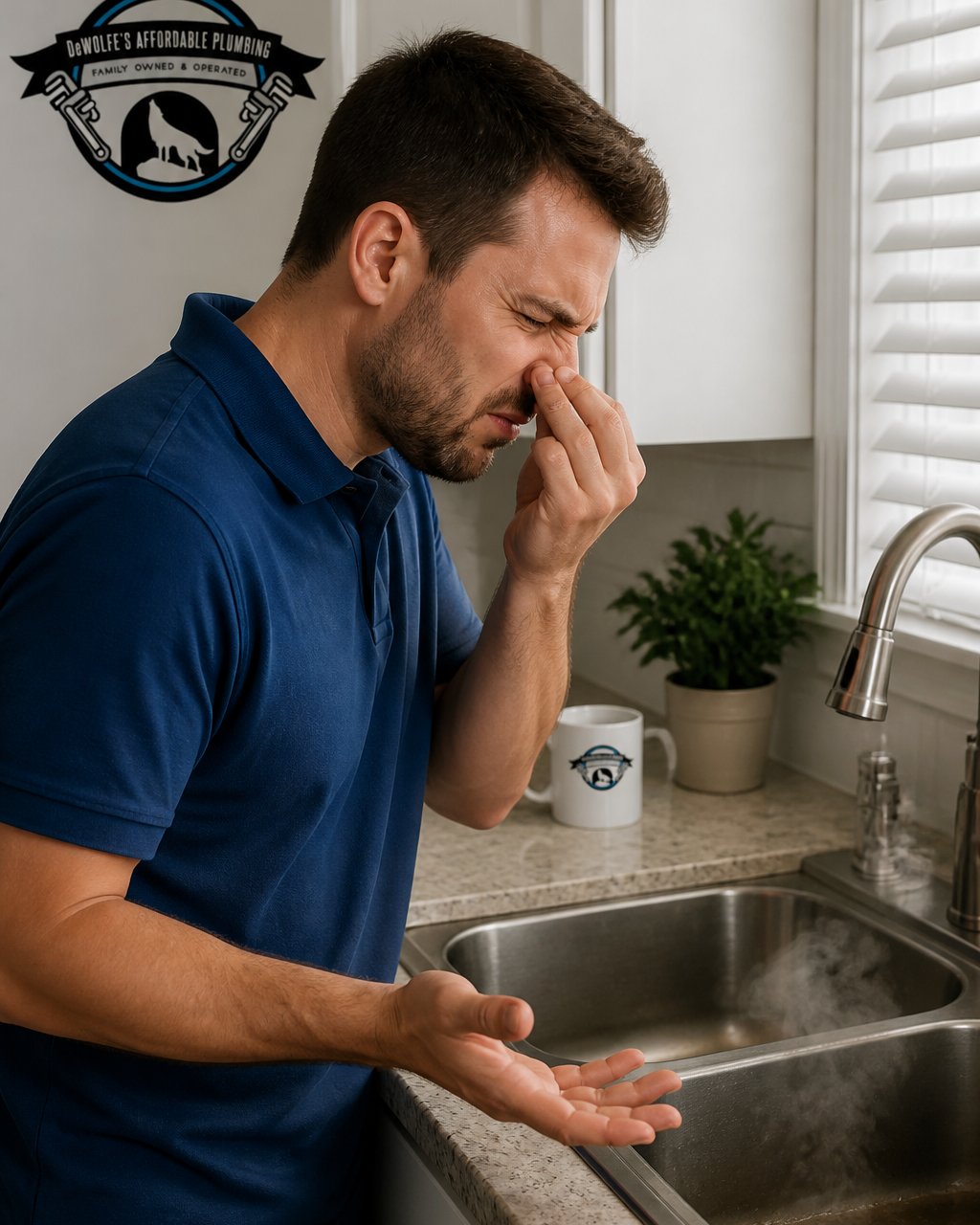
That kitchen sink smell is hydrogen sulfide gas, and it almost always comes from bacteria breaking down food and grease inside the drain, not from the water itself.
Hydrogen sulfide is a gas produced when sulfate-reducing bacteria feed on organic matter in a low-oxygen environment. In a kitchen drain, that environment is the slimy film coating the inside of your pipes.
Here is the part most guides get wrong: people pour bleach down the drain, the smell vanishes for two days, then it comes back worse. Bleach kills the surface bacteria but leaves the food source untouched, so the colony regrows fast.
Below, we walk through exactly how to find the source and fix it for good. First, let’s cover what’s actually causing the problem.
Common Causes of a Sulfur Smell in the Drain
Most drain odors trace back to one of five culprits:
- Food debris and grease coating the pipe walls and feeding bacteria
- A dirty garbage disposal with residue trapped under the baffle
- A clogged or smelly dishwasher drain line connected to the sink
- A dry P-trap that lets sewer gas rise into the room
- A damaged or improperly vented pipe allowing gas backflow
The smell gets stronger after you run hot water because heat releases trapped gas. If it only appears when you run the tap, the source is likely the drain. If it appears even when the sink is idle, suspect the trap or venting.
Never mix bleach with ammonia-based or acidic cleaners in a drain. The combination can release toxic gas in an enclosed cabinet space. Use one cleaner, flush it fully, then wait before trying another.
How to Get Rid of Rotten Egg Smell in Kitchen Sink
The fastest fix is a three-step flush-and-scrub routine that clears the bacteria’s food supply, not just the smell. Set aside about 30 minutes and gather a few basics first.
What you’ll need:
- Rubber gloves and eye protection
- A bucket
- Dish soap and a stiff brush
- Baking soda and white vinegar
- A plumber’s snake or drain brush
- An adjustable wrench
Work through the steps below in order. Stop as soon as the smell clears.
Step 1: Flush the Drain and Disposal
Start by clearing loose debris. Run hot water for a full minute, then pour half a cup of baking soda down the drain followed by one cup of white vinegar. Let it fizz for five minutes, then flush with hot water for another minute.
If you have a disposal, run it with cold water and a few ice cubes to knock buildup off the blades. Cold water keeps grease solid so it flushes out instead of coating the pipes.
Expected result: the smell should drop noticeably. If it’s still strong, move to step two.
Step 2: Scrub the Sink and Disposal Baffle
The baffle is the rubber flap inside your disposal opening, and it traps more gunk than any other part of the sink. Lift the edges with a gloved finger and scrub underneath with dish soap and a stiff brush.
Scrub the sink basin, the drain flange, and the overflow hole too. Rinse everything with hot water. A common mistake is skipping the overflow, which collects food film and feeds bacteria all on its own.
Step 3: Clean the P-Trap and Dishwasher Line
If the smell persists, the buildup is deeper in the plumbing. The P-trap is the curved pipe under the sink that holds water and blocks sewer gas. Place a bucket underneath, unscrew the slip nuts by hand or with a wrench, and empty the trap into the bucket.
Scrub the inside of the trap with a bottle brush and hot soapy water, then reinstall it. Run the dishwasher on a hot cycle with a cup of vinegar in the bottom rack to clear its drain line.
Clean Kitchen Sink P-Trap: Step-by-Step
Cleaning the P-trap is the step people skip, and it’s usually where the real problem lives. Here’s the safe way to do it without a mess.
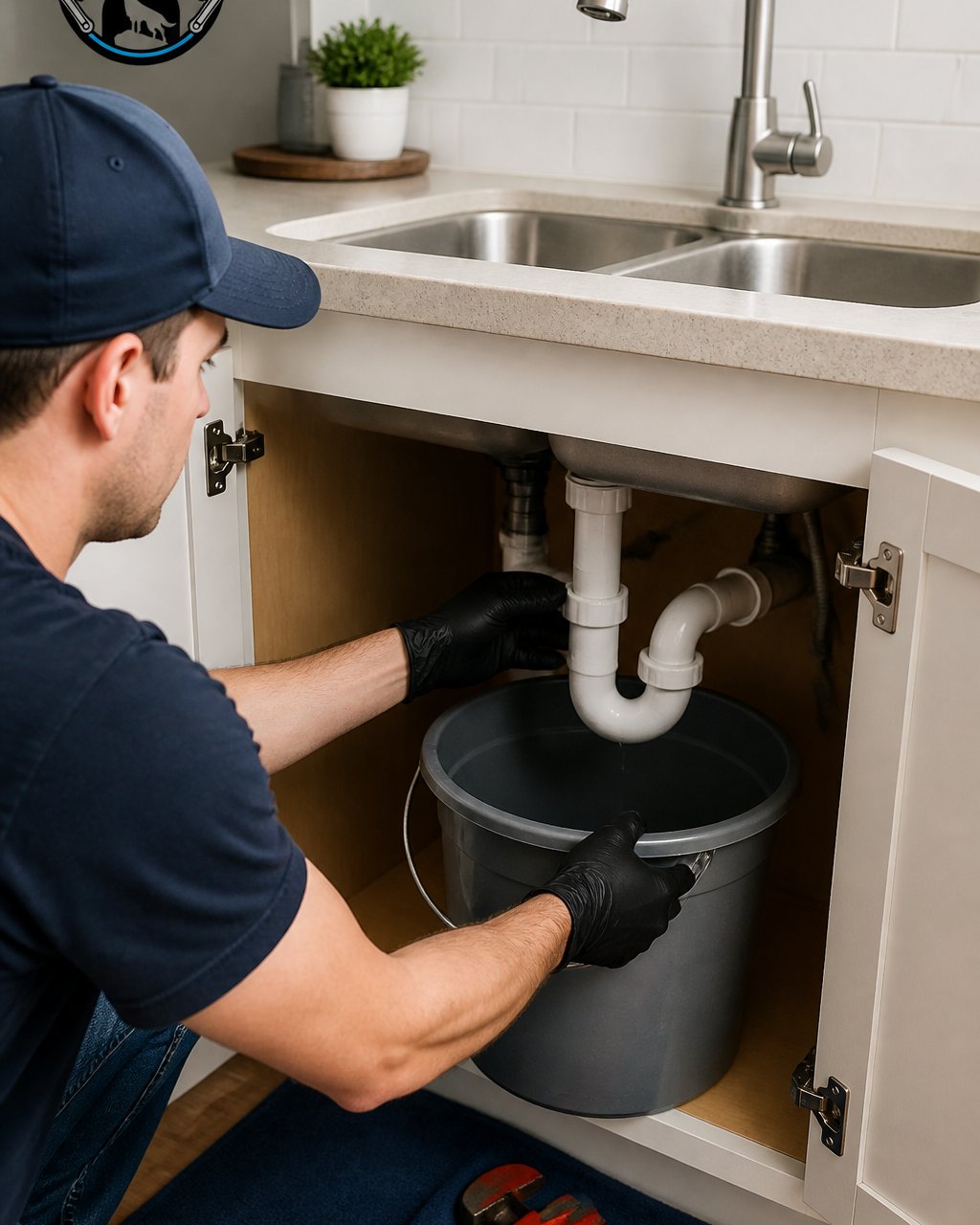
- Clear the cabinet and lay a towel down to catch drips.
- Place the bucket directly under the trap.
- Loosen the slip nuts on both sides of the trap by hand first.
- Remove the trap and dump the contents into the bucket.
- Scrub inside with a bottle brush and hot soapy water.
- Check the washers for cracks and replace any that look worn.
- Reinstall and hand-tighten, then run water to test for leaks.
Most traps come apart by hand. If a nut won’t budge, use an adjustable wrench, but don’t force it hard enough to crack plastic fittings.
Snake the drain while the trap is off. It’s the easiest access point you’ll get, and it clears the buildup that causes both odors and slow drains at the same time.
Rotten Egg Smell in Tap Water vs. Drain Odor
Telling these two apart changes everything about the fix, and most guides stop at a single glass test.
The glass test. Fill a glass from the tap, step away from the sink, swirl it, and smell it.
- Smell stays in the glass → the problem is your water supply or water heater
- Smell disappears once you leave the sink → the problem is the drain
The hot-versus-cold test. Run cold water into one glass and hot water into another, let both sit for a minute, and compare.
- Only hot water smells → the water heater is the likely source. Bacteria can grow in a tank that sits at a low thermostat setting, and the magnesium anode rod can react with sulfate in the water to produce hydrogen sulfide. Raising the tank temperature and having the anode checked are the usual next steps, and a licensed plumber should handle both, the same crew that handles water heater service and replacement.
- Only cold water smells → the issue is in the household supply or the service line, not the heater. Call your water utility and ask about local water quality and whether the system has had recent changes.
- Both hot and cold smell → the supply itself is the source. The utility is the right first call, and a water test is the right second step.
The appliance isolation test. If the glass test points to the drain, narrow it further before you clean anything:
- Run the disposal alone with cold water. If the smell spikes, the disposal is the source.
- Run the dishwasher alone on a rinse cycle. If the smell appears after the cycle, the dishwasher drain line, filter, or air gap is the source.
- Run the tap alone without the disposal or dishwasher. If the smell appears only then, the drain flange, overflow, or P-trap is the source.
- Smell the cabinet under the sink with the doors open. A smell that is stronger in the cabinet points to the P-trap or a leaking fitting.
When to test the water. A persistent sulfur odor in the water itself is worth a water-quality test, especially if you are on a private well.
When to leave the area. A faint sulfur smell from a drain is a nuisance. The CDC guidance on hydrogen sulfide explains the exposure risks clearly.
Write down which test produced the smell before you call anyone. “Smells only after the dishwasher runs” or “smells only in hot water” saves a plumber a diagnostic visit and points straight at the fix.
Sewer Gas, Dry Traps, and Venting Problems
Sewer gas entering the home is the one cause you shouldn’t ignore. It carries hydrogen sulfide, and in high concentrations it’s a real safety concern, not just a bad smell.
The P-trap holds a water seal that blocks gas from rising out of the sewer. If that seal dries out, gas flows straight into the kitchen. This happens most in sinks that go unused for weeks.
Venting problems cause the same symptom. Every drain needs an air vent to equalize pressure. A blocked or damaged vent lets gas back up through the trap.
If you notice a strong sulfur smell plus dizziness, nausea, or headaches, open windows, leave the area, and call a professional right away. The CDC guidance on hydrogen sulfide explains the exposure risks clearly.
When to Call a Plumber for a Smelly Drain
Call a plumber when the smell survives a full clean, when drains gurgle or back up, or when you suspect a damaged pipe or vent. Those are signs the problem is inside the plumbing, not on its surface.
Here’s when to pick up the phone:
- The smell returns within a few days of cleaning
- Multiple drains smell, not just one
- Water drains slowly or backs up
- You smell gas even when the sink is dry
- You can’t access or loosen the P-trap
A licensed plumber can camera-inspect the line and check the venting to find the true source. DeWolfe’s Affordable Plumbing offers on-site estimates for residential customers, so you know what you’re facing before any work starts. We’re family owned, fully licensed and insured, and we back all labor with a full written warranty.
If a deep clean doesn’t fix the smell and the drain gurgles, the issue is venting or a pipe problem. That’s a job for a licensed plumber, not another bottle of cleaner.
Preventing Future Sink Odors
Prevention comes down to denying bacteria their food supply. A few small habits keep the drain clear and the smell gone.
- Run hot water for 30 seconds after every meal prep session
- Never pour grease or oil down the drain, even small amounts
- Flush with baking soda and vinegar once a month
- Run the disposal weekly with cold water and ice
- Clean the disposal baffle every couple of weeks
- Run water in unused sinks weekly to keep traps sealed
- Clean the dishwasher filter monthly
A monthly maintenance flush takes two minutes and prevents most odor problems before they start. If you’d rather hand off the routine work, our team handles drain cleaning guidance from the EPA and professional drain clearing for homes across the area.
Frequently Asked Questions
How do I get my sink to stop smelling like rotten eggs?
Start by flushing the drain with hot water and running the garbage disposal with ice and citrus peels to clear food debris. Scrub the disposal baffle and sink walls with dish soap, then clean the P-trap by removing the trap arm and rinsing out organic buildup. If the smell returns, check for a dry trap or venting problem. Persistent odor after cleaning usually points to a plumbing issue that needs a licensed plumber to inspect.
Should I be worried if my water smells like rotten eggs?
A rotten egg smell in tap water usually means hydrogen sulfide is present in the water supply or water heater. Cold water that smells points to the utility or well; hot water only points to the water heater’s anode rod and sulfate-reducing bacteria. Stop drinking it and contact your water utility or a plumber. Hydrogen sulfide is not typically a health emergency at low levels, but it can indicate contamination and should be tested.
Can a dry P-trap make a kitchen sink smell?
Yes. The P-trap holds a water seal that blocks sewer gas from entering your home. If the trap dries out from disuse, or if it is damaged or missing, sewer gas flows up through the drain and smells like rotten eggs. Run water in rarely used sinks weekly to restore the seal. If the trap is cracked or improperly installed, a plumber should replace it.
When should I call a plumber about a rotten-egg smell?
Call a plumber if the smell returns after cleaning, if you notice slow drainage or gurgling, if multiple drains smell, or if you suspect a dry or damaged P-trap. A persistent smell with no obvious source can signal a venting or sewer line problem. A licensed plumber can inspect the trap, vents, and sewer line and recommend the right repair.
A sulfur smell in the kitchen is usually a simple drain problem, but it can also signal a venting issue or sewer gas leak that needs a trained eye. If cleaning hasn’t solved it, don’t keep guessing. DeWolfe’s Affordable Plumbing provides expert drain clearing, on-site estimates, and 24/7 emergency service, all backed by a full written warranty on labor. Call (972) 632-9935 and get your kitchen smelling clean again.