

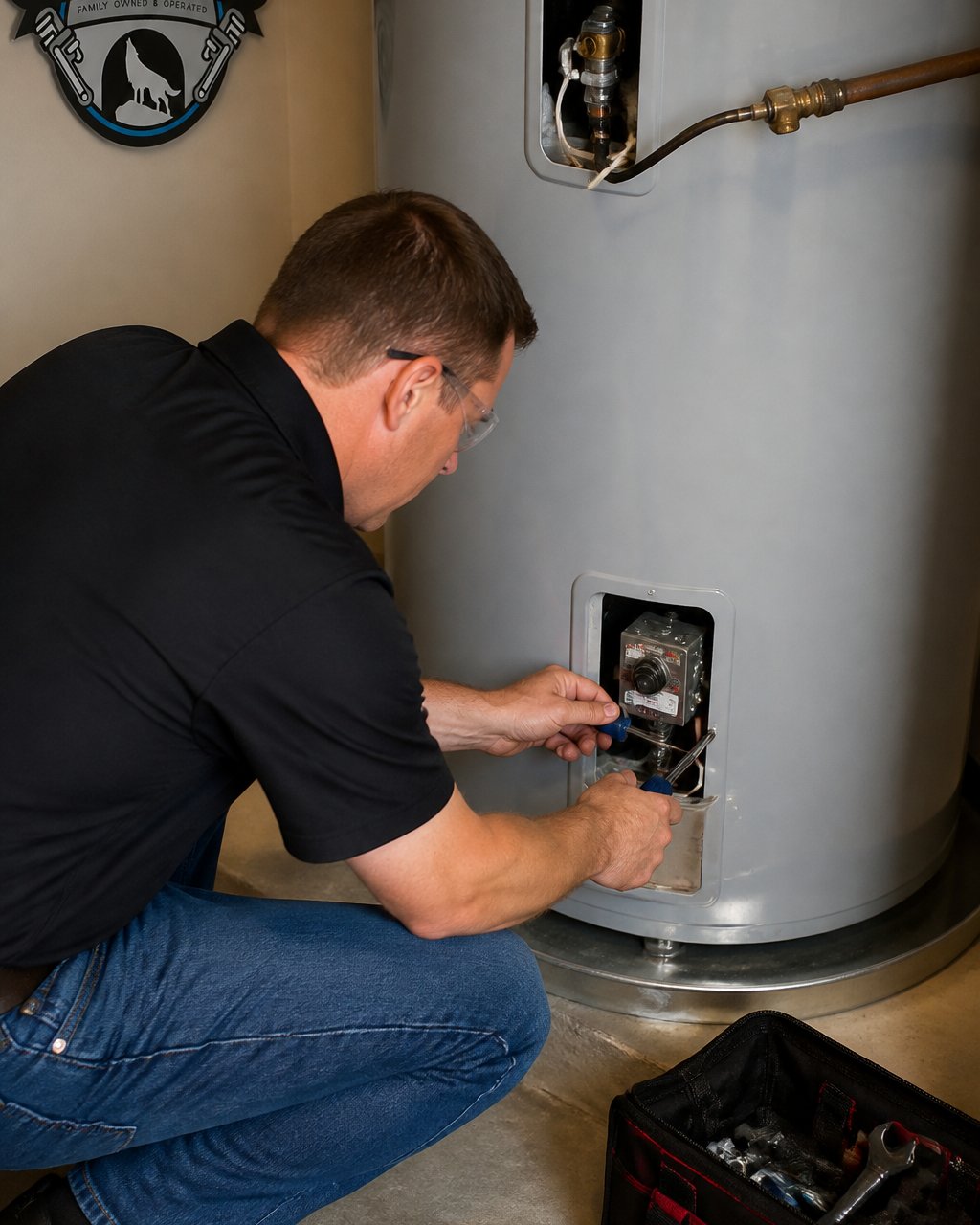
Why Does Your Water Heater Pilot Light Keep Going Out?
Last Updated: October 30, 2026
Quick Summary
A water heater pilot light goes out when the flame loses fuel, oxygen, or the thermocouple signal that holds the gas valve open. The most common causes are a worn thermocouple, a dirty pilot orifice, drafts, a gas supply problem, or a failing gas control valve.
- Thermocouple failure is the single most common reason a pilot light won’t stay lit.
- A clogged pilot orifice starves the flame of gas and produces a weak flame.
- Drafts from doors, windows, or exhaust fans are the most overlooked cause of pilot outages.
- If the pilot won’t stay lit after two clean relight attempts, call a licensed technician.
- Never relight a pilot if you smell gas; leave the building and call for help.
Table of Contents
- Why Your Water Heater Pilot Light Goes Out
- Water Heater Thermocouple Problems
- Dirt, Clogged Orifices, and Burner Assembly Issues
- Drafts, Airflow, and Ventilation Disturbances
- Gas Supply and Gas Control Valve Problems
- Water Heater Pilot Light Won’t Stay Lit: What to Do Next
- How to Relight a Water Heater Pilot Light
- When to Stop Troubleshooting and Call a Licensed Plumber
- Frequently Asked Questions
Why Your Water Heater Pilot Light Goes Out
A water heater pilot light goes out when the flame loses its fuel source, its oxygen supply, or the signal that tells the gas valve a flame is present.
A pilot light that keeps going out is usually caused by one of five things: a worn thermocouple, a dirty pilot orifice, a draft, a gas supply problem, or a failing gas control valve. Below, we’ll walk through each cause, show you how to relight the pilot safely, and tell you when to call a licensed plumber.
One note before you grab a screwdriver. The U.S. Consumer Product Safety Commission guidance on carbon monoxide explains why any fuel-burning appliance needs proper venting and a working CO alarm nearby.
Water Heater Thermocouple Problems
Thermocouple failure is the single most common reason a pilot light won’t stay lit. The thermocouple is a safety device, not a flame starter. It generates a small electrical current when heated, and that current holds the gas valve open. No heat means no current, and the valve closes.
How the Thermocouple Works With the Pilot Flame
The thermocouple tip sits directly in the pilot flame.
If the flame goes out, the tip cools within seconds, the voltage drops, and the valve closes. That prevents raw gas from pouring into your home when there’s no flame to burn it.
When the thermocouple is dirty, misaligned, or worn out, it can’t hold that signal. The pilot lights, then dies a few seconds after you release the button.
Signs of Thermocouple Failure, Dirt, or Misalignment
Watch for these clues:
- The pilot lights but goes out the moment you release the gas control knob
- The flame looks weak, yellow, or only touches the edge of the thermocouple tip
- The thermocouple tip is blackened, corroded, or bent away from the flame
A common mistake is replacing the thermocouple before checking alignment. Sometimes the tip simply isn’t sitting in the flame, and repositioning it is a simple first step.
Dirt, Clogged Orifices, and Burner Assembly Issues
A clogged pilot orifice starves the flame of gas, which produces a weak flame that can’t heat the thermocouple. Dust, rust, and mineral debris build up in the tiny opening over time.
The orifice is a pinhole-sized opening, and the wrong tool can widen or damage it, so a licensed technician is the safer choice for cleaning or replacing the assembly.
The burner assembly matters too.
Drafts, Airflow, and Ventilation Disturbances
Drafts are the most overlooked cause. A pilot flame is small and fragile, and a gust from an open window, a nearby door, a garage entry, or a poorly sealed flue can blow it out.
Check for these airflow problems:
- The water heater sits in a garage or utility closet near a frequently opened door
- Loose vent pipe connections or a disconnected draft hood
- A new exhaust fan, dryer vent, or HVAC return pulling air across the unit
If your pilot goes out on windy days or after someone uses a bathroom fan, airflow is the likely culprit. A blocked or backdrafting flue can push carbon monoxide into your home, so treat venting issues as a safety matter (Carbon Monoxide Fact Sheet).
Gas Supply and Gas Control Valve Problems
No gas means no flame, and the cause can be upstream of the heater. Confirm the manual gas shutoff valve on the supply line is fully open.
The gas control valve is the other suspect. This is the unit the pilot button and temperature dial sit on, and inside it is a safety circuit that holds the main valve open only while it receives a signal from the thermocouple or thermopile.
Standing-Pilot vs. Electronic Ignition: Know Which You Have
Not every water heater has a pilot light. Standing-pilot models use a constantly burning flame and a thermocouple, while many newer units use electronic ignition, a hot-surface igniter or an intermittent pilot, with no standing flame at all. If your heater has no pilot button and no visible pilot flame, these troubleshooting steps don’t apply; consult the appliance label or manual.
Match the Symptom to the Gas-Side Cause
- No flame at all, no gas smell, other appliances work: Confirm the shutoff valve is open and the control knob is set to PILOT. If still nothing, the pilot orifice or tubing may be blocked.
- Pilot lights but the valve clicks audibly and shuts off within seconds of releasing the button: The safety circuit is not holding, thermocouple, thermopile, or the valve’s internal circuit.
- Pilot burns but the main burner never fires when you turn the dial to ON: The valve may not be opening, or the thermostat portion of the control has failed.
If you smell gas, a rotten-egg odor, do not operate light switches, appliances, or your phone inside the area (Recognizing and Responding to Pipeline Emergencies | Stakeholder Communications). Leave the building, and from a safe distance call your gas utility’s emergency line or 911. Do not attempt to relight the pilot or shut off the valve yourself if doing so requires staying in a gas-filled space. Only shut off the gas at the tank or meter if you can do so safely on your way out.
If you smell gas or suspect a supply issue, stop and call for help. A licensed technician can trace the problem safely. For homes in our area, our licensed gas leak repair services in Wylie cover diagnosis and repair.
Water Heater Pilot Light Won’t Stay Lit: What to Do Next
When the pilot lights but won’t stay lit, the timing of the failure tells you almost everything. Work through the flowchart below in order, start with the simplest and cheapest checks, then move toward parts and professional help.
Step 1: When Does the Flame Die?
- It dies the instant you release the control knob. The thermocouple isn’t generating enough voltage to hold the safety circuit. Check that the tip sits in the flame, clean it with fine-grit sandpaper, and confirm the connection at the valve is tight. If it still dies, replace the thermocouple.
- It stays lit for a few minutes, then quits on its own. This usually points to a weak flame (clogged orifice), a marginal thermocouple, or a draft that intermittently blows the flame out. Inspect the flame color and shape first.
- It goes out only when the main burner fires. Suspect a draft, a venting problem, or a gas pressure issue, the pattern most likely to involve a safety concern.
Step 2: Match the Symptom to the Likely Cause
| Symptom | Likely Cause | First Step |
|---|---|---|
| Pilot dies when you release the button | Thermocouple or alignment | Check tip position, clean tip |
| Pilot dies after a few minutes | Weak flame or marginal thermocouple | Inspect flame, clean orifice |
| Pilot dies when main burner fires | Draft, venting, or gas pressure | Check venting and drafts |
| Weak, yellow, or tiny flame | Clogged pilot orifice | Clean orifice gently |
| Pilot quits on windy days | Draft or vent issue | Check venting and drafts |
| No flame at all, no gas smell | Gas supply or shutoff valve | Confirm gas valve is open |
| Pilot lights, then valve clicks off | Failing gas control valve | Call a licensed plumber |
| Smell of gas or soot | Gas leak or venting failure | Leave the area, call for help |
Work top to bottom. Most homeowners find the answer in the first two rows.
Step 3: Know Your Model Before You Turn a Wrench
Lighting procedures and components vary by manufacturer and heater type. A standing-pilot heater with a thermocouple is not the same as an electronic-ignition unit with a thermopile or hot-surface igniter, and the steps aren’t interchangeable. Before you troubleshoot, find the rating plate and the manual, most manufacturers publish lighting instructions on a label near the gas control valve. If your unit has no pilot button, follow the manufacturer’s procedure rather than the steps in this article.
Step 4: Repair or Replace?
Whether a repair or replacement makes more sense depends on the heater’s condition and remaining service life. A repeated pattern of repairs on an older unit is a reason to have a licensed technician weigh the options, and a written quote before authorizing either path is a sensible step.
If the pilot won’t stay lit after two clean relight attempts, stop. Repeated relighting on a unit with a gas or venting fault is how small problems become dangerous ones. Call a licensed technician.
How to Relight a Water Heater Pilot Light
Relighting a pilot is a 10-minute job if you follow the steps and keep safety first.
- Turn the gas control knob to OFF and wait. Give it five minutes so any lingering gas clears out.
- Locate the pilot assembly. Remove the access panel and find the burner and pilot tube.
- Set the knob to PILOT. Press and hold it down.
- Light the pilot. Use a long lighter while holding the knob down. The flame should be blue and steady.
- Hold the button for about 30 seconds. This lets the thermocouple heat up.
- Release the button. If the flame stays lit, turn the knob to ON and replace the panel.
- If the flame dies, repeat once. If it dies again, stop and troubleshoot the thermocouple or call a pro.

Watch out: never relight a pilot if you smell gas. Shut off the supply, ventilate the area, and call for help.
When to Stop Troubleshooting and Call a Licensed Plumber
Stop DIY work when you smell gas, see soot or yellow flames, or the pilot won’t stay lit after two clean relight attempts. If you need a nearby plumber in Rockwall, see Dewolfes Affordable Plumbing Best Plumber In Rockwall Tx. If you need a nearby plumber in McKinney, see Dewolfes Affordable Plumbing Best Plumber In Mckinney Tx.
The honest truth: a pilot that keeps going out often signals the unit is nearing the end of its life. Our team handles water heater repair and replacement and can help you weigh which path makes sense for your unit.
We’re family owned, fully licensed and insured, and we back all labor with a full written warranty. When you’re ready to stop guessing, call (972) 632-9935.
Frequently Asked Questions
Is it safe to relight a water heater pilot light myself?
Relighting is safe if you follow the manufacturer’s steps and never smell gas. Turn the gas control knob to Off, wait at least five minutes for gas to clear, then follow the label on the tank. If you smell gas at any point, leave the area and call a licensed plumber or the gas utility. A water heater pilot light that keeps going out after a relight usually signals a thermocouple or gas valve problem that needs a professional.
Does gas flow if the pilot light goes out?
On most standing-pilot water heaters, the gas control valve shuts off gas to the main burner when the pilot flame goes out. The thermocouple stops generating the small voltage that holds the valve open, so gas stops flowing to the burner. The pilot gas line itself can still release gas while you hold the control button, which is why you should never hold it down for more than a minute if the flame does not catch.
Can a dirty thermocouple cause a pilot light to go out?
Yes. Soot, dirt, or oxidation on the thermocouple tip insulates it from the pilot flame, so it stops sending enough voltage to the gas valve and the pilot goes out. Cleaning the tip with fine-grit sandpaper can restore it briefly, but a thermocouple that has failed from wear and tear needs replacement. A licensed plumber can test the thermocouple and confirm whether cleaning or replacement is the right fix.
When should I call a plumber about a water heater pilot light?
Call a plumber if the pilot will not stay lit after two relight attempts, if you smell gas, if you see soot or a yellow flame, or if the pilot goes out repeatedly within days. These signs point to thermocouple failure, a clogged orifice, a faulty gas control valve, or a venting problem. A licensed plumber can inspect the pilot system, test the thermocouple, and confirm whether repair or replacement makes more sense for your unit.
A pilot light that keeps quitting is your water heater’s way of asking for help. Don’t ignore it, and don’t keep relighting it hoping the problem fixes itself. DeWolfe’s Affordable Plumbing offers on-site estimates, transparent up-front pricing, and 24/7 emergency service, plus a full written warranty on all labor. Get started with DeWolfe’s Affordable Plumbing and get your hot water back for good.
