

Signs of Hidden Gas Leaks: 7 Warning Signs to Know
Last Updated: October 23, 2026
Quick Summary
Hidden gas leaks are gas releases from pipes, fittings, or appliance connections you cannot see or smell, often hiding behind walls, under slabs, or inside appliances. Watch for rotten-egg odor, hissing sounds, dead vegetation, pilot light problems, rising bills, and symptoms like headaches or dizziness that ease outdoors.
- Natural gas has no smell; utilities add mercaptan odorant so leaks are detectable.
- A carbon monoxide detector does not detect natural gas, so you need both.
- If you smell gas, leave immediately and call 911 or your gas utility from outside.
- Never use a flame, electrical switch, or phone inside to test for a leak.
- The safest homeowner check is a smell-and-listen walk-through plus yard and bill review.
Table of Contents
- What Are Hidden Gas Leaks and Why They Matter
- 7 Warning Signs of Hidden Gas Leaks
- Gas Leak Symptoms in Humans You Should Not Ignore
- What to Do If You Smell Gas: Step-by-Step
- Carbon Monoxide Detector and Gas Leaks: What You Need to Know
- Safe Gas Leak Detection: How to Check Without Risk
- When to Call a Licensed Technician
- Frequently Asked Questions
What Are Hidden Gas Leaks and Why They Matter
A hidden gas leak is a release of natural gas from a pipe, fitting, or appliance connection that you cannot see and often cannot smell.
Why do they matter so much? The U.S. Consumer Product Safety Commission tracks gas appliance hazards and urges homeowners to treat any suspected leak as an emergency. The good news: hidden gas leaks almost always leave clues.
7 Warning Signs of Hidden Gas Leaks
Most hidden gas leaks announce themselves in small ways before they become an emergency. Here are the seven signs we tell every homeowner to watch for. If you notice two or more together, call a licensed technician right away.
Rotten-Egg Smell and Sulfur Odor
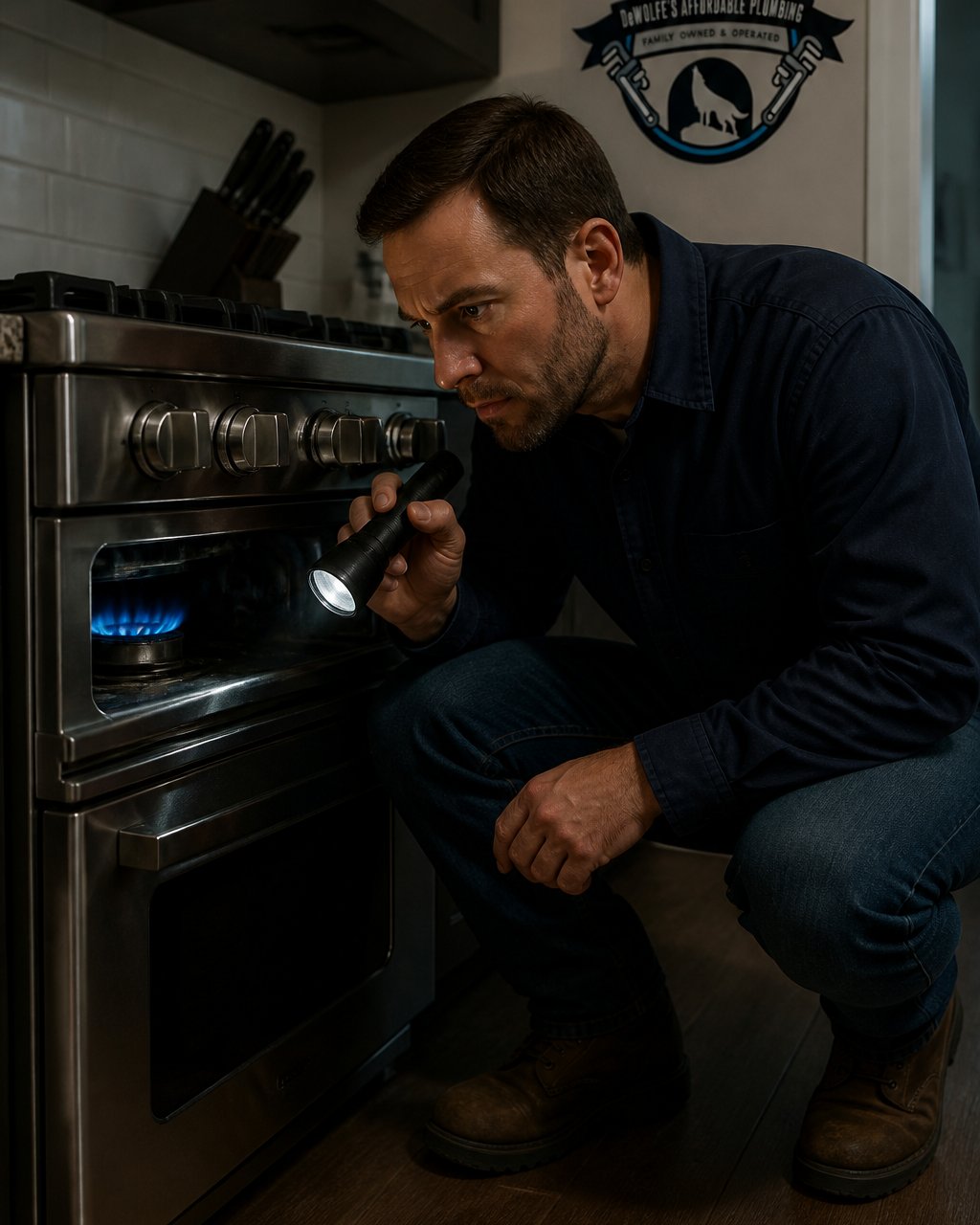
Natural gas has no smell on its own. Utility companies add a chemical called an odorant, usually mercaptan, so leaks are detectable. That rotten-egg smell is your first and loudest warning. If the odor is faint near one appliance, shut it off and ventilate the room. If it is strong or spreads through the house, leave immediately and call your gas utility from outside.
Hissing, Whistling, or Blowing Sounds
A hissing or whistling sound near a gas line, meter, or appliance points to gas escaping under pressure. Blowing sounds can mean a larger breach. These noises often show up in quiet moments, so listen near your water heater, furnace, and stove when the house is still.
Dead Vegetation and Bubbles in Water
Gas leaking from a buried line can starve plant roots of oxygen. A patch of dead or dying grass in an otherwise healthy lawn, or bubbles rising in a puddle over a gas line, is a real red flag. Do not dig to investigate. Mark the spot and call a professional.
Pilot Light Problems and Rising Gas Bills
A pilot light that keeps blowing out, burns yellow instead of blue, or refuses to stay lit can signal a leak or a combustion problem. So can a gas bill that jumps without a change in usage. Track your bills month to month. An unexplained increase deserves a professional inspection.
Never relight a pilot light repeatedly to “test” it. Each attempt releases unburned gas into the room. If a pilot light keeps going out, shut off the appliance and call a licensed technician.
Gas Leak Symptoms in Humans You Should Not Ignore
Your body can detect a leak before your nose does. Common gas leak symptoms in humans include headaches, dizziness, nausea, fatigue, and irritation of the eyes, nose, and throat.
These symptoms often mimic a cold or the flu, which is why they get ignored. The tell is the pattern: symptoms that ease when you go outside and return when you come back inside.
Keep a simple log of when symptoms appear and where in the home they are worst. That pattern helps a technician trace a hidden leak to the right room or appliance.
What to Do If You Smell Gas: Step-by-Step
If you smell gas, the order of your actions matters as much as the actions themselves. Follow this sequence exactly.
- Leave the building immediately. Get everyone, including pets, outside. Do not stop to gather belongings, find shoes, or investigate the source.
- Do not touch electrical switches or outlets. No lights, fans, garage door openers, thermostats, or appliance controls. A spark from an ordinary switch can ignite gas.
- Do not use your phone inside. A phone can spark. Wait until you are outside and well clear of the structure before calling.
- Put out open flames. No smoking, lighters, or matches anywhere near the building. If a stove burner is lit, leave it, do not reach over it to shut it off.
- Move well away from the structure. Go to the street, a neighbor’s yard, or another safe spot upwind of the building. Do not stand in a driveway or doorway.
- Call 911 and your gas utility from outside. Call 911 first if the odor is strong, you hear a blowing sound, or anyone feels ill. Otherwise, call your gas utility’s emergency line, it is printed on your bill and usually on the meter. Tell the dispatcher your address, where you smell gas, and whether anyone is inside.
- Warn neighbors without entering their homes. Knock and tell them to leave, but do not go inside to demonstrate or investigate.
- Wait for the all-clear. Do not re-enter until a utility worker or fire department official says it is safe. Responders will typically shut off the gas at the meter, ventilate the structure, and use detection equipment to find the source before anyone is allowed back in.
When to call 911 versus the gas utility
Call 911 first when the smell is strong, when you hear gas blowing or hissing, when a pilot light or appliance is involved in a fire, or when anyone in the building has symptoms like headache, dizziness, nausea, or difficulty breathing. Call the gas utility’s emergency line first when the odor is faint and localized and no one feels ill, but do not delay leaving to make the call.
What happens after you call
A utility technician or fire crew will arrive, shut off the gas at the meter if needed, and use detection equipment to locate the source. If the leak is on the utility side of the meter, the utility handles the repair. If it is on your side, piping, fittings, or an appliance connection, you will need a licensed plumber or gas fitter to make the repair before service is restored.
Never re-enter the building to open windows, shut off a valve, or retrieve a pet after you have left. Opening a window can draw gas toward an ignition source, and re-entry exposes you to a concentration that may have grown since you left.
Carbon Monoxide Detector and Gas Leaks: What You Need to Know
A carbon monoxide detector does not detect natural gas. This is the mistake we see most often. Carbon monoxide, or CO, is a colorless, odorless byproduct of incomplete combustion.
That means you need both. Install UL-listed CO alarms near sleeping areas and on every level of the home (CO Alarms). The U.S. Environmental Protection Agency explains how CO builds up indoors and why ventilation and proper appliance maintenance matter.
Safe Gas Leak Detection: How to Check Without Risk
Most guides blur the line between noticing a leak and testing for one. That distinction matters, because some popular “checks” can turn a small leak into an ignition event. Here is how to separate safe observation from work that belongs to a licensed professional.
What you can safely observe
These actions involve no tools, no flames, and no contact with gas piping:
- Smell: Trust your nose. A sulfur or rotten-egg odor near an appliance, meter, or wall means stop and follow the emergency steps below.
- Listen: In a quiet house, note hissing, whistling, or blowing near the meter, furnace, water heater, stove, or where the service line enters the home.
- Look outdoors: Watch for dead or dying grass in an otherwise healthy lawn, bubbles rising in standing water over a buried line, or soil that looks unusually disturbed or pushed up.
Observation stops there. Do not probe, dig, or disassemble anything to confirm a suspicion.
What you should never do
- Never use a flame. A match, lighter, or candle near a suspected leak can ignite accumulated gas. This is the single most dangerous “test” homeowners attempt.
- Never operate electrical switches, thermostats, doorbells, garage openers, or appliance controls in a space where you smell gas. A spark from an ordinary switch can ignite the mixture.
- Never dig near a buried gas line to check for damage. Striking a line can cause a major release.
Why the soapy-water test belongs to a professional
The soapy-water method, applying a detergent solution to a fitting and watching for bubbles, is a legitimate technique, but it is a professional’s tool. It requires access to the fitting, a controlled environment, and the judgment to know which joints to test and how to interpret a slow bubble versus a fast one. Attempting it near a strong odor, inside a closed space, or on a fitting you cannot safely reach adds risk without adding certainty.
What professional detection adds
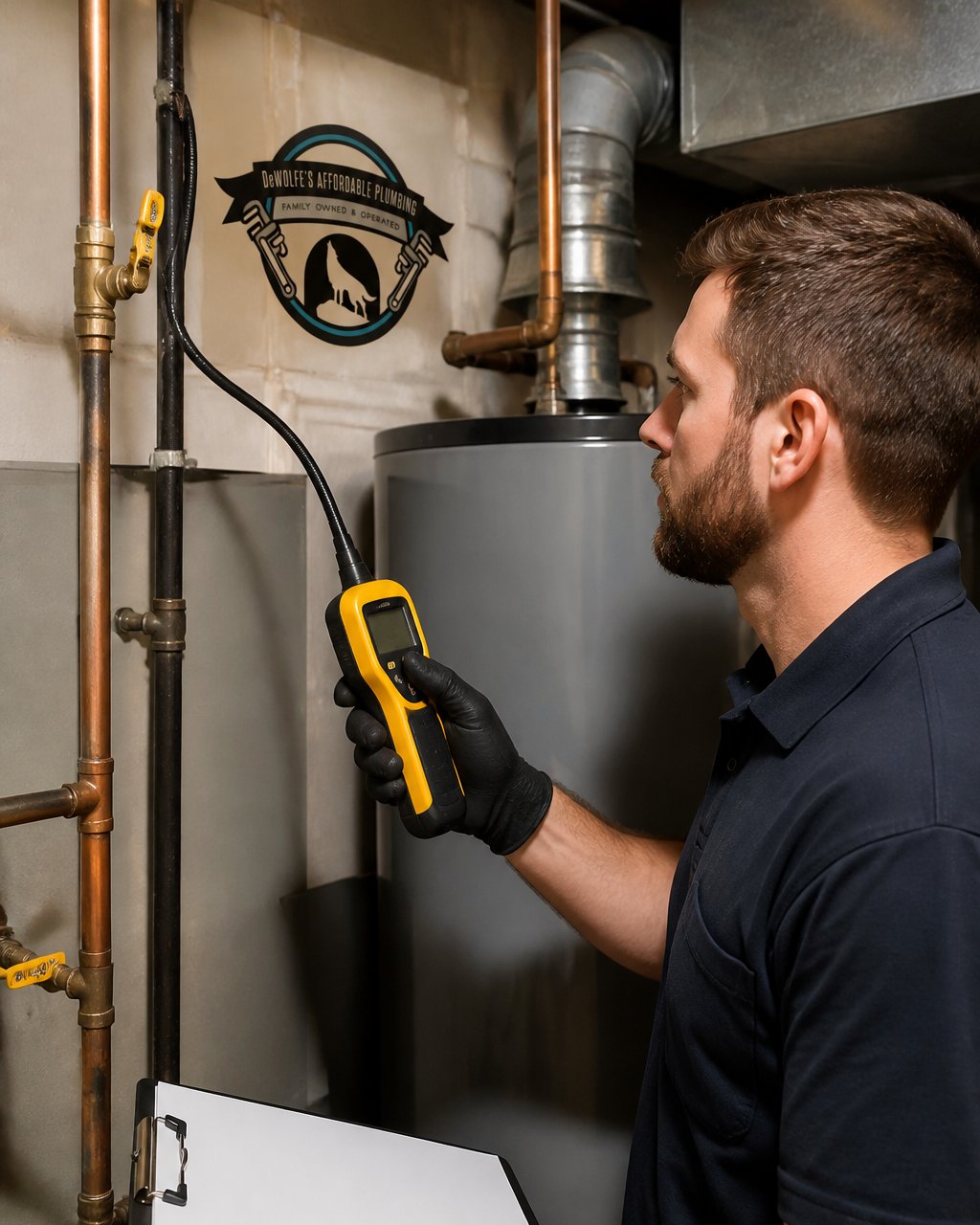
A licensed technician uses tools a homeowner does not have: combustible gas detectors that read concentration in parts per million, electronic leak sniffers for concealed piping, and pressure tests that isolate a section of line. For buried service lines, utilities and contractors use specialized locating equipment to trace the line before excavation. These methods find leaks that smell, sound, and sight clues miss, which is exactly the problem with hidden leaks.
The safest homeowner check is a smell-and-listen walk-through plus a look at the yard and the bill. Every other test, soapy water, pressure testing, electronic sniffing, belongs to a licensed professional.
When to Call a Licensed Technician
Call a licensed technician for any leak you cannot confirm as safe, for repairs, and for annual inspections. Hidden gas leaks behind walls, under slabs, or inside appliance connections need professional detection tools and code-compliant repairs.
This is where DeWolfe’s Affordable Plumbing comes in. We are family owned and operated, fully licensed and insured, and we offer on-site estimates for residential customers.
Frequently Asked Questions
How can I tell if I have a hidden gas leak?
Look for a cluster of clues: a faint sulfur or rotten-egg smell that comes and goes, a hissing sound near a gas line or appliance, dead patches of grass above an outdoor line, or unexplained rises in your gas bill. Physical symptoms like headaches or dizziness that ease when you leave the house also point to a hidden gas leak. Because some leaks have no odor, a licensed technician using gas leak detection equipment is the only way to confirm one.
Will a carbon monoxide detector detect a gas leak?
No. A standard carbon monoxide detector only alarms on carbon monoxide, not on natural gas itself. Natural gas leaks are detected by the odorant added to the gas or by a combustible gas detector. For full coverage, install both carbon monoxide alarms and, if you want early warning, a natural gas detector. If you suspect a gas leak, leave the building and call your gas utility from outside.
Can a gas leak be present without a noticeable smell?
Yes. Hidden gas leaks can occur in crawl spaces, behind walls, under slabs, or outdoors where the odorant dissipates before reaching living areas. People with a diminished sense of smell may also miss the rotten-egg odor. That is why gas leak detection tools, such as handheld detectors and pressure tests performed by a licensed technician, matter when you have symptoms or unexplained bill increases but no smell.
What should I do if I suspect a gas leak in my home?
Leave the building immediately. Do not flip light switches, use your phone, or start a car in the garage, since any spark can ignite gas. Get everyone, including pets, outside and call your gas utility or 911 from a safe distance. Do not re-enter until a professional clears the property. After the emergency, a licensed technician can inspect, repair, and pressure-test the gas line to confirm the leak is fixed.
A hidden gas leak is one of the few home problems where guessing is never worth it. If you notice a sulfur smell, a hissing sound, dead grass over a buried line, or symptoms that vanish when you step outside, act now. DeWolfe’s Affordable Plumbing offers licensed gas leak repair, on-site estimates, and a full written warranty on all labor. Call (972) 632-9935 and get a professional inspection before a small leak becomes a real emergency.
