
Best Way to Find Gas Leaks: 5 Methods
Table of Contents
- Why Finding Gas Leaks Matters
- What to Do If You Smell Gas
- How to Check for a Gas Leak with Soapy Water
- Using a Gas Leak Detector for Home Safety
- Does a Carbon Monoxide Detector Detect Natural Gas
- Other Detection Methods and Their Limits
- When to Call a Professional
- Frequently Asked Questions
Last Updated: October 10, 2026
Why Finding Gas Leaks Matters
A gas leak in your home is a serious safety hazard. Natural gas is odorless, but utility companies add an odorant that smells like rotten eggs to make leaks detectable. Exposure can cause headaches, dizziness, nausea, and in severe cases, loss of consciousness (the CDC). The best way to find gas leaks is to use a combination of methods: start with your nose, move to visual inspection, and confirm with tools when necessary.
Early detection prevents explosions, carbon monoxide buildup, and structural damage. If you suspect a leak, your first action should always be to leave the house and call emergency services from outside. Do not use electrical switches, phones, or anything that could create a spark.
If you smell gas, do not attempt to locate the leak yourself. Leave your home immediately and call 911 from outside. A single spark or flame can ignite leaking gas.
What to Do If You Smell Gas
The rotten-egg smell is your first warning sign. This odorant, called mercaptan, is added to natural gas for early detection.
Immediate steps:
- Leave your home right away
- Do not use light switches, phones, or electrical devices
- Do not light matches or create any flame
- Call 911 from outside or a neighbor’s phone
- Stay outside until emergency responders arrive and clear your home
Once professionals confirm your home is safe, they can locate and repair the leak.
Keep your gas utility’s emergency number posted on your refrigerator. Most utilities have 24/7 hotlines for suspected leaks.
How to Check for a Gas Leak with Soapy Water
The soap-and-water bubble test is a reliable DIY method for confirming small gas leaks once your home is cleared as safe and no strong odor is present. Escaping gas creates visible bubbles in soapy liquid, but this is not a substitute for professional detection.
Safety Preconditions Before You Start
Do not attempt the soap test if:
- You smell gas strongly (evacuate and call 911)
- You suspect a leak near an active appliance or pilot light
- Emergency responders have not cleared your home
- You are testing a suspected leak in a wall, crawl space, or foundation
The soap test is safe only for external pipe connections, visible fittings, and appliance connections in well-ventilated areas.
Making Your Soap Solution
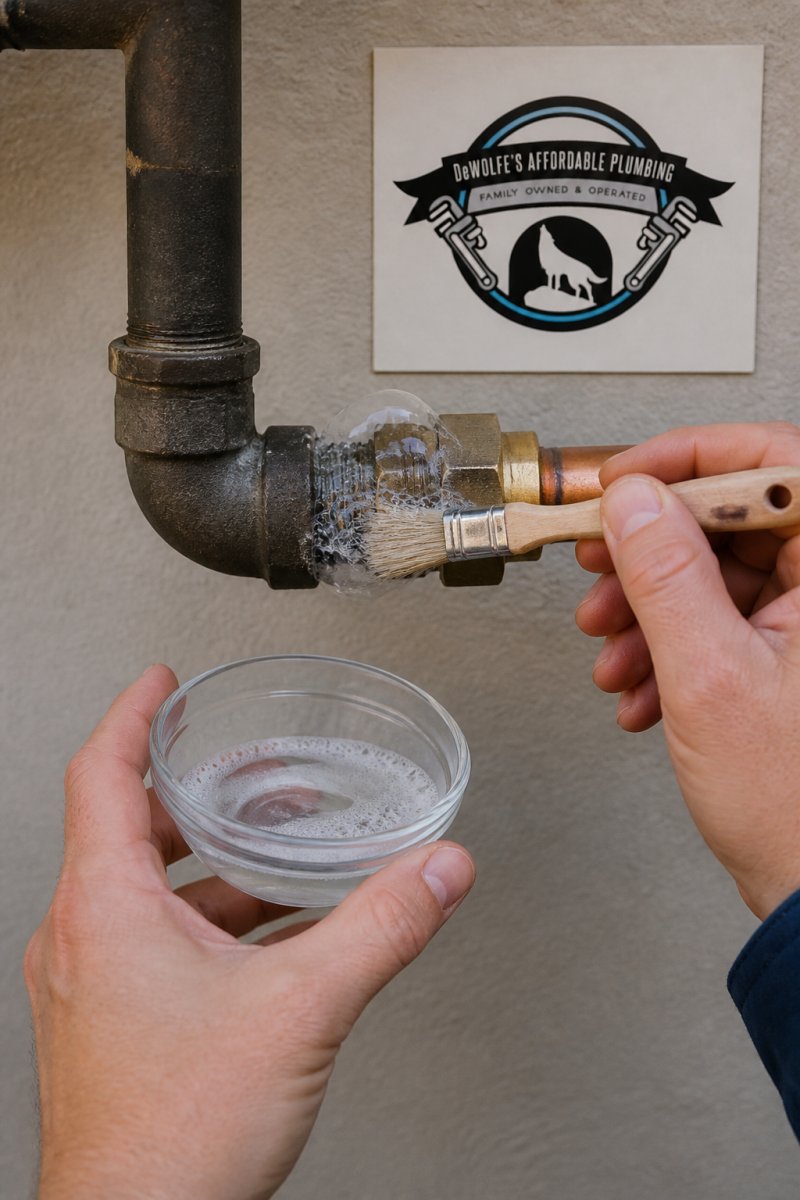
Mix one part dish soap to six parts water in a spray bottle or bowl. The solution should be thin enough to spray or brush easily but thick enough to cling to metal and create visible bubbles.
Applying the Bubble Test: Step-by-Step
-
Start at the gas meter. Apply soapy solution to the inlet connection and meter. Look for bubbles forming.
-
Move to appliance connections. Check lines connecting your furnace, water heater, stove, and dryer. Apply solution to each fitting and connection point.
-
Watch for bubble behavior. Growing bubbles that expand and pop repeatedly indicate escaping gas. Mark the location with tape.
-
Do not test near ignition sources. Keep solution away from pilot lights, flames, or outlets.
-
Stop if you smell gas. Leave the area and call your gas utility or 911.
What Bubbles Mean, and What They Don’t
Growing, repeating bubbles = Gas is escaping. Mark the location and contact a professional immediately. Do not attempt to tighten the connection yourself.
No bubbles = No leak detected at that connection, though very small leaks may not produce visible bubbles.
Slow, occasional bubbles = Possible micro-leak; report to a professional for confirmation.
The soap test is most reliable for surface leaks at fittings and will not detect leaks inside walls, under slabs, or in buried lines.
When to Stop and Call a Professional
Stop the soap test and call a licensed gas technician or your utility immediately if:
- You see bubbles at a connection
- You smell gas during the test
- You find corroded, cracked, or damaged pipe
- You cannot safely access the area
- The test is inconclusive but you remain concerned
Never attempt to repair a gas connection yourself, even if the leak seems small. Gas line repairs require proper tools, training, and permits to ensure safety and code compliance.
The soap test is a screening tool, not a final diagnosis. A negative result does not rule out a leak. If you suspect a gas leak based on smell, symptoms, or meter readings, contact a professional even if the soap test shows no bubbles.
Using a Gas Leak Detector for Home Safety
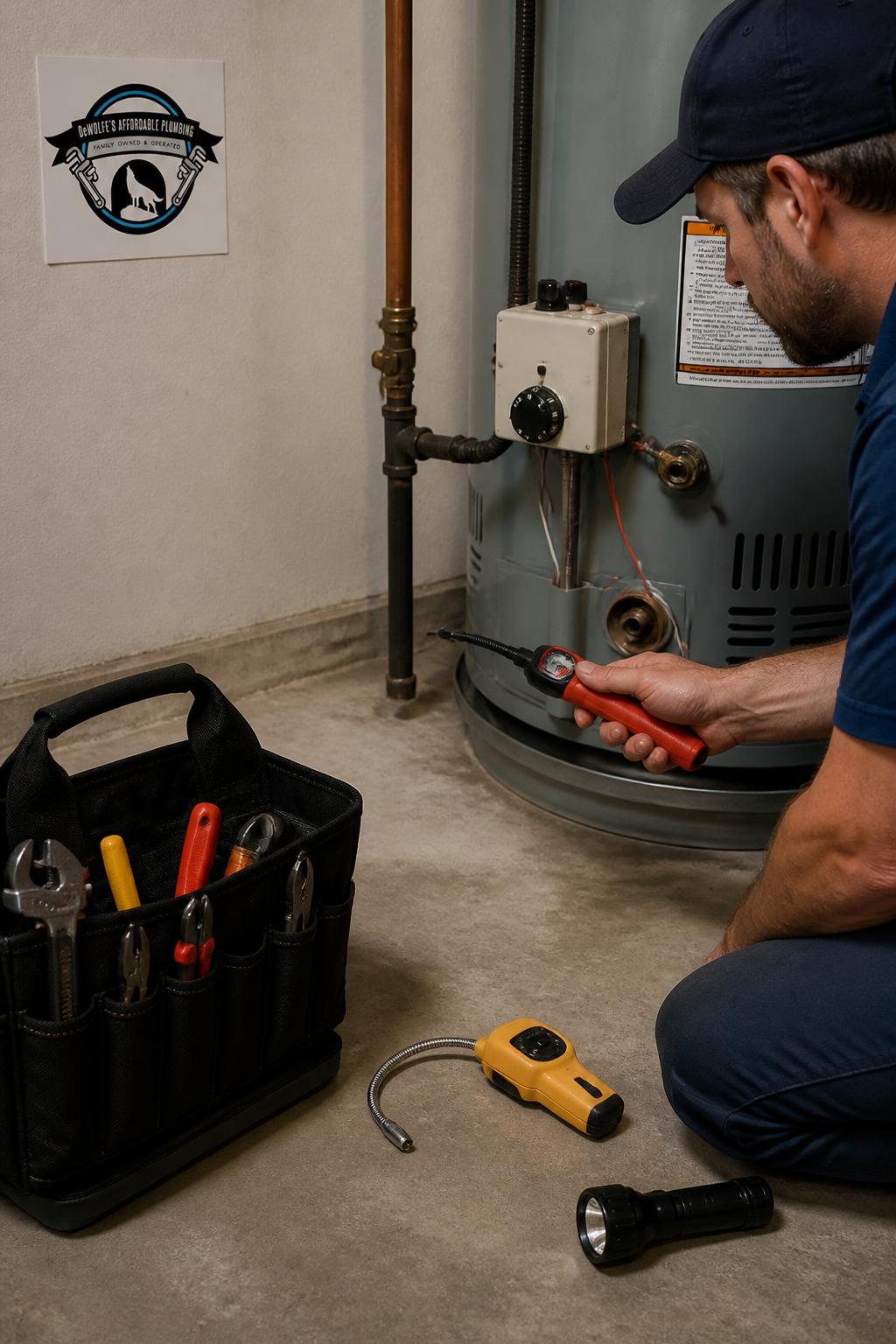
An electronic gas leak detector is a handheld device that senses combustible gas in the air. These tools are more sensitive than the human nose and can find leaks the soap method might miss, but they are a confirmation tool, not a primary detection method.
How Electronic Detectors Work
Most consumer detectors use a catalytic bead or semiconductor sensor that detects combustible gas in parts per million (ppm). When gas is present, an alarm sounds and a light flashes; some models display the concentration level. These detectors are calibrated to respond to natural gas and propane but are not as precise as professional equipment.
Choosing and Using a Detector Safely
Before you buy:
- Confirm the detector is rated for natural gas or propane
- Check for a battery-life indicator and common batteries (AA or 9V)
- Look for both audible and visual alarms
- Avoid carbon monoxide detectors; they will not detect natural gas
Before you test:
- Read the manufacturer’s instructions
- Allow the detector to warm up and calibrate (30 seconds to 2 minutes)
- Test the alarm function by pressing the test button
- Ensure batteries are fresh
During the test:
- Move the detector slowly around suspected leak areas
- Hold it 2-4 inches from the suspected site
- Allow 5-10 seconds for the sensor to respond
- If the alarm sounds, mark the location and stop
Understanding False Positives and False Negatives
False positives (alarm sounds but no leak exists): residual gas odor, sensitivity set too high, contaminated sensor, or weak battery.
False negatives (no alarm but a leak exists): weak batteries, uncalibrated sensor, leak out of range, or insufficient sensitivity.
A detector alarm should always be confirmed by a professional. A negative result does not rule out a leak.
Maintenance and Reliability
- Replace batteries every 6-12 months or if the low-battery indicator appears
- Test the alarm function monthly
- Store in a cool, dry place away from extreme heat or humidity
- Avoid strong chemical odors that can contaminate the sensor
- Replace if the detector fails the test function
Professional-grade detectors are calibrated to stricter standards, which is why a professional inspection is the most reliable way to confirm a leak.
When to Use a Detector, and When Not To
Use a detector when:
- You suspect a small leak but do not smell gas strongly
- You want to confirm a location before calling a professional
- You are checking connections after a repair
Do not use a detector when:
- You smell gas strongly (evacuate and call 911)
- You suspect a leak in a wall, under a slab, or buried line
- The detector has not been tested recently or batteries are low
Electronic detectors are useful for confirming small leaks and checking connections, but they are not a substitute for your nose, the soap test, or professional inspection. Always follow up a detector alarm with a call to a licensed technician or your gas utility.
Does a Carbon Monoxide Detector Detect Natural Gas
No. A carbon monoxide detector will not alert you to a natural gas leak. These are different hazards with different detection needs.
Carbon monoxide detectors sense CO, a colorless, odorless gas produced by burning fuel. Gas leak detectors sense combustible gas (natural gas or propane) itself. You need both types of protection. A carbon monoxide detector is essential for any home with gas appliances. A gas leak detector is a useful backup to your nose and the soap test but does not replace professional inspection.
Other Detection Methods and Their Limits
Beyond soap solutions and electronic detectors, several other approaches exist. Each has strengths and limitations.
Checking Your Gas Meter
Your gas meter shows how much gas your home uses. If the dial is moving when no appliances are running, you may have a leak.
How to check:
- Turn off all gas appliances
- Note the meter reading
- Wait 30 minutes without using any gas
- Check the reading again, it should not change
A rising meter indicates gas escaping somewhere. This method is simple but not precise, it only tells you a leak exists, not where it is. Call your gas utility or a professional to locate it.
Inspecting Appliances and Connections
Visual inspection can reveal obvious problems: loose fittings, corroded pipes, or disconnected hoses. Look for:
- Discolored or corroded metal around connections
- Hoses that are cracked, kinked, or worn
- Loose fittings or valves
- Appliances that smell like gas when running
Visual cues alone are not enough to confirm a leak. Combine inspection with the soap test or a detector. Many small leaks show no visible signs.
Do not attempt to repair gas connections yourself. Improper repairs create new hazards. Always hire a licensed plumber or gas technician.
When to Call a Professional
You should call a professional plumber or gas technician in these situations:
- You smell gas and have evacuated your home
- The soap test shows bubbles at any connection
- Your gas meter rises when appliances are off
- A gas detector alarm sounds
- You see visible corrosion or damage to gas lines
- Your gas appliance smells like gas during normal operation
- You suspect a slab leak (gas line buried under your foundation)
A professional inspection using specialized detection equipment can locate leaks in walls, under slabs, and at connections that DIY methods might miss. Licensed technicians ensure repairs meet safety codes and provide the certainty that your home is secure.
Attempting DIY repairs on gas lines can lead to more dangerous leaks or incomplete fixes. Gas work requires proper tools, training, and permits.
| Detection Method | Best For | Limitations |
|---|---|---|
| Smell (odorant) | Initial detection | May not catch micro leaks |
| Soap solution | Small leaks, connections | Requires safe conditions to test |
| Electronic detector | Confirming leaks | Needs batteries, can give false readings |
| Gas meter check | System-wide leaks | Does not pinpoint location |
| Visual inspection | Obvious damage | Misses small or hidden leaks |
| Professional detection | Slab leaks, hidden leaks | Finds everything with certainty |
A suspected gas leak is not something to delay on. The best way to find gas leaks combines your sense of smell, simple testing methods, and professional confirmation. If you smell gas or your tests show bubbles, leave your home and call emergency services immediately. Once your home is safe, a licensed plumber can locate the exact source with Gas Line Repair and Install services and repair it properly.
Frequently Asked Questions
What should you do if you suspect a gas leak?
If you suspect a gas leak, leave the area immediately and call your gas utility or emergency services from outside your home. Do not use electrical switches, lighters, or any ignition source. Avoid opening windows or doors unless you are evacuating. Once you are safely outside, contact your gas provider or call 911. Do not re-enter the home until a qualified technician confirms the area is safe.
How do you make a gas leak detector solution?
Mix one part dish soap with six parts water in a spray bottle or shallow container. Stir gently to combine without creating excess foam. Some people add a few drops of food coloring to make bubbles more visible. Apply this solution to suspected gas line connections, valves, and fittings. Growing bubbles indicate a leak. This soap-and-water method is a reliable first step for homeowners to find gas leaks before calling a professional.
Can you use a gas leak detector to find a leak in your home?
Yes, electronic gas leak detectors are effective tools for finding gas leaks in your home. These handheld sensors detect combustible gas and alert you with a beep or light when they sense a leak. They work on both natural gas and LPG systems. However, they require proper use and regular calibration. For safety-critical leaks, a professional inspection is recommended after any DIY detection to confirm the location and severity.
Would a carbon monoxide detector detect a natural gas leak?
No, a carbon monoxide detector will not detect a natural gas leak. Carbon monoxide detectors are designed specifically to sense carbon monoxide, a colorless, odorless gas produced by combustion. Natural gas leaks require a different type of sensor. However, a gas leak can lead to carbon monoxide buildup if gas appliances malfunction, so proper ventilation and prompt leak detection are important for overall home safety.