
How to Handle an Overflowing Toilet Emergency Fast
Last Updated: October 23, 2026
Quick Summary
To handle an overflowing toilet, lift the tank lid and push the flapper down to seal the tank opening, then turn the shutoff valve clockwise until it stops. If the valve is stuck or missing, turn off the main water supply to the house. Never flush again, since a second flush pushes more water into an already full bowl.
- Press the flapper flat against the drain opening in the tank before touching the shutoff valve.
- A flange plunger clears most soft clogs in under a minute with 10 to 15 firm strokes.
- Mix one part household bleach to nine parts water and let it stay wet for at least 10 minutes.
- Call a plumber when the clog returns after two rounds of plunging and augering.
- Test the flapper monthly by adding a drop of food dye to the tank.
Table of Contents
- Stop the Water: Your First 60 Seconds
- How to Stop a Toilet From Overflowing Before It Spills
- How to Unclog an Overflowing Toilet: Plunger, Auger, or Both
- Toilet Overflow Cleanup and Disinfection Done Right
- When to Call a Plumber for a Clogged Toilet
- Overflow Causes Beyond a Simple Clog
- What Not to Do During a Toilet Emergency
- Prevent the Next Overflowing Toilet
- Frequently Asked Questions
Stop the Water: Your First 60 Seconds
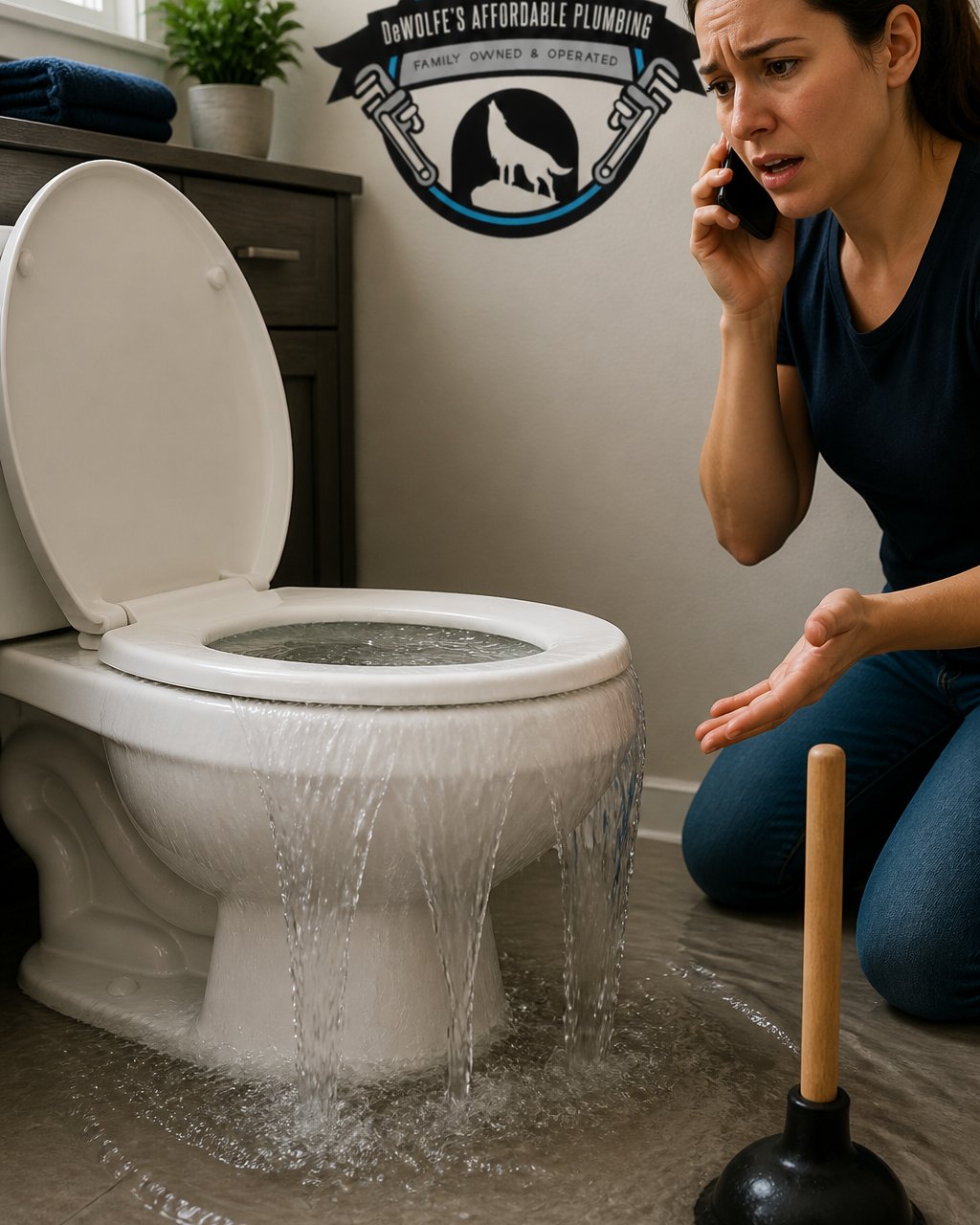
An overflowing toilet is a race against the water. Every second counts, and the first thing you do decides how much damage your floor takes.
Here is the order that works:
- Lift the tank lid off carefully and set it somewhere dry.
- Reach in and push the flapper down to seal the tank opening. This stops new water from entering the bowl.
- Turn the shutoff valve clockwise until it stops. It sits low on the wall behind the toilet.
- If the valve is stuck or missing, turn off the main water supply to the house.
Do not flush again. Do not jiggle the handle. A second flush pushes more water into an already full bowl.
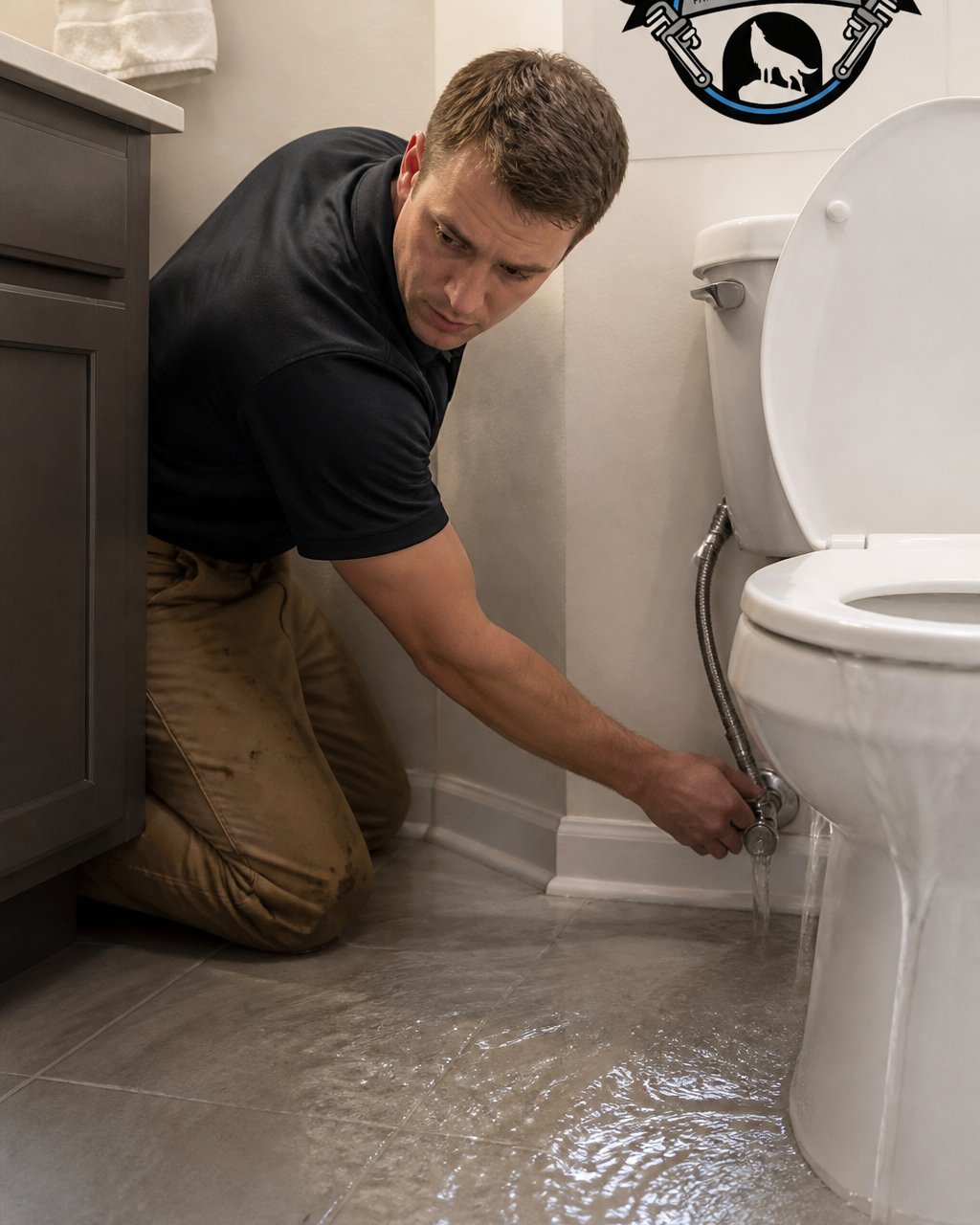
If the shutoff valve won’t budge, don’t force it with pliers. A snapped valve turns a small overflow into a full water line break. Shut off the main instead.
Here is the order that works to stop the flow fast.
| Step | What to do |
|---|---|
| 1 | Lift the tank lid off carefully |
| 2 | Push the flapper down to seal the tank opening |
| 3 | Turn the shutoff valve clockwise until it stops |
| 4 | If valve is stuck or missing, turn off main water supply |
How to Stop a Toilet From Overflowing Before It Spills
The fastest way to stop a toilet from overflowing is to cut the water supply at the tank, not the bowl.
Most people panic and reach for towels first. That’s backwards.
Here’s the sequence we recommend:
- Flapper first. Press it flat against the drain opening in the tank.
- Valve second. Turn the shutoff clockwise behind the bowl.
- Float third. If the fill valve keeps running, lift the float arm to shut it off manually.
If your toilet has a one-piece design with a hidden valve, look underneath the tank on the left side.
Once the water is off, take a breath. Now you can deal with the clog.
How to Unclog an Overflowing Toilet: Plunger, Auger, or Both
Start with a plunger. It clears most soft clogs in under a minute. If the bowl drains slowly after several plunges, switch to a toilet auger. That tool reaches the deeper blockage a plunger can’t touch.
Here’s how to use each one correctly:
Plunger method
- Use a flange plunger, not a cup plunger. The rubber flap seals the drain hole.
- Press down slowly at first to seat the seal.
- Then plunge with firm, steady strokes, 10 to 15 times.
Auger method
- Feed the cable into the drain hole at the bottom of the bowl.
- Crank clockwise until you feel resistance.
- Keep cranking to hook the clog, then pull it back out.
Never plunge a bowl that’s already full to the rim. Bail out half the water into a bucket first. Otherwise your first plunge sends wastewater over the edge.
If both tools fail, the blockage is likely past the toilet trap. That points to a main line issue, not a simple clog.
Toilet Overflow Cleanup and Disinfection Done Right
Toilet overflow cleanup is a contamination job, not a mopping job.
Gear up before you touch anything. Put on rubber gloves that reach past your wrist.
Work in this order:
- Stop the spread. Lay towels or a rolled bath mat at the bathroom doorway to block water from reaching carpet or hallways. Water that reaches carpet or subfloor is a much bigger drying job than water on tile.
- Remove solids first. Use a plastic bag or gloved hands to pick up any solid waste before you mop. Bag it and dispose of it in an outside bin.
- Mop up standing water. Use a mop and bucket, not just towels. Ring the mop into the bucket, not the sink or tub, you do not want to move contamination to another fixture. Empty the bucket into the toilet (if it is draining) or an outside drain, not a kitchen sink.
- Bag the waste. Double-bag soaked towels, the mop head if it is disposable, and any paper products. Tie each bag closed and put it outside. Do not launder contaminated towels with household laundry until they have been washed separately on a hot cycle with detergent.
- Disinfect the floor. Mix a fresh solution of one part household bleach to nine parts water (roughly 1/2 cup bleach per gallon of water). Wipe every surface the water touched. Let the solution stay wet on the surface for at least 10 minutes before wiping dry, contact time is what does the disinfecting, not the scrubbing. Mix only what you will use that day; bleach loses strength once diluted.
- Sanitize the baseboards and grout. These hold moisture and grow mold fast. Wipe them with the same solution, then dry them with a clean cloth.
- Wash up. Peel gloves off inside-out and discard them. Wash your hands with soap and warm water for at least 20 seconds (the CDC). If you touched contaminated surfaces without gloves, wash your forearms too.
- Dry completely. Run a fan or open a window for several hours. Damp flooring under a toilet is a mold risk within days.
Porous materials may need to go. Sewage-contaminated carpet, padding, drywall, and particleboard do not disinfect reliably.
Check under the toilet base and around the wax ring. If water got beneath the flooring, the subfloor may need professional drying.
Never mix bleach with ammonia-based cleaners, vinegar, or other cleaning products. The combination can release dangerous fumes. Use one product at a time, rinse between products, and ventilate the room.
When to Call a Plumber for a Clogged Toilet
Call a plumber when the clog returns after two rounds of plunging and augering, when water backs up into other drains, or when you smell sewage. If it’s after hours, why emergency plumbing costs more at night explains the pricing before you dial. If you’ve decided it’s time to call a pro, what to do first before the plumber arrives walks you through the steps.
Some overflows are beyond a plunger. Here’s when to stop and pick up the phone:
- The toilet overflows again after you clear it
- Water gurgles in the tub or shower when you flush
- Multiple fixtures drain slowly at once
A recurring clog is the biggest warning sign. It usually means something is stuck in the trap or the sewer line. Repeated plunging can crack the porcelain bowl or damage the wax seal. When the problem turns out to be the line itself, our sewer line repair or replacement service can find and fix the cause rather than just clearing the same clog again.
At DeWolfe’s Affordable Plumbing, we offer on-site estimates and a full written warranty on all labor. You can call our team for same-day or 24-hour response.
Overflow Causes Beyond a Simple Clog
A simple clog is not the only reason a toilet overflows.
Use this decision tree:
Did the bowl overflow while the toilet was sitting idle, no flush?
That points to a tank-side fault, not a clog. The tank kept sending water into the bowl until it spilled.
- Stuck flapper. The flapper stays open and keeps refilling the bowl. Lift the tank lid and watch: if water keeps running into the bowl after a flush, the flapper is not seating. Clean the flapper seat or replace the flapper.
- Faulty fill valve. The valve never shuts off, so the tank overfills and dumps into the bowl through the overflow tube. If the water level in the tank sits above the marked line, the fill valve is the suspect.
- Float set too high or waterlogged. A float that sits too high lets the tank overfill. A plastic float that has taken on water sinks and never triggers shutoff. Adjust the float or replace it.
Did the bowl overflow during or right after a flush?
That points to a drain-side problem, something is blocking the way out.
- Simple clog in the trap or drain. The bowl fills, rises, and drains slowly. A plunger or auger usually clears it. This is the most common cause.
- Blocked vent stack. Air cannot escape, so water backs up instead of draining. A clue: the toilet gurgles or drains slowly, and other fixtures may gurgle too. Vent blockages are usually a job for a plumber.
- Main sewer line blockage. Water has nowhere to go and rises in the lowest fixture. A clue: water backs up in the tub, shower, or floor drain when you flush, or multiple fixtures drain slowly at once. Stop flushing and call a plumber.
Is water seeping from the base of the toilet rather than overflowing the bowl?
That is a seal problem, not an overflow.
If the overflow keeps happening even when the bowl looks clear, the problem is usually downstream. How to unclog a main sewer line walks you through diagnosing and clearing it.
Snap a photo of the tank interior before you adjust anything, the flapper, float, and fill valve positions, so you can put it back if your adjustment makes things worse.
What Not to Do During a Toilet Emergency
The wrong move during a toilet emergency turns a small spill into a costly repair. Avoid these mistakes.
- Don’t keep flushing. Each flush adds more water to a bowl that’s already full.
- Don’t use chemical drain cleaners. They can crack porcelain and harm pipes, and they rarely clear a toilet clog.
- Don’t plunge a full bowl. Bail out the water first to avoid a bigger spill.
The single biggest mistake is flushing again to “test” whether the clog cleared. If the bowl is full, that test floods your floor. Clear the clog first, then flush once with the valve half open.
Prevent the Next Overflowing Toilet
Prevention comes down to a few habits and one annual check. A toilet that runs quietly, flushes cleanly, and has a healthy flapper rarely overflows.
Here’s your maintenance checklist:
- Test the flapper monthly. Add a drop of food dye to the tank. If color reaches the bowl without a flush, the flapper is leaking.
- Check the fill valve. It should stop the water at the marked level, not above it.
- Never flush wipes, paper towels, or feminine products. They don’t break down.
If your toilet leaks, runs, or has worn parts, a repair or replacement solves the root cause. Our team handles toilet, faucet, and fixture repairs so small issues don’t become floods.
Frequently Asked Questions
What should I do if my toilet is about to overflow?
Act before the bowl tops out. Lift the tank lid and push the flapper down to seal the flush valve, or turn the shutoff valve behind the toilet clockwise until it stops. If the water keeps rising, reach into the tank and lift the float to the top of its travel. Do not flush again. Once the water settles, plunge the bowl or call a licensed plumber if the clog will not clear.
Should I turn off the water if my toilet overflows?
Yes. Turning off the water supply is the fastest way to stop an overflowing toilet from spreading across the floor. The shutoff valve sits on the wall behind the bowl, usually a chrome oval or a small knob. Turn it clockwise until it stops. If the valve is stuck or missing, lift the float inside the tank instead, then call a plumber to repair or replace the valve.
How should I clean up water from an overflowing toilet?
Assume the water is contaminated. Put on rubber gloves, remove standing water with a mop, bucket, or wet/dry vacuum, then disinfect every surface the water touched with a bleach solution or a bathroom disinfectant. Pull up towels and bath mats, dry the floor and baseboards thoroughly, and run a fan to prevent mold. If water reached drywall, carpet, or subfloor, call a plumber or restoration professional to assess hidden damage.
When should I call a plumber for an overflowing toilet?
Call a plumber if the toilet overflows again after plunging, if water backs up in the tub or shower when you flush, if you smell sewage, or if the clog returns within a few days. Repeated overflows often point to a blockage deeper in the drain line or a sewer backup that a plunger cannot reach. A licensed plumber can auger the line and find the source.
A toilet emergency tests your patience, but the right sequence keeps the damage small. Stop the water, clear the clog, clean and disinfect, and know when to call for help. If you’re facing a recurring overflow or a main line problem, DeWolfe’s Affordable Plumbing offers 24/7 emergency service, transparent up-front pricing, and a full written warranty on all labor. Get started with DeWolfe’s Affordable Plumbing and stop guessing whether the clog will come back.
