
7 Warning Signs a Pipe Is About to Burst
Last Updated: October 30, 2026
Quick Summary
You can tell a pipe burst is coming by watching for hissing or popping sounds inside walls, a sudden drop in water pressure, unexplained water bill spikes, damp drywall, peeling paint, musty odors, or cracks in walls and foundation. If you notice three or more of these signs, shut off the water and call a licensed plumber.
- A hissing sound that continues after all faucets and appliances are off means water is moving somewhere it shouldn’t.
- A screw-on hose-bib pressure gauge from a hardware store gives you a reading in seconds.
- With every fixture off, watch the meter’s flow indicator for two hours to confirm a hidden leak.
- When a pipe bursts, shut off the main valve first, then open a low faucet to drain the lines.
- Never stand in standing water to operate an electrical switch or appliance.
Table of Contents
- 7 Warning Signs a Pipe Is About to Burst
- Water Pipe Leak Warning Signs You Should Never Ignore
- Water Pressure Too High Signs That Put Your Pipes at Risk
- How to Find a Water Leak in a Wall Before It Spreads
- How to Use Your Water Meter to Confirm a Hidden Leak
- What to Do When a Pipe Bursts: Immediate Steps
- When to Investigate Yourself and When to Call a Licensed Plumber
- Schedule a Leak Inspection with DeWolfe’s Affordable Plumbing
- Frequently Asked Questions
7 Warning Signs a Pipe Is About to Burst
A pipe rarely bursts without warning. Most failures start as small clues: a faint hiss, a drop in water pressure, or a water bill that jumps for no reason. Learning how to tell if a pipe is about to burst gives you time to shut off the water and call for help before a wall turns into a flood.
Below, we break down the seven signs that matter most, plus what to do when a pipe bursts.
Water Pipe Leak Warning Signs You Should Never Ignore
Water pipe leak warning signs fall into two groups: things you hear and things you see. Sounds usually show up first, because a pinhole leak or a stressed joint makes noise long before water soaks through drywall. Visible damage comes later, once water has traveled through the wall cavity.
Watch for these seven signs:
- Hissing, popping, or gurgling sounds
- A sudden drop in water pressure
- Water bills that climb without explanation
- Damp drywall, wet walls, or ceiling stains
- Peeling paint or bubbling wallpaper
- A musty smell or visible mold
- Cracks in walls or foundation
One or two of these signs means you should investigate. Three or more means you should shut off the water and call a licensed plumber.
Sounds That Signal Trouble: Hissing, Popping, and Gurgling
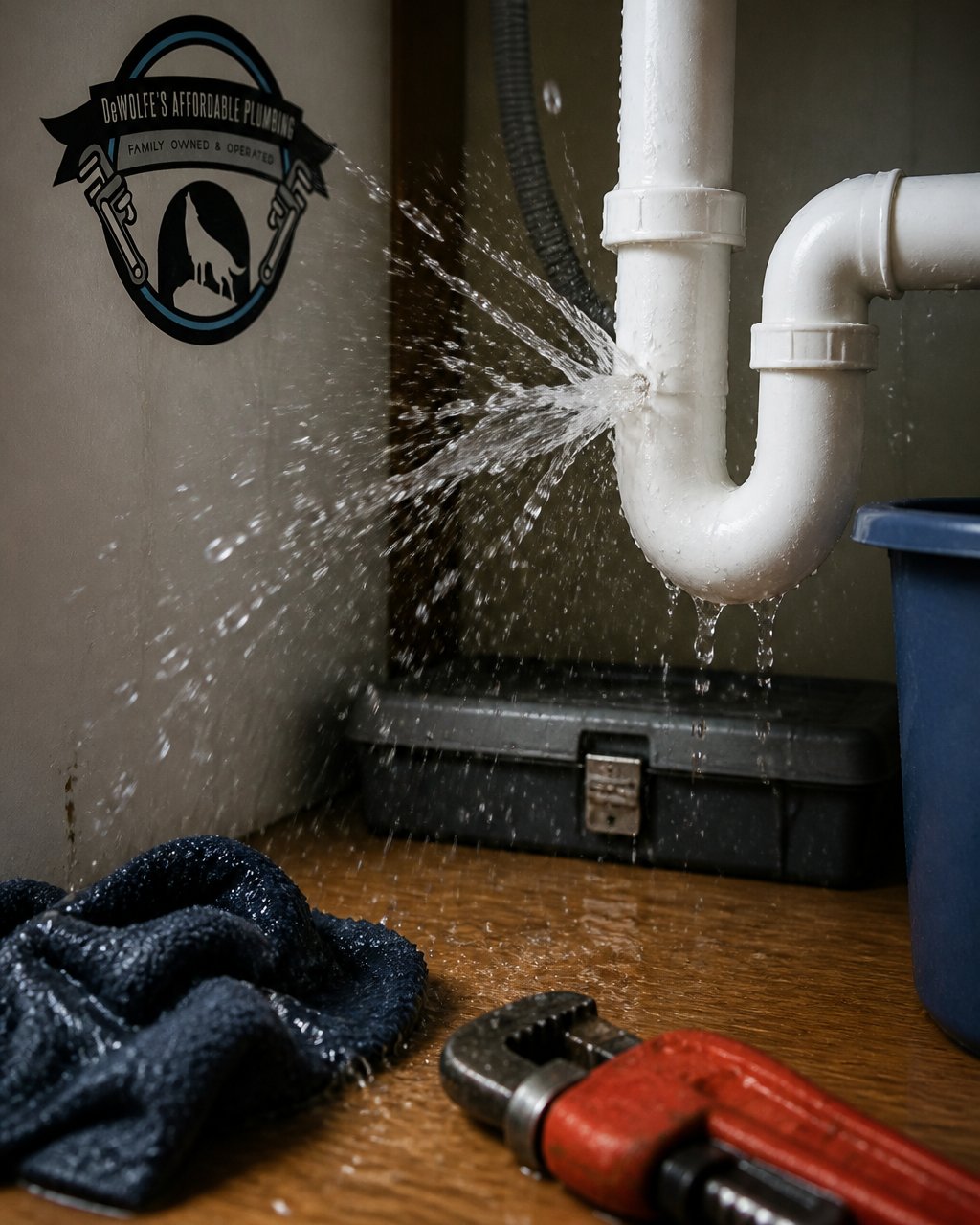
A hissing noise from inside a wall is the sound of water escaping a pinhole or a failing joint. Popping sounds often mean air is trapped or a pipe is expanding under pressure.
The tell is timing. If the sound continues after you turn off every faucet, shower, and appliance, water is moving somewhere it shouldn’t. That’s your cue to check the meter.
Damp Drywall, Peeling Paint, and Musty Odors
Wet walls and damp drywall mean water has already left the pipe. Look for soft spots, brown rings on ceilings, and paint that bubbles or peels away from the surface.
Don’t paint over it. If you spot damp drywall or a musty odor, our guide to signs of a hidden water leak in walls walks through how to confirm the source before it spreads.
Here are the seven warning signs the article says to watch for, grouped by what you hear and what you see.
| Warning Sign | Type of Clue |
|---|---|
| Hissing, popping, or gurgling sounds | Sound |
| Sudden drop in water pressure | Performance |
| Water bills that climb without explanation | Cost |
| Damp drywall, wet walls, or ceiling stains | Visible damage |
| Peeling paint or bubbling wallpaper | Visible damage |
| Musty smell or visible mold | Odor or growth |
| Cracks in walls or foundation | Visible damage |
Water Pressure Too High Signs That Put Your Pipes at Risk
High water pressure is easy to miss because it feels normal. Strong showers and fast-filling sinks seem like a good thing, but pressure above the standard range can stress every joint and fitting in the system.
Check for these clues:
- Faucets that spray or splash when you turn them on
- Appliances that wear out early, like a water heater or washing machine
- Banging or hammering sounds when a valve closes
A simple pressure gauge from a hardware store screws onto a hose bib and gives you a reading in seconds. If the number sits consistently high, install a pressure-reducing valve.
How to Find a Water Leak in a Wall Before It Spreads
Finding a leak in a wall starts with narrowing the search. Turn off every fixture in the house, then watch the water meter.
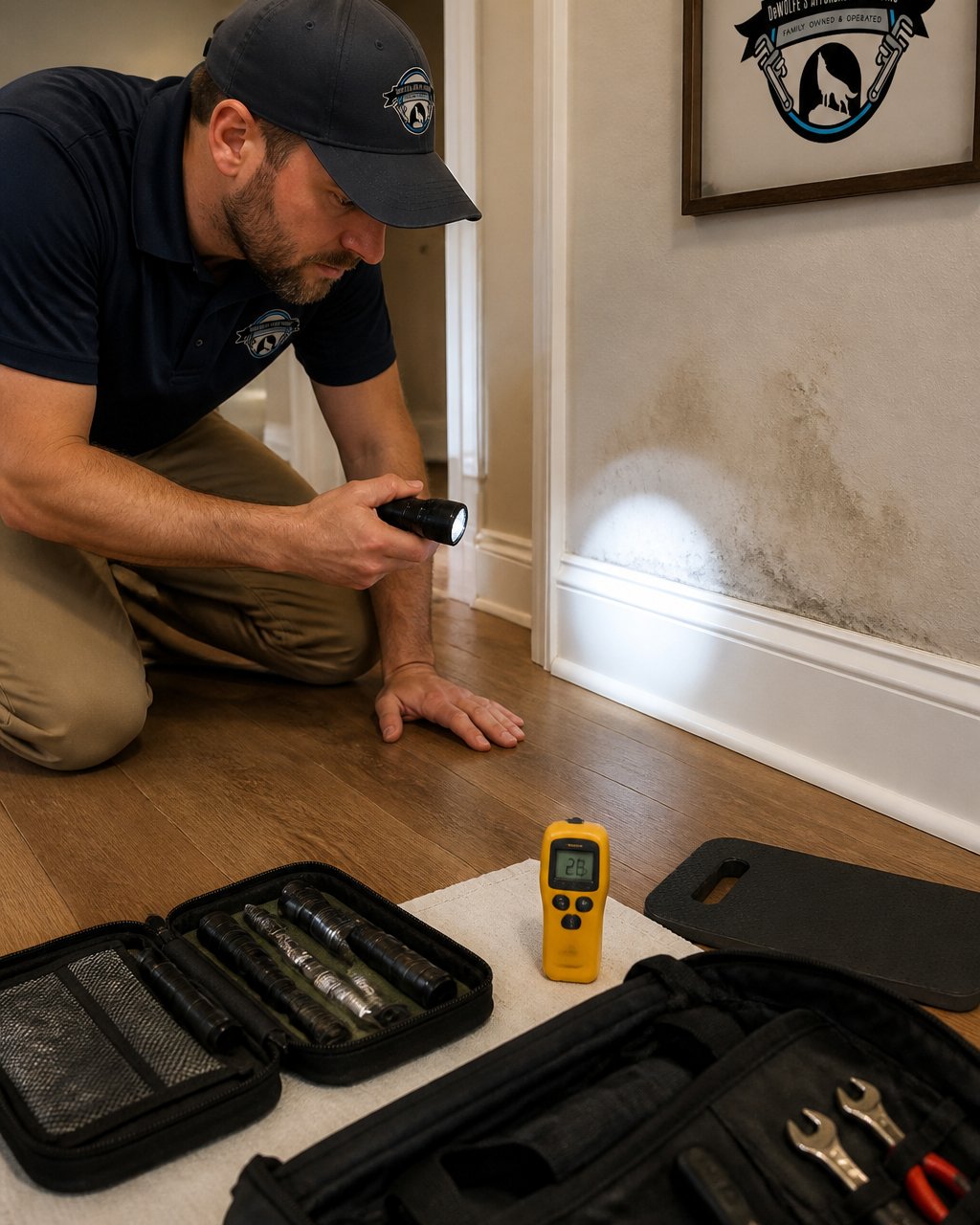
Here’s the practical order we recommend:
- Shut off all fixtures and confirm the meter stops.
- Note where stains, soft spots, or smells are strongest.
- Check the ceiling below upstairs bathrooms.
- Feel for warm spots on the floor, which can signal a slab leak.
- Shut off the main valve if the meter keeps moving.
Moisture meters and thermal cameras can help, and a licensed plumber can use professional leak detection equipment to locate the source.
How to Use Your Water Meter to Confirm a Hidden Leak
The water meter is a useful tool for homeowners, because it measures flow whether or not you can see it. The trick is reading it correctly and eliminating the fixtures that can fake a leak.
Step 1: Shut everything off
Turn off every faucet, shower, and tub. Shut off the ice maker, the dishwasher, and the washing machine at the valve, not just the control panel. If you have an irrigation system, close its isolation valve or shut off the zone controller, a single weeping sprinkler head can move the meter all night.
Step 2: Find the leak indicator
Most residential meters have a small flow indicator, often a triangle, a star, or a low-flow dial, separate from the main sweep hand. On a meter with a digital display, look for a flow icon or a rate readout. The indicator is sensitive enough to spin on a slow drip that the main dial barely registers.
Step 3: Watch, then wait
If the indicator moves with everything off, you have continuous water use somewhere. Write down the reading, wait two hours without using any water, and check again. Any change confirms a hidden leak. A fast sweep points to a supply-side pipe leak; a slow creep is more typical of a running toilet, a dripping valve, or an underground line in the yard.
Photograph the meter face before and after the two-hour window. The timestamped images are useful evidence for a plumber and for any insurance claim later.
Step 4: Rule out the usual impostors
A running toilet can mimic a pipe leak on the meter. Lift the tank lid and check the flapper and fill valve, dye tablets or a few drops of food coloring in the tank will show a silent leak into the bowl within about 15 minutes. Check the water softener and any humidifier for a stuck regeneration or drain cycle.
Step 5: Split the system if the meter keeps moving
If you have a shutoff valve on the line to the irrigation system or to an outdoor spigot, close it and recheck the meter. If the indicator stops, the leak is on that branch. If it keeps moving, the leak is inside the house or under the slab.
For a deeper look at why the bill jumped, read our breakdown on why your water bill is so high.
What to Do When a Pipe Bursts: Immediate Steps
Knowing what to do when a pipe bursts can save thousands in water damage. Act in this order:
- Shut off the main water shutoff valve immediately.
- Open a low faucet to drain remaining water from the lines.
- Cut power to any room with standing water near outlets.
- Move furniture, rugs, and electronics away from the water.
- Call a licensed plumber and document the damage with photos.
Don’t try to patch a burst pipe under pressure. Shut it down and let a pro handle the repair. If the burst happened during a cold snap, our guide on how to safely thaw frozen pipes covers the steps that prevent a second break.
When to Investigate Yourself and When to Call a Licensed Plumber
Most of this article is about early detection, and the honest answer is that a homeowner can safely do more than they think, and less than they sometimes try. The line is not about confidence. It is about water, electricity, and structural risk.
What you can safely check yourself
- Reading the water meter with all fixtures off
- Looking for visible stains, soft drywall, or bubbling paint
- Testing water pressure with a screw-on hose-bib gauge
These steps cost nothing, cause no damage, and give a plumber useful information. Do them first.
Stop and call now
Some situations are not diagnostic problems, they are emergencies. Call a licensed plumber immediately, and in the case of electrical or gas hazards, leave the area and call the appropriate emergency service, if:
- Water is pooling near electrical outlets, a panel, or an appliance
- You smell gas or suspect a gas line is involved
- You cannot find or operate the main shutoff valve
Never stand in standing water to operate an electrical switch or appliance. Cut power at the breaker only if you can reach the panel without wading through water.
Call a plumber, but not in a panic
These situations need a professional, though you have time to schedule rather than rush:
- The meter keeps moving after fixtures and the toilet are ruled out
- Water is pooling near the foundation or in the yard
- You suspect a slab leak under the floor
A slab leak generally requires specialized leak detection equipment to locate and repair. It is not a DIY job, and delaying the call can allow water to undermine the foundation. Our Slab Leak Location and Repair service covers this type of work, and our Residential Plumbing Service and Repairs addresses smaller plumbing failures.
What to do while you wait
Shut off the main valve if water is actively escaping. Open a low faucet to drain the lines. Move furniture, rugs, and electronics away from the wet area.
The goal is not to diagnose the pipe yourself. It is to gather the right information, avoid the unsafe steps, and hand a plumber a clear picture so the repair starts in the right place.
Schedule a Leak Inspection with DeWolfe’s Affordable Plumbing
Catching a failing pipe early is the whole game. The signs above give you a head start, but a professional inspection confirms what’s happening behind the walls and floors. DeWolfe’s Affordable Plumbing is family owned and operated, licensed and insured under Master License #M39597, and we back all labor with a full written warranty.
If you’re ready to stop guessing, book a leak inspection with DeWolfe’s Affordable Plumbing and get a clear answer on what’s going on in your plumbing system.
Frequently Asked Questions
What does a pipe sound like before it bursts?
A pipe under stress often makes a hissing, popping, or gurgling sound even when no fixtures are running. Hissing can indicate a pinhole leak or high pressure pushing against a weak joint, while popping or banging may come from pipe expansion and water hammer. If you hear rushing water when everything is off, treat it as an active leak and check your water meter before doing anything else.
Can high water pressure cause a pipe to burst?
Yes. Water pressure too high signs include banging pipes, frequent faucet drips, and water spraying from fixtures. Pressure above the standard range can stress joints and fittings, so it is worth checking with a gauge. A licensed plumber can test pressure at an outdoor hose bib and install a pressure-reducing valve if needed. Do not ignore a pressure drop or spike, since both can signal a pipe burst in progress.
Can I fix a leaking pipe myself, or should I call a plumber?
Small drips at an accessible supply line or faucet can sometimes be handled with a compression fitting or plumber’s tape. But if the leak is behind a wall, under a slab, or accompanied by low water pressure, wall cracks, or a wet floor, call a licensed plumber. Hidden leaks and slab leaks require leak detection equipment and can cause foundation damage if left alone. DeWolfe’s offers on-site estimates for residential customers.
What should I do first if I think a pipe is about to burst?
Shut off the main water shutoff valve immediately, then open a low faucet to drain remaining water and reduce pressure. Move valuables away from the area and document any damage with photos. Do not poke holes in drywall or try to tighten fittings on a bulging pipe. Call a licensed plumber for an inspection, and if water is actively spraying, treat it as an emergency and call for 24/7 service.
A failing pipe won’t fix itself, and the cost of waiting grows with every gallon that leaks into your walls. If any of these warning signs sound familiar, call DeWolfe’s Affordable Plumbing at (972) 632-9935. We offer 24/7 emergency service, on-site estimates, and a full written warranty on all labor. Get started with DeWolfe’s Affordable Plumbing and protect your home before a small leak becomes a major repair.
