
7 Risks of Using Chemicals on Old Pipes
Last Updated: November 1, 2026
Quick Summary
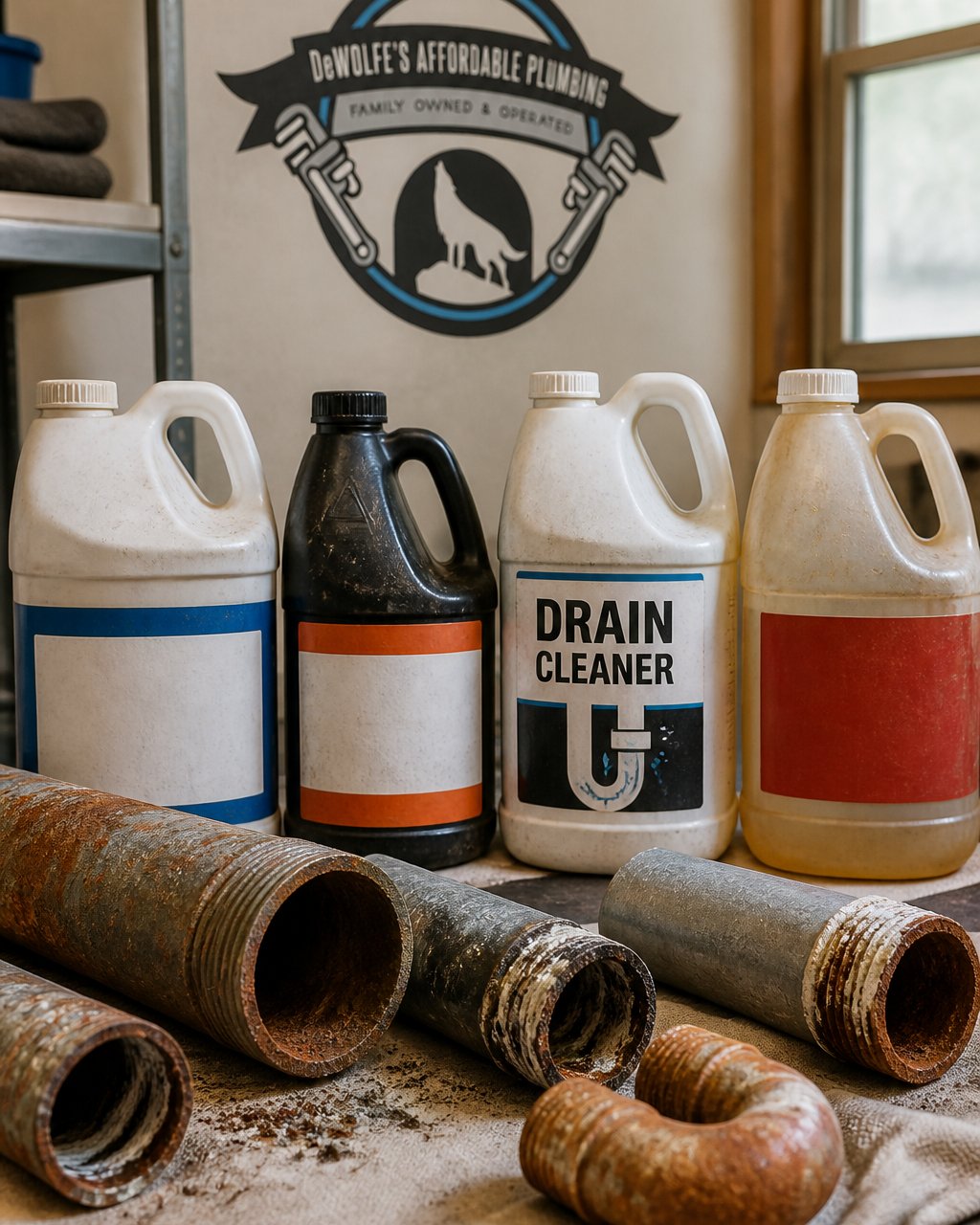
Chemicals on old pipes are not safe: store-bought drain cleaner is one of the fastest ways to turn a slow drain into a burst pipe, especially in homes with aging metal plumbing. Caustic cleaners generate heat, acid-based cleaners eat through metal fast, and oxidizing cleaners speed up rust and corrosion. Old pipes have less margin for error, so a thin-walled pipe can crack within hours.
- Cast iron drain lines rust from the inside out, and caustic chemicals accelerate that process.
- Acid-based cleaners are the worst offenders for metal pipes, causing corrosion and erosion.
- Never mix two drain cleaners; mixing acid-based and caustic products can cause a violent reaction.
- The safest way to unclog a drain in an old house is mechanical, not chemical.
- Enzyme-based cleaners use bacteria to eat organic matter and won’t corrode metal pipes.
Table of Contents
- Are Chemical Drain Cleaners Safe for Old Pipes?
- How to Check Your Pipe Material and Condition
- Is Drain Cleaner Safe for Cast Iron Pipes?
- What Chemical Cleaners Do to Metal and Plastic Pipes
- How to Unclog a Drain in an Old House
- Alternatives to Chemical Drain Cleaner
- What to Do After Drain Cleaner Fails
- When to Call a Licensed Plumber
- Frequently Asked Questions
Are Chemical Drain Cleaners Safe for Old Pipes?
No. Chemical drain cleaners are not safe for old pipes.
Here’s the core problem: chemicals on old pipes attack the pipe itself, not just the clog.
So can you use chemicals on old pipes? Technically yes. Practically, it’s a gamble with your plumbing.
- Caustic cleaners (lye-based) generate heat as they work
- Acid-based cleaners eat through metal fast
- Oxidizing cleaners speed up rust and corrosion
Old pipes have less margin for error. A pipe with thin walls may hold for years under normal water pressure.
How to Check Your Pipe Material and Condition
Before you pour anything down a drain, find out what the drain is made of and how much life it has left. Pipe material and condition together decide whether a chemical cleaner is merely risky or outright reckless. This is the step most homeowners skip, and it is the step that prevents the most expensive mistakes.
Identify the material first
Look at exposed pipes under sinks, in the basement, at the water heater, and where the main line enters the house. Then match what you see and feel:
- Cast iron: dark gray to black, very heavy, often rusty on the outside, with bell-and-spigot or hub joints. A magnet sticks firmly.
- Galvanized steel: dull gray, lighter than cast iron, with visible threaded joints and a zinc coating that flakes off in patches. Common in mid-century homes. A magnet sticks.
- Copper: reddish-brown, rigid, with soldered or compression joints. Common from the 1950s onward. A magnet does not stick.
- PEX: flexible, often red, blue, or white, with crimp or push-fit fittings. Common in newer construction and repipes. A magnet does not stick.
A small magnet is the fastest field test for metal versus plastic. If the pipe is painted or wrapped, scrape a small hidden spot with a coin to see the bare surface.
Judge the condition, not just the material
A fifty-year-old copper line can be sound. A fifty-year-old galvanized steel drain line is usually near the end of its service life. Age alone does not tell you the answer; condition does. Check for these signs:
- Rust flakes or orange-brown sediment in the water or at the drain strainer
- White mineral crust around joints, which points to a slow leak
- Dimpled or pitted surfaces on metal, meaning wall thickness is already reduced
- Damp patches or green crust near joints (green crust on copper signals an active leak)
A common mistake is assuming a pipe is fine because water still drains. Slow draining can be an early sign the pipe has narrowed from corrosion or scale.
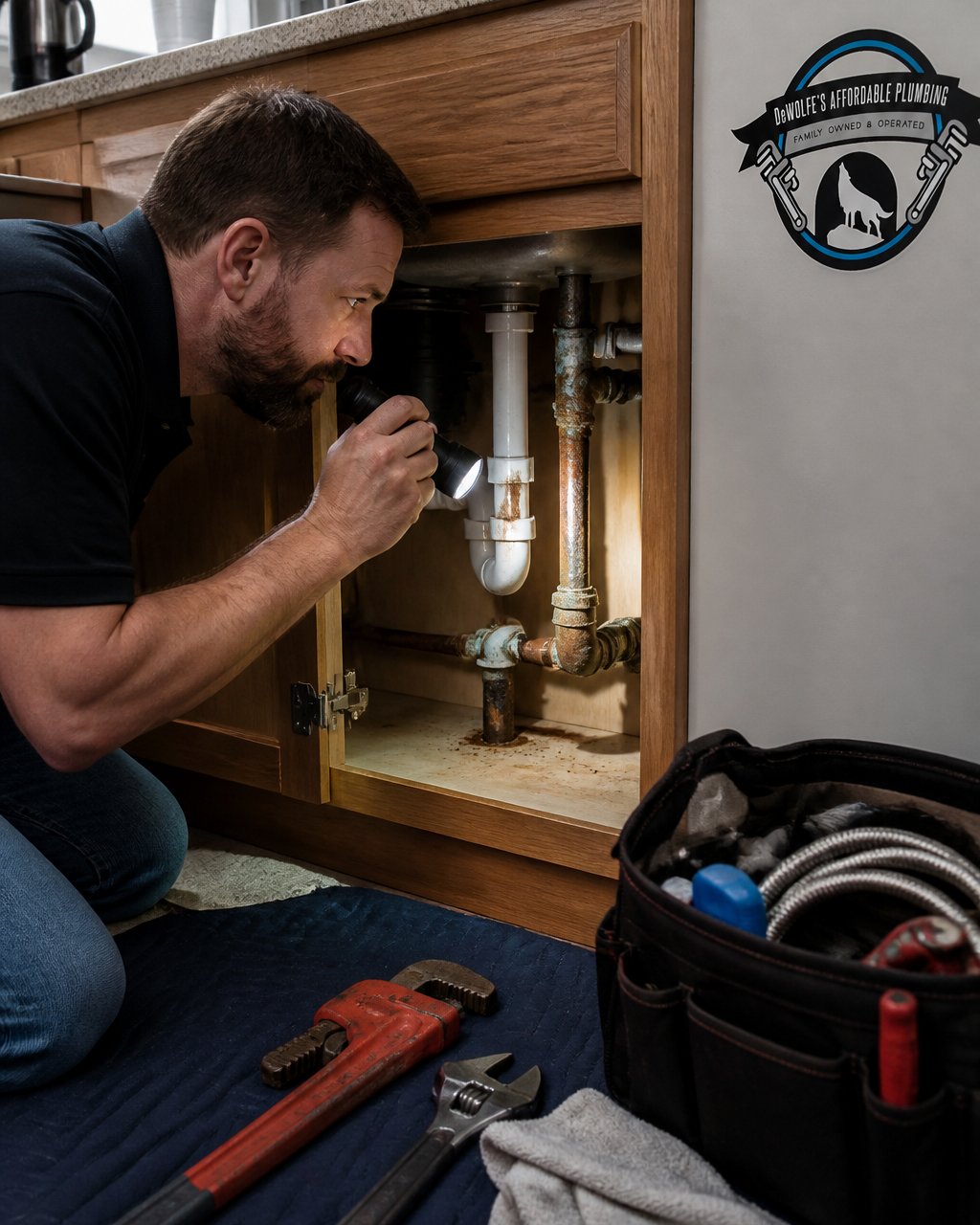
Photograph the pipe and any joints before you call a plumber. A clear photo of the material, joint type, and any corrosion helps the plumber quote the job accurately and tell you whether a chemical cleaner has already done damage.
Is Drain Cleaner Safe for Cast Iron Pipes?
No. Drain cleaner is not safe for cast iron pipes.
Cast iron is tough, but it corrodes. Decades of contact with water and waste leave the inner walls pitted and coated in rust scale.
The result? Weakened pipe walls, pinhole leaks, and eventually cracks.
If your home has cast iron drains, skip chemical cleaners entirely. Use a plunger or a mechanical drain snake instead.
What Chemical Cleaners Do to Metal and Plastic Pipes
Chemical drain cleaners can damage metal and plastic pipes in different ways, depending on the ingredients and how often they are used.
Metal pipes (cast iron, galvanized steel, copper) face corrosion and erosion. Acid-based cleaners are the worst offenders here.
Plastic pipes (PVC) hold up better, but they are not immune. Some harsh chemicals can soften or degrade PVC over repeated use, especially at glued joints.
Heat, Fumes, and Mixing Hazards
A chemical reaction inside a drain generates heat. In a healthy pipe, that’s manageable.
Then there’s the fume problem. Caustic and acid cleaners give off hazardous fumes that irritate your eyes and lungs. Never mix two drain cleaners.
Watch out: pouring a second product into a drain that already has cleaner in it is one of the most dangerous mistakes homeowners make.
How to Unclog a Drain in an Old House
The safest way to unclog a drain in an old house is mechanical, not chemical. Start gentle and work up.
- Boil a pot of water. Pour it slowly down the drain in stages.
- Use a plunger. Seal the drain and plunge for 15-20 seconds.
- Try baking soda and vinegar. A half cup of each, then flush with hot water.
- Run a drain snake. Feed it down and pull the clog out.
- Repeat if needed. Give it a second pass before reaching for anything stronger.
For a smelly old drain, the rotten-egg odor usually points to buildup or a dry trap, not just a clog. If the smell persists, read about why your kitchen sink smells like rotten eggs.
These steps handle most household clogs. If they don’t, the problem is deeper than a surface blockage.
Alternatives to Chemical Drain Cleaner
Mechanical cleaning beats chemicals on old pipes almost every time. Here are the safer options, matched to the clog type.
| Clog Type | Best Alternative | Why It’s Safer |
|---|---|---|
| Hair or soap scum | Drain snake or hair tool | Pulls the clog out, no chemical reaction |
| Grease buildup | Hot water flush plus enzyme cleaner | Enzyme-based cleaner breaks down grease gently |
| Food scraps | Plunger, then snake | No heat, no corrosion risk |
| Slow whole-house drain | Hydro jetting by a pro | Clears the full line without harsh chemicals |
| Recurring clog | Camera inspection | Finds the real cause instead of masking it |
Enzyme-based cleaners are the one chemical option worth considering. They use bacteria to eat organic matter and won’t corrode metal pipes.
Hydro jetting uses high-pressure water to scour the pipe clean. If you’re weighing that route, it helps to know how long hydro jetting takes before you book it.
What to Do After Drain Cleaner Fails
When a store-bought drain cleaner doesn’t clear the clog, stop. Do not pour in a second bottle, and do not switch to a different product. The drain now contains an active chemical, and the wrong next step can splash it back at you or damage the pipe further. This sequence is written for that exact moment.
Protect yourself first
- Open a window and run the exhaust fan. Caustic and acid cleaners give off fumes that irritate eyes and lungs.
- Put on gloves and eye protection before you touch the drain, the bottle, or anything that may have splashed.
- Keep children and pets out of the room until the drain has been flushed and the area cleaned.
- Do not lean over the drain while it is still reacting. Stand back and let it settle.
Read the label before you do anything else
Find the bottle and read the back panel. Note the active ingredient (sodium hydroxide, sulfuric acid, sodium hypochlorite, or an enzyme blend) and any pipe-material restrictions printed on the label. Many caustic and acid products explicitly warn against use in older metal, cast iron, or galvanized plumbing. That warning is the manufacturer telling you the product can damage the pipe, not just the clog.
Never mix two drain cleaners, and never combine a drain cleaner with bleach, ammonia, or other household cleaners. Mixing an acid-based product with a caustic one, or a caustic product with bleach, can cause a violent reaction that sprays caustic liquid and toxic fumes back up the drain.
Flush, wait, and watch
- Flush with plenty of water. Dilute whatever is still sitting in the pipe, pouring slowly to avoid splashing.
- Wait several hours. Give the chemical time to settle before you plunge, snake, or disassemble anything.
- Do not plunge right away. Plunging a drain full of caustic liquid can splash it back into your face and onto surrounding surfaces.
- Check for leaks. Look under the sink and at nearby joints for damp spots, drips, or new staining.
Tell the plumber exactly what was used
If the clog survives, call a professional and give them three facts: the product name, the active ingredient from the label, and when it was poured. A plumber who knows a caustic or acid cleaner is sitting in the line can take appropriate precautions while clearing the clog. Withholding that information is the most common reason a simple snaking turns into a surprise repair.
If the cleaner has already been used on old pipes, treat any new leak, soft spot, or recurring clog as a signal that the pipe wall has been compromised. That is the point to schedule an inspection rather than reach for another bottle.
When to Call a Licensed Plumber
Call a licensed plumber when a clog returns, when water backs up in more than one fixture, or when you’ve already used chemicals on old pipes. Before you book, you can read about what a professional drain cleaning visit involves.
A professional drain cleaning service uses mechanical tools rather than harsh chemicals, which protects older plumbing. If the line itself needs attention, our Sewer line Repair or Replacement service can assess it.
A few more reasons to call:
- Water pools in a sink, tub, or shower and won’t drain
- You smell gas or sewage near a drain
- A pipe shows rust, cracks, or damp patches
- The same drain clogs every few months
Recurring clogs can signal a larger problem, such as a bellied line or root intrusion.
DeWolfe’s Affordable Plumbing is family owned and operated and fully licensed and insured, with a full written warranty on all labor performed.
Frequently Asked Questions
Can chemical drain cleaners damage old pipes?
Yes. Caustic and acid-based cleaners generate heat and can corrode metal, eat into thin walls, and worsen existing cracks. Cast iron, galvanized steel, and older copper are the most vulnerable. Repeated use speeds up pipe deterioration, and a cleaner that clears one clog can leave you with a leak that costs far more to fix.
Is chemical drain cleaner safe for cast iron pipes?
It is risky. Cast iron drains in older homes are often already rusted and lined with scale, so the pipe wall is thinner than it looks. A drain cleaner safe for cast iron pipes generally means a low-corrosion product used sparingly, but mechanical methods like a snake or plunger are safer. If your cast iron is pitted or flaking, skip chemicals entirely and have the line inspected.
What should you do if chemical drain cleaner does not clear the clog?
Do not pour a second product on top of the first. Mixing caustic and acid cleaners can create violent reactions and hazardous fumes. Flush with plenty of water, wait several hours, and try a plunger or drain snake. If the clog remains, stop and call a licensed plumber. A clog that survives a chemical cleaner often points to a deeper blockage or a failing pipe.
When should you call a plumber instead of using drain cleaner?
Call a plumber if the same drain clogs repeatedly, if water backs up in multiple fixtures, if you smell gas or see standing water, or if your home has older metal plumbing. These signals often mean a main line blockage, a broken pipe, or a failing sewer line. A licensed plumber can inspect the line and clear it without risking further damage.
Old pipes and harsh chemicals don’t mix, and a clog that keeps coming back is your plumbing telling you something. Get it looked at before a slow drain becomes a cracked pipe. DeWolfe’s Affordable Plumbing offers drain cleaning, plumbing inspections, and 24/7 emergency response, all backed by a full written warranty on labor. Get started with DeWolfe’s Affordable Plumbing and clear the clog the safe way. Call (972) 632-9935.
