
Plumbing Vents: What They Are and Why They Clog
Last Updated: November 8, 2026
Quick Summary
A plumbing vent is the pipe that lets air into your drainage system so wastewater can flow out, keeping drain lines at normal atmospheric pressure. It clogs when leaves, debris, snow, ice, or animal nests block the roof opening or the pipe itself, breaking the pressure balance and causing gurgling, sewer odor, and slow drains.
- Vent lines admit air into the system and let sewer gas escape safely above the roof.
- A typical lavatory trap holds about 2 inches of water, which a single strong siphon can pull dry.
- Blocked vent symptoms show up as noise, smell, or slow drainage rather than at the vent itself.
- Do not climb onto your roof to clear a vent yourself because roof work is a fall risk.
- Never pour chemical drain cleaner into a line you suspect is vent-blocked.
Table of Contents
- What a Plumbing Vent Does in Your Drainage System
- Blocked Plumbing Vent Symptoms to Watch For
- What Causes a Clogged Vent Pipe
- Clogged Vent Versus Clogged Sewer: How to Tell the Difference
- How to Clear a Plumbing Vent Without Getting on the Roof
- Risks of a Blocked Vent and When to Call a Licensed Plumber
- Book a Vent Inspection With DeWolfe’s Affordable Plumbing
- Frequently Asked Questions
What a Plumbing Vent Does in Your Drainage System
A plumbing vent is the pipe that lets air into your drainage system so wastewater can flow out. Without it, drains choke on their own suction.
Every sink, tub, and toilet connects to a drain-waste-vent system, usually shortened to DWV. That system has three jobs that happen at the same time:
- Drain lines carry wastewater and solids away from fixtures toward the main sewer line.
- Waste lines connect each fixture’s trap to the branch and stack.
- Vent lines admit air into the system and let sewer gas escape safely above the roof.
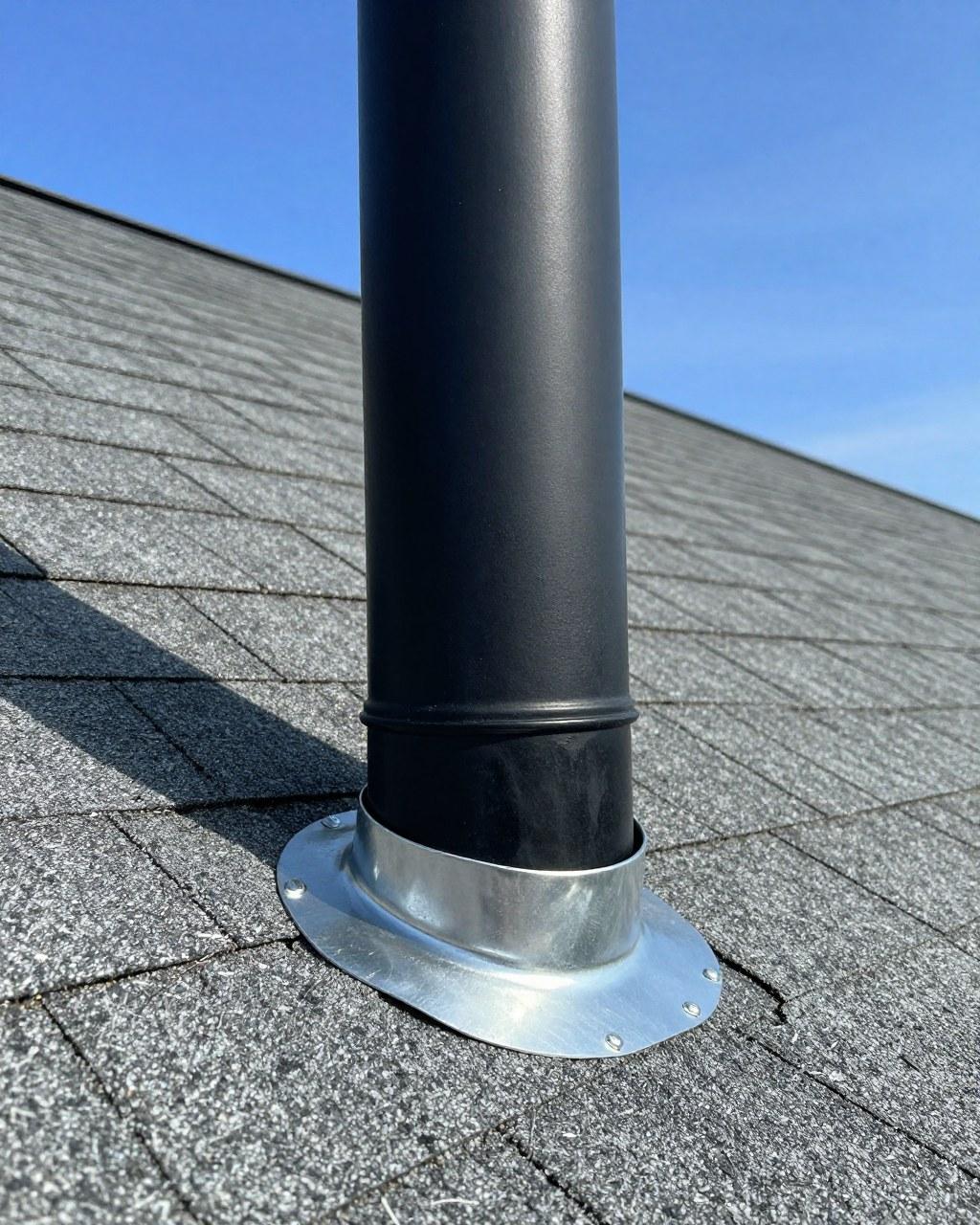
The vent stack is the vertical pipe you see rising through the roof. It is open to the sky, which keeps the drain line at normal atmospheric pressure. A stack vent is the portion of that same stack that serves the building drain.
How the Drain-Waste-Vent System Balances Pressure
Water rushing down a pipe pushes air ahead of it and pulls air behind it. The vent pipe keeps that pressure balanced.
When the system works, air moves freely through the roof vent and the drain line stays at normal atmospheric pressure. When the vent clogs, the balance breaks.
The mechanism is worth understanding because it explains every symptom later in this article. As wastewater leaves a fixture, it displaces air in the drain line.
A common pattern is that a partially blocked vent still works most of the day. The drain is slow but functional.
What Happens to Your Trap Seal When Airflow Stops
The trap seal is the small pocket of water sitting in the curved P-trap under every fixture. That water is your barrier against sewer gas.
A blocked vent creates suction in the drain line. The suction siphons water right out of the trap. Once the seal is gone, sewer gas has a clear path into your home.
Trap seals are sized by the fixture they serve.
A trap can also lose its seal from evaporation if a fixture goes unused for weeks, from a partially clogged branch line that drains slowly, or from a damaged trap.
Blocked Plumbing Vent Symptoms to Watch For
Blocked plumbing vent symptoms almost always show up as noise, smell, or slow drainage. The vent is hidden, so your fixtures do the talking for it. Watch for these signs:
- Gurgling or bubbling sounds after you flush or run water
- Sewer odor indoors, especially near bathrooms
- Sinks and tubs that drain slowly and keep coming back
- Toilets that bubble or flush weakly
- Water that dips in the bowl after a nearby fixture drains
Gurgling, Glugging, and Bubbling in Toilets and Sinks
Gurgling means air is being pulled through water somewhere it shouldn’t be. When you flush a toilet, the drain line needs a rush of air. If the vent is blocked, that air gets sucked through the nearest trap instead, and you hear the glugging.
Hearing strange noises from your plumbing pipes? That is your first clue that something in the system is off. A toilet or faucet check can rule out a fixture problem before you assume the worst.
Sewer Odor Indoors and Slow Drains That Keep Coming Back
Sewer gas smell indoors is the loudest warning sign. It usually means a trap seal has been pulled dry by vent suction.
Slow drains that return after you snake them point to the same cause. You cleared the fixture, but the vent is still blocked, so the problem rebuilds itself. A recurring clog is rarely a coincidence.
What Causes a Clogged Vent Pipe
A clogged vent pipe usually comes down to something blocking the top of the stack or the pipe itself. Common causes include:
- Leaves and roof debris packed into the vent opening
- Bird or animal nests built inside the stack
- Snow and ice sealing the vent shut in winter
- Dead animals or insects lodged in the pipe
- Rust, scale, or sagging pipe sections that collect debris
- Frost buildup on vents in cold weather
Leaves, Debris, Snow, Ice, and Animal Nests on the Roof Vent
The roof vent is open to the sky, which makes it a magnet for whatever the weather brings. Fall leaves pile up around the flashing. Squirrels and birds find the warm, dry pipe appealing. In freezing weather, snow and ice can cap the opening completely.
Seasonal conditions explain a lot of vent clogs that seem to appear out of nowhere. A vent that worked all summer can fail after the first hard freeze.
Clogged Vent Versus Clogged Sewer: How to Tell the Difference
A clogged vent and a clogged sewer line share symptoms, but they behave differently. A vent problem usually affects multiple fixtures at once and comes with gurgling or odor. A sewer clog tends to center on one area and gets worse the more you use it.
The table below compares the four most common explanations for the same set of complaints. Use it as a starting point, not a diagnosis.
| Sign | Clogged Vent | Clogged Fixture Drain | Clogged Main Sewer | Toilet Mechanism Problem |
|---|---|---|---|---|
| Gurgling from multiple drains | Common | Rare | Sometimes | Rare |
| Sewer odor indoors | Common | Rare | Sometimes | Rare |
| Slow drains that return after snaking | Common | Common | Common | Not applicable |
| Backup in one fixture only | Rare | Common | Rare | Common |
| Backup in lowest fixtures first | Rare | Rare | Common | Rare |
| Problem after heavy rain | Rare | Rare | Possible | Rare |
| Weak or incomplete flush | Sometimes | Rare | Sometimes | Common |
| Water level dips in bowl after nearby fixture drains | Common | Rare | Sometimes | Rare |
A Symptom-Based Way to Narrow It Down
Start with the scope of the problem.
Next, listen. Gurgling from a fixture you are not using is a strong vent signal.
Then check the toilet specifically.
Finally, check the smell. Sewer odor that appears only in one bathroom and clears after you run water in every fixture is usually a dry trap.
If you are unsure whether the issue is the vent or the sewer line, sewer line cleaning guidance helps you judge how often your line needs attention.
Watch out: do not assume every gurgle is a vent clog.
How to Clear a Plumbing Vent Without Getting on the Roof
You can often clear a plumbing vent from the ground with a few safe steps. Do not climb onto your roof to do this yourself. Roof work is a fall risk, and one wrong step costs more than a service call.
Here is the ground-level approach we recommend:
- Start at the fixture. Remove the drain stopper and clear any hair or debris from the trap arm.
- Check the trap. A full trap that drains slowly points to a vent issue further up the line.
- Use a drain snake. Feed a hand snake down the drain and through the trap to reach the branch line.
- Work toward the stack. A longer snake can reach the vent connection from inside the home.
- Flush and listen. Run water and listen for gurgling. If it stops, you cleared the blockage.
- Check the basement or crawlspace. Look for a cleanout near the base of the stack and open it carefully.
- Call a pro for roof access. If the clog is at the roof vent, a licensed plumber with the right equipment handles it safely.
For a deeper walkthrough on clearing stubborn blockages, our guide to clearing deep drain clogs covers the tools and techniques in more detail.
Watch out: never pour chemical drain cleaner into a line you suspect is vent-blocked. The chemicals sit in the pipe, can damage fittings, and do nothing about the actual blockage.
Risks of a Blocked Vent and When to Call a Licensed Plumber
A blocked vent is not just annoying. It can cause real damage over time. Traps that keep losing their seal let sewer gas into living spaces. Slow drainage stresses pipe joints. Repeated backups can push wastewater where it shouldn’t go.
Call a licensed plumber when you notice:
- Sewer odor that returns after you clear a drain
- Multiple fixtures backing up at once
- Gurgling that continues after snaking
- Water pooling around the base of a toilet
- Any sign of a vent problem you cannot trace from the ground
If you are in Collin County or nearby and want to know what a visit involves, our plumbing site estimate overview explains the process before anyone arrives. We give on-site estimates for residential customers and stand behind our labor with a full written warranty. If the inspection turns up a blockage further down the line, our sewer clog repair service can clear it.
Book a Vent Inspection With DeWolfe’s Affordable Plumbing
A vent clog is easy to misdiagnose and easy to ignore until it gets worse. If gurgling, odor, or slow drains have you guessing, a professional inspection will tell you what is actually happening.
We are family owned and operated, fully licensed and insured, and we offer 24/7 emergency service. Our team provides transparent, up-front pricing and same-day or 24-hour response to inquiries, so you are not left waiting around.
Ready to get it handled? Book a plumber in Wylie and we will inspect your vent and drainage system, explain what we find, and give you a clear plan before any work begins.
Stop guessing whether that gurgle is your vent or your sewer line. DeWolfe’s Affordable Plumbing brings licensed, insured plumbers to your door with on-site estimates, transparent up-front pricing, and a full written warranty on all labor.
Frequently Asked Questions
Will a toilet still flush if the plumbing vent is clogged?
It will flush, but poorly. A blocked vent traps air in the drain line, so the water in the bowl empties slowly and may not carry waste all the way to the main drain. You may hear gurgling from the toilet or nearby sink after the flush, and repeated flushes can back up. If flushing has become a two-attempt job, the vent is one of the first things to check before assuming the toilet itself is failing.
What are the most common blocked plumbing vent symptoms?
Gurgling or bubbling from toilets and drains, slow drainage in sinks and tubs that returns after snaking, sewer odor indoors, and a toilet that flushes weakly or backs up are the classic signs. The pattern matters: when several fixtures misbehave at once and the smell arrives with the gurgle, the vent is the likely culprit. A single slow sink with no odor usually points to a local trap or drain clog instead.
Can I clear a clogged vent pipe without getting on the roof?
Sometimes. Start at the lowest point: check the vent connection under each sink and clear any debris, then try a plumbing snake down through the roof vent only if you can reach it safely. A garden hose fed down the vent from the roof can flush leaves, but never do this alone or on a wet, icy, or steep roof. For most homeowners, a camera inspection from a licensed plumber is safer and finds the blockage faster.
How can I tell a clogged vent from a clogged sewer line?
A clogged vent usually shows up as gurgling and sewer odor across several fixtures with no standing water, while a sewer line clog causes water to back up in the lowest drains first, often the floor drain or tub, and multiple fixtures refuse to drain at all. If water rises when you run the washing machine or flush a toilet, suspect the sewer line. If fixtures drain but complain loudly and smell, suspect the vent.
