
How to Know How Often to Clean Sewer Lines
Last Updated: November 4, 2026
Quick Summary
How often you should clean sewer lines depends on your pipe material, tree cover, and backup history. Healthy plastic pipe with no trees nearby needs cleaning every 18 to 24 months, while clay or cast iron pipe under mature trees needs it every 12 to 18 months. Homes with prior backups or root intrusion should clean sewer lines every 6 to 12 months.
- Slow drains in several fixtures at once point to the main sewer line, not a local clog.
- A sewer camera inspection sets a cleaning schedule based on evidence rather than guesses.
- Tree roots find tiny cracks and joints, then catch paper and grease so blockages return within months.
- Chemical drain cleaners generate heat and can damage cast iron and clay pipes.
- Preventative cleaning every 12 to 24 months avoids backups, emergency calls, and damaged floors.
Table of Contents
- How Often Should You Clean Sewer Lines? A Practical Baseline
- Signs of a Clogged Sewer Line You Should Never Ignore
- What Drives Frequency: Pipe Material, Home Age, and Tree Roots
- Professional Sewer Line Inspection: The Baseline Every Home Needs
- Main Sewer Line Cleaning Cost: What Affects the Price
- Preventative Maintenance vs. Reactive Cleaning: Which Saves More
- DIY vs. Professional Sewer Cleaning: What You Can Handle
- Booking Your Sewer Line Cleaning with DeWolfe’s
- Frequently Asked Questions
How Often Should You Clean Sewer Lines? A Practical Baseline
Most homeowners never think about their sewer line until wastewater backs up into a tub. That is the wrong time to learn the answer to how often should you clean sewer lines. There is no single schedule that fits every house.
A general baseline looks like this:
- Healthy plastic pipe, no trees nearby: every 18 to 24 months
- Clay or cast iron pipe, mature trees on the lot: every 12 to 18 months
- A history of backups or root intrusion: every 6 to 12 months
The right interval depends on your pipe material, the age of the home, and what is growing above the line. A sewer line is the buried pipe that carries wastewater from your house to the city main (EPA New England Water Infrastructure Outreach Private Sewer Laterals June 2014). When grease, debris buildup, and roots collect inside it, flow slows and pressure builds.
Below, we break down the warning signs, the factors that shorten the schedule, and how to decide between DIY and a plumbing professional.
Signs of a Clogged Sewer Line You Should Never Ignore
The clearest signs of a clogged sewer line show up long before a full sewer backup. Catch them early and you avoid emergency calls.
Watch for these:
- Slow drains in more than one fixture at the same time
- Gurgling toilets when you run a sink or the washing machine
- Sewer gas odor drifting from drains or the yard
- Water pooling around the cleanout access or floor drain
- Repeated clogged drains that keep coming back after you clear them
One slow drain usually means a local clog. Several slow drains across the house point to the main sewer line. That is a different problem, and it needs a camera, not another bottle of drain cleaner.
If you see any of these, stop pouring chemicals down the drain and get the line checked.
What Drives Frequency: Pipe Material, Home Age, and Tree Roots
No two plumbing systems age the same way. Pipe condition decides how fast debris buildup returns.
Why Older Homes and Clay or Cast Iron Pipes Need More Attention
Older homes deserve a shorter cleaning interval. Clay tile and cast iron pipes develop cracks, joint gaps, and rough interior walls over time. Rough walls catch grease accumulation and paper, so clogs form faster.
Cast iron also rusts from the inside. That rust narrows the pipe and creates ledges where waste collects.
For older homes, an annual inspection is a reasonable approach rather than guessing. For a deeper look at what else tends to fail in older properties, read our guide to common plumbing issues in old homes.
How Tree Root Intrusion Shortens the Interval
Tree root intrusion is the single biggest reason a healthy line suddenly needs yearly cleaning. Roots find tiny cracks and hairline joints, then grow into the pipe chasing moisture.
Once roots are inside, they act like a net. Paper and grease catch on them, and the blockage returns within months.
Homes with mature trees near the sewer lateral often benefit from more frequent cleaning.
Professional Sewer Line Inspection: The Baseline Every Home Needs
A sewer line camera inspection is a video inspection that shows the condition of a pipe from the inside, which helps set a cleaning schedule based on evidence rather than guesses.
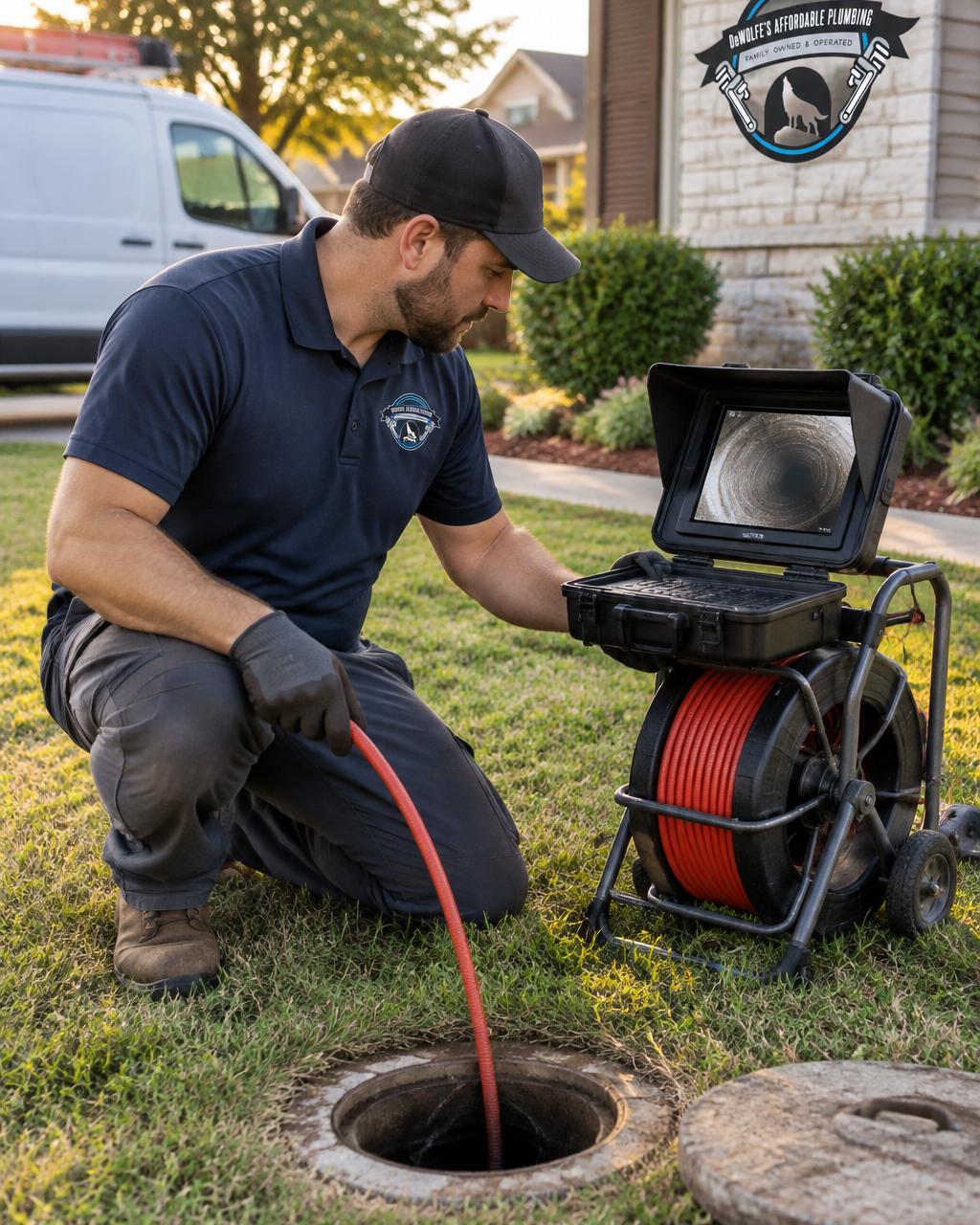
What a sewer scope inspection reveals:
- Pipe material and overall pipe integrity
- Cracks, bellies, and offset joints
- Root intrusion and where it starts
- Grease accumulation and debris buildup
- Whether trenchless repair or pipe lining is worth considering
We recommend a baseline scope on any home you just bought, and again whenever you move into a new cleaning cycle. It turns “every 18 months, maybe” into a real plan. You can learn about our sewer camera inspection service and schedule one before your next cleaning.
Main Sewer Line Cleaning Cost: What Affects the Price
Sewer line cleaning cost depends on the method, the access, and how severe the blockage is. Pricing depends on the specifics of each job, so a quote is best confirmed after the line has been assessed.
We offer on-site estimates for residential customers and transparent, up-front pricing. Pricing depends on the work involved, so contact us for a quote.
Preventative Maintenance vs. Reactive Cleaning: Which Saves More
Preventative maintenance can cost less than waiting for a failure. A scheduled cleaning clears buildup before it becomes a sewer backup, and backups cause the expensive damage.
Reactive cleaning means you call after the mess. That usually means emergency rates, water damage, and sometimes a ruined water heater or floor.
The trade-off is simple:
| Approach | Timing | What You Avoid | Best For |
|---|---|---|---|
| Preventative | Scheduled maintenance, every 12-24 months | Backups, emergency calls, damaged floors | Most homes, especially older ones |
| Reactive | After a clog or backup | Nothing, the damage is done | Rarely the cheaper choice |
A planned annual inspection also catches small problems while they are still cheap. For the full case, see our article on the benefits of regular home plumbing maintenance.
DIY vs. Professional Sewer Cleaning: What You Can Handle
You can handle a single slow sink or a shallow trap clog yourself. You should not handle a main sewer line clog with store-bought chemicals.
Here is the honest split:
- DIY is fine for: one slow drain, a pop-up stopper, a P-trap under the sink
- Call a pro for: multiple slow drains, gurgling toilets, sewer gas odor, repeat clogs
Chemical drain cleaners are a real risk on old pipes. They generate heat and can damage cast iron and clay. Our guide to the risks of using chemicals on old pipes explains why we avoid them.
If you want to try the main line yourself first, our step-by-step guide to unclogging a main sewer line walks you through it safely. If it comes back within weeks, that is root intrusion or a broken pipe, and it needs a camera.
Booking Your Sewer Line Cleaning with DeWolfe’s
The right cleaning interval comes down to your pipe, your trees, and your history. Start with a camera inspection, set a real schedule, and stop guessing.
At DeWolfe’s Affordable Plumbing, we are a family-owned and operated business, fully licensed and insured, and we back all labor with a full written warranty. We offer on-site estimates for residential customers, transparent up-front pricing, and 24/7 emergency service. We provide sewer clog repair and sewer line repair or replacement in the Wylie area.
Get started with DeWolfe’s Affordable Plumbing to plan care for your sewer line. Call (972) 632-9935 today.
Frequently Asked Questions
How often should I get my sewer line cleaned?
Many homes benefit from periodic professional cleaning, but the right interval is a starting point rather than a rule. Homes with older clay or cast iron pipes, mature trees near the lateral, or a history of backups often need more frequent attention.
What are the warning signs that a sewer line needs cleaning?
Watch for slow drains in more than one fixture, gurgling toilets after a flush, a sewer gas odor indoors or in the yard, and water backing up in the lowest drain of the house. Repeated clogs in the same spot point to debris buildup or tree root intrusion rather than a one-off blockage. Two or more of these signs together mean it is time for a professional sewer line inspection.
What factors influence how often sewer lines need cleaning?
Pipe material and age top the list: cast iron corrodes and clay cracks, both of which catch debris. Tree roots find joints in older lines and grow into them. Heavy grease accumulation from kitchen use, a long sewer lateral, and a home with more occupants all shorten the interval. North Texas clay soil shifts with wet and dry cycles, which stresses pipe joints and can open gaps roots exploit.
What is the difference between drain cleaning and sewer line maintenance?
Drain cleaning clears a single clogged fixture, like a kitchen or bathroom drain, using a snake or hand tool. Sewer line maintenance covers the main sewer lateral that carries all wastewater from the house to the city line.
