

Signs Your Water Heater Is Failing: 7 Warning Signals
Table of Contents
- 7 Warning Signs Your Water Heater Is Failing
- 1. Rusty, Brown, or Discolored Hot Water
- 2. Water Heater Making Noise: Rumbling, Popping, or Banging
- 3. Inconsistent Water Temperature
- 4. Hot Water Running Out Sooner Than Usual
- 5. Little or No Hot Water
- 6. Water Heater Leaking From the Bottom or Moisture Near the Base
- 7. Visible Corrosion on the Tank or Connections
- Water Heater Life Expectancy: How Age Factors Into Failure
- Tank vs. Tankless: Different Warning Signs to Watch For
- Safe Troubleshooting Steps Homeowners Can Try
- Water Heater Repair or Replacement: How to Decide
- When to Call a Professional Immediately
- Conclusion
- Frequently Asked Questions
Last Updated: October 5, 2026
7 Warning Signs Your Water Heater Is Failing
Learning to read the signs your water heater is failing can mean the difference between a quick repair and a flooded garage. The tank warns you weeks in advance through rusty water, odd noises, or moisture at the base.
1. Rusty, Brown, or Discolored Hot Water
Rusty water is the clearest early warning a tank can give you. If hot water runs brown or reddish but cold water stays clear, the corrosion is happening inside the tank, not in your pipes. Sediment collects at the bottom, water sits against bare steel, and the lining gives way. The EPA guidance on drinking water safety is a useful reference for what discolored water can indicate in a home.
2. Water Heater Making Noise: Rumbling, Popping, or Banging
A water heater making noise is usually a sediment problem. As mineral deposits harden on the tank floor, trapped water boils into steam, producing rumbling, popping, or banging. A flush often quiets a younger tank; on an older unit, the sediment layer is thick enough to overheat the steel, and the tank is on borrowed time.
3. Inconsistent Water Temperature
Temperature swings mid-shower point to a failing heating element or a thermostat that can’t hold a set point. In gas units, a dirty burner or failing dip tube causes the same symptom.
4. Hot Water Running Out Sooner Than Usual
Reduced hot water capacity is a classic sign of a tank nearing the end. Sediment steals space that should hold hot water, so a 50-gallon tank behaves like a 30. If your morning routine runs cold halfway through, note how long the hot water lasts and compare it to a month ago.
5. Little or No Hot Water
No hot water at all usually means a failed element, a tripped breaker, a pilot that won’t stay lit, or a gas valve issue. Check the breaker or pilot first. If power and gas are fine and the tank still won’t heat, the problem is internal, call a plumber.
6. Water Heater Leaking From the Bottom or Moisture Near the Base
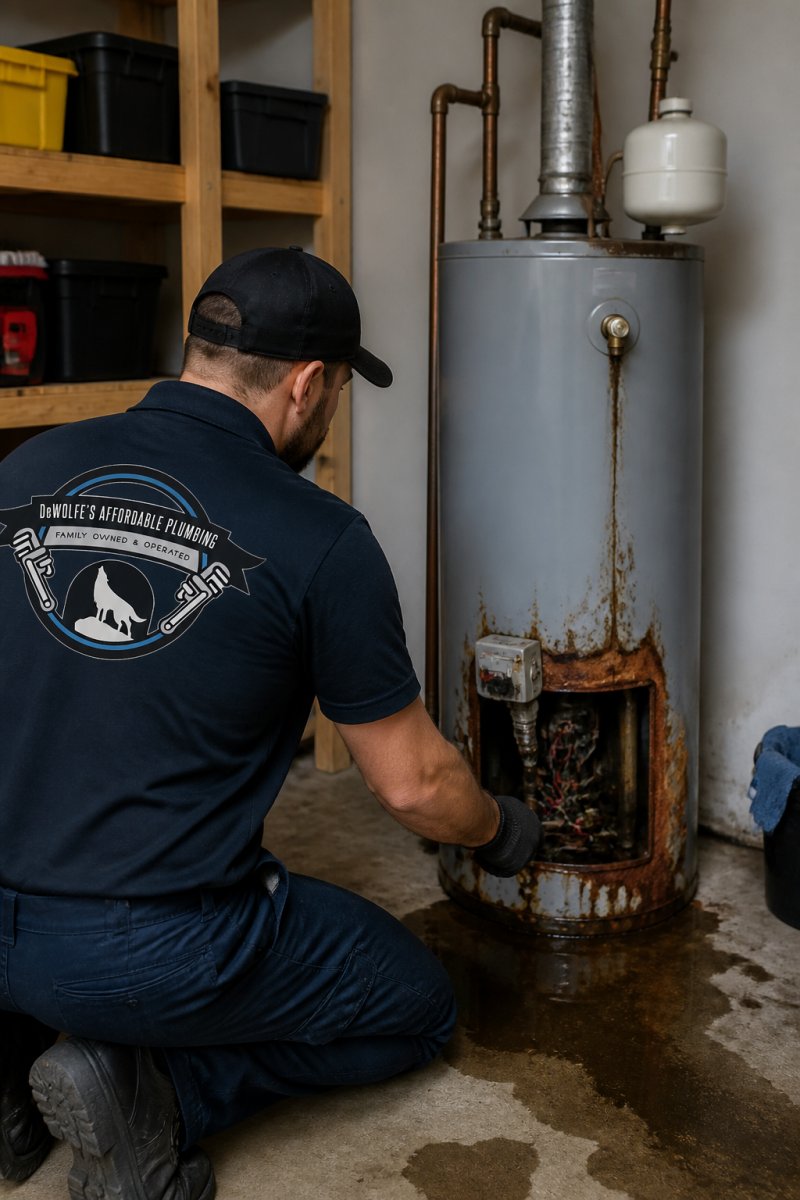
A water heater leaking from the bottom is the one sign you never wait on. Moisture near the base, water pooling under the tank, or a damp ring on the concrete means the inner tank has cracked, not a repairable part. Shut off the water supply and the gas or power, then call a plumber. A tank leak can turn into a full rupture and water damage fast.
If you see water pooling under the tank, do not tighten fittings and hope for the best. A bottom leak means the tank shell has failed, and the unit can burst without further warning.
7. Visible Corrosion on the Tank or Connections
Corrosion on the tank body, fittings, or connections means the metal is thinning. Flaking rust, white mineral crust around the inlet and outlet, or rust streaks down the side all point to a tank past its service life. Corroded connections also raise the risk of a gas or water leak, so have them inspected rather than painted over.
| Warning Sign | Likely Cause | Urgency |
|---|---|---|
| Rusty or brown hot water | Internal tank corrosion | High – plan replacement |
| Rumbling or popping | Sediment buildup | Medium – flush or replace |
| Inconsistent temperature | Failing element or thermostat | Medium |
| Hot water runs out early | Sediment reducing capacity | Medium |
| No hot water | Element, breaker, or gas valve | High |
| Leaking from the bottom | Cracked inner tank | Emergency |
| Visible corrosion | Thinning metal, aged tank | High |
Water Heater Life Expectancy: How Age Factors Into Failure
Water heater life expectancy typically runs 8 to 12 years for a traditional tank and up to 20 for a well-maintained tankless unit. Age is the single best predictor of failure. A tank that is 10 years old and showing two or more symptoms is usually closer to replacement than repair. For a closer look at how age affects performance, the Department of Energy guide to water heating explains how efficiency drops as tanks age.
Tank vs. Tankless: Different Warning Signs to Watch For
Most guides describe one machine.
Tank (storage) water heaters hold 30 to 80 gallons in a glass-lined steel vessel and fail from the inside out.
Tankless (on-demand) water heaters heat water as it flows through a copper or stainless heat exchanger.
Here is how the same complaint reads differently on each system:
| Complaint | Tank system | Tankless system |
|---|---|---|
| Not enough hot water | Sediment has stolen capacity, or the dip tube has failed | Unit is undersized for simultaneous demand, or the inlet filter is clogged |
| Temperature swings | Failing element, thermostat, or dip tube | Scale in the heat exchanger, or flow rate below the activation threshold |
| Strange noises | Rumbling and popping from boiling sediment | Kettling or whistling from scale, or a fan/bearing noise |
| Water where it shouldn’t be | Cracked inner tank (bottom leak) | Condensate line, relief valve, or a fitting on the water line |
| Error or fault code | Rare on basic tanks | Common; the display is the unit’s own diagnostic tool |
| Cold water at the tap | Recovery rate can’t keep up | “Cold water sandwich” between ignition cycles |
A few tankless-specific signs deserve their own callouts:
- Error codes on the display. A tankless unit reports faults directly. The code points to a specific subsystem, such as an ignition failure, a flame-sensor fault, a blocked vent, or a flow-sensor error. Write the code down before you call, because it shortens the diagnosis.
- The cold-water sandwich. A brief burst of cold water mid-shower happens when the burner cycles off and back on, often because the flow rate dropped below the unit’s minimum activation point. A low-flow showerhead, a partially closed valve, or a clogged inlet filter can all trigger it.
- Reduced flow at every hot tap. If hot-water pressure drops throughout the house while cold pressure stays normal, scale or debris is restricting the heat exchanger or the inlet filter screen.
Find your model’s rating plate before you troubleshoot. Tankless units list a maximum flow rate in gallons per minute and a temperature rise. If two showers and a dishwasher are running at once, you may simply be exceeding the unit’s capacity, which is a sizing issue, not a failure.
One more distinction matters for both types: a tankless unit that never reaches temperature may have a crossed or reversed water connection, which shows up right after installation and mimics a failed unit. If the symptom started the day the heater was installed, suspect the install before the machine.
If you are not sure which system you have, look for a large cylindrical tank or a small wall-mounted box with a display and venting.
Safe Troubleshooting Steps Homeowners Can Try
Step 1: Confirm the unit has power or a flame. For an electric unit, check the breaker panel and reset a tripped breaker once. If you smell gas, leave the area and call your gas utility or a licensed plumber from outside.
Step 2: Isolate the problem to one tap or the whole house. This is the fastest way to avoid an unnecessary service call. Run hot water at two fixtures at once, ideally one bathroom and one kitchen, then compare:
- Hot water is cold or weak at one tap only. The water heater is likely fine. The problem is that fixture: a failed mixing cartridge, a clogged aerator, or a closed shutoff valve under the sink.
- Hot water is cold or weak at every hot tap. The issue is at the heater or in the hot-water distribution line, not at a single fixture.
- Hot water is fine, cold water is weak. That is a cold-side plumbing or supply problem, not a water heater problem at all.
- One faucet runs hot when you only asked for cold. A failing mixing valve or a crossed connection is blending the two lines.
Step 3: Check the thermostat setting. Someone may have bumped the dial, or a digital control may have reset after a power outage.
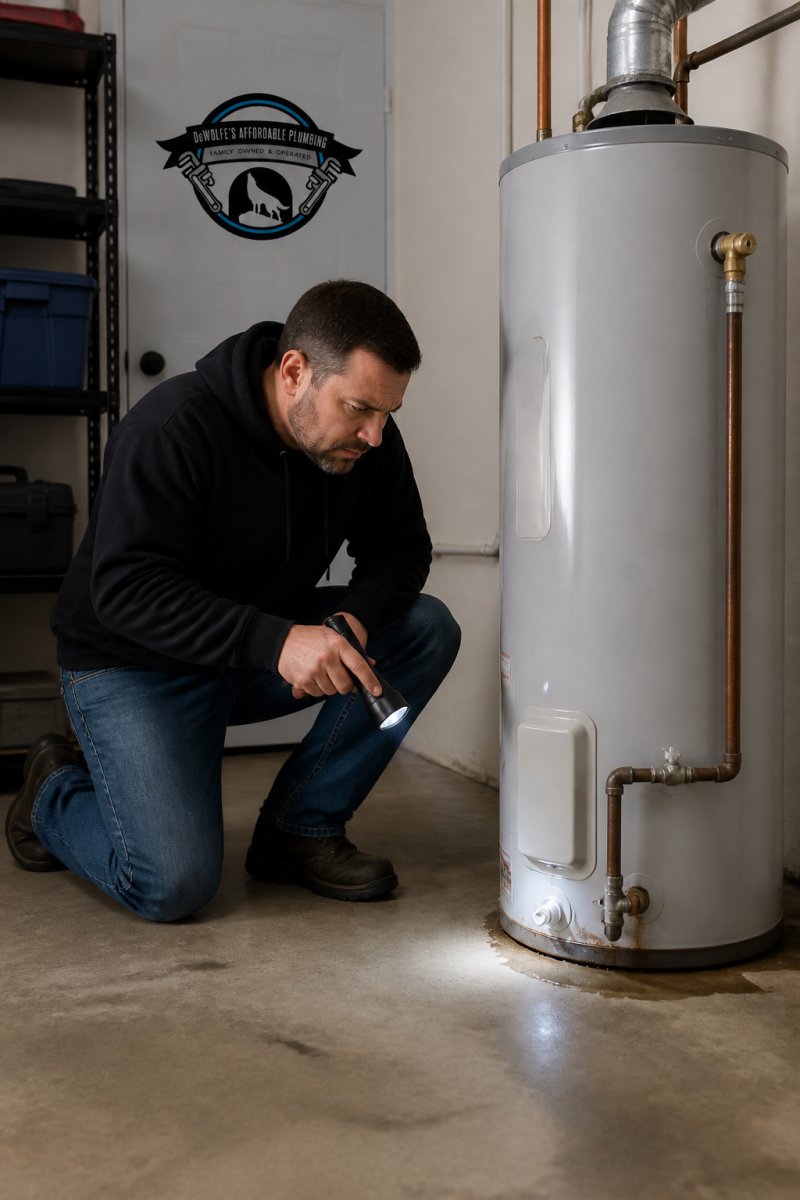
Step 4: Look for moisture without touching the tank. Shine a light on the base and fittings.
Step 5: Note the symptoms and the age. Write down what you observed, when it started, and the build date from the manufacturer’s label.
Do not open the tank, remove the burner cover, disconnect gas lines, or touch the temperature-and-pressure relief valve. Do not attempt to relight a pilot if you smell gas. These are the tasks that turn a repair into an emergency, and they belong to a licensed professional.
If only one faucet runs cold, you have a fixture problem, not a water heater problem, and you just saved yourself a service call. Test a bathroom tap and a kitchen tap at the same time to confirm.
When to stop troubleshooting. Call a licensed plumber if you see water pooling near the tank, smell gas, spot corrosion on gas connections, notice the relief valve discharging, or have no hot water after the basic checks above. Gas leaks, active water leaks, and suspected pressure-relief failures are emergencies, not weekend projects.
Water Heater Repair or Replacement: How to Decide
The repair-or-replace call comes down to age, symptom count, and leak status. A single issue on a tank under 8 years old is usually a repair. A tank over 10 years old with two or more symptoms, or any bottom leak, is a replacement. If the repair costs a large share of a new unit and the tank is near the end of its lifespan, replace it.
One symptom on a young tank means repair. Two or more symptoms on a tank past 10 years, or any leak from the base, means replacement.
When to Call a Professional Immediately
Some situations are not DIY territory. Call a licensed plumber right away if you see water pooling near the tank, smell gas, spot corrosion on gas connections, or have no hot water after basic checks. Gas leaks and active water leaks are emergencies. DeWolfe’s Affordable Plumbing offers 24/7 emergency service and same-day or 24-hour response to inquiries, backed by a full written warranty on all labor performed.
Consumer Product Safety Commission home safety resources
Conclusion
A failing water heater rarely fails without warning. Rusty water, odd noises, temperature swings, and moisture at the base give you time to act before a leak damages your home. If you’re seeing any of these signs, don’t wait for the tank to quit on its own. DeWolfe’s Affordable Plumbing is family owned and operated, fully licensed and insured, and offers transparent, up-front pricing, on-site estimates, and a full written warranty on all labor.
Frequently Asked Questions
What is the typical life expectancy of a water heater?
Tank-style water heaters usually last 8 to 12 years, while tankless units can last up to 20 years with proper maintenance. If your unit is over 10 years old and showing signs your water heater is failing, such as leaks or inconsistent hot water, replacement is often more cost-effective than repair. Regular flushing removes sediment and can extend water heater life expectancy.
Why is my water heater leaking from the bottom?
A water heater leaking from the bottom often indicates a failed tank or loose drain valve. Sediment buildup can cause the tank to overheat and crack, leading to leaks. If you see water pooling or moisture near the base, turn off the power and water supply, then call a licensed plumber. Ignoring a bottom leak can lead to water damage and mold.
What do unusual noises from a water heater mean?
Rumbling, popping, or banging sounds usually mean sediment has accumulated at the bottom of the tank. As the burner heats the water, trapped sediment causes steam bubbles to pop, creating noise. This reduces heating efficiency and can shorten the unit’s life. Flushing the tank may help, but if the water heater making noise persists, it’s best to have a professional inspect it.
Should I repair or replace a failing water heater?
If your water heater is under 10 years old and the issue is a minor part like a heating element or thermostat, repair is often the better choice. However, if the tank is corroded, leaking from the bottom, or over 10 years old, replacement is usually more reliable. A licensed plumber can assess the unit and help you weigh water heater repair or replacement based on safety and long-term costs.