

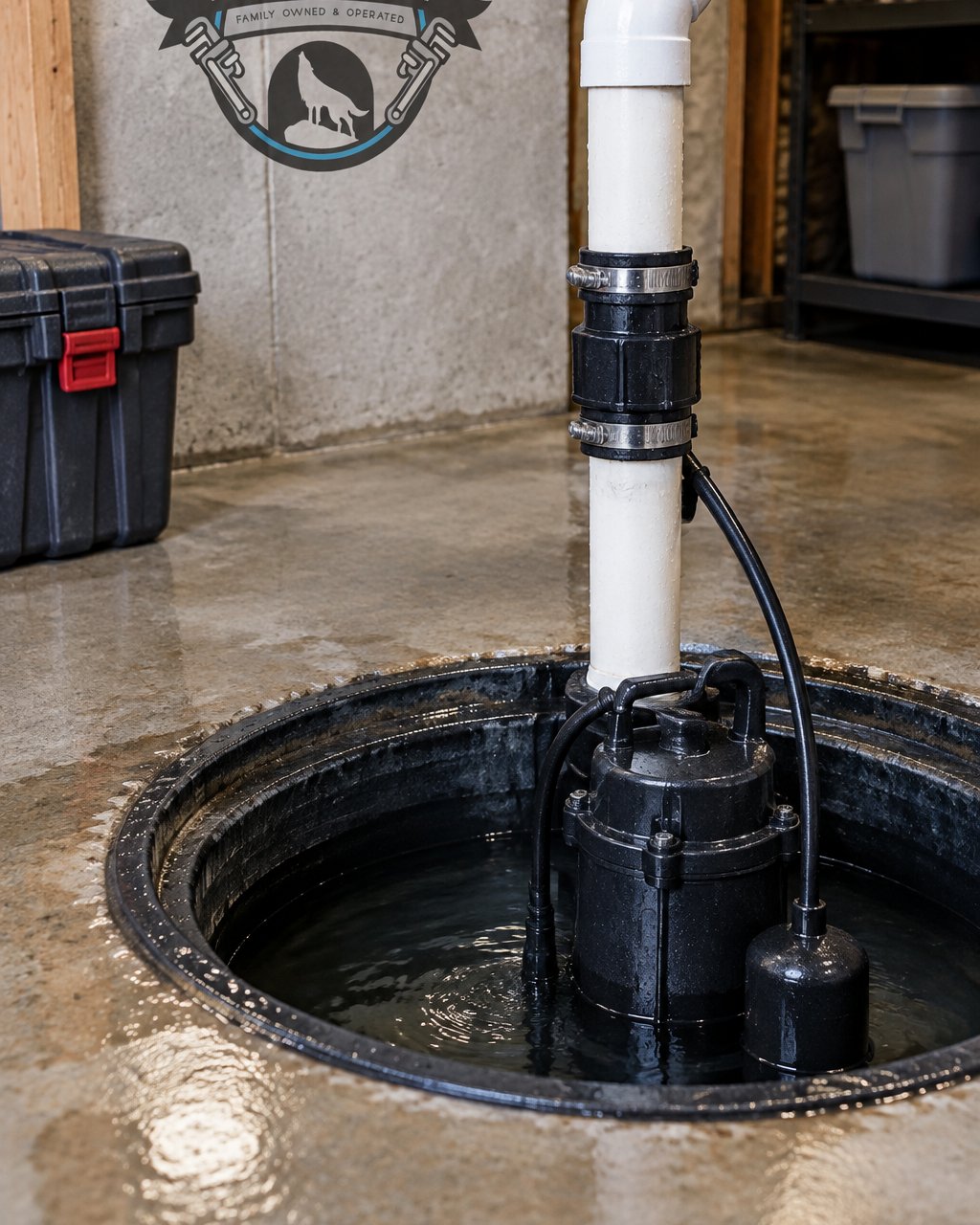
Is Your Sump Pump Ready for Heavy Rain?
Last Updated: November 5, 2026
Quick Summary
To maintain a sump pump for rainy seasons, run a monthly bucket test and float switch check, clean the pit every six months, and inspect the discharge line before the wet season. Test the backup battery monthly and schedule a full professional inspection yearly.
- A bucket test takes about ten minutes and confirms the pump still activates.
- Clean the sump pit every six months to remove sediment before it jams the float.
- Set the backup float slightly higher than the primary so the pumps do not fight.
- Slope and insulate the discharge pipe so water drains out and does not freeze.
- Call a licensed plumber if the motor trips the breaker on every start.
Table of Contents
- Pre-Season Sump Pump Inspection Before the Rain Hits
- How to Test a Sump Pump With a Simple Bucket Test
- Cleaning the Sump Pit, Float Switch, and Pump Motor
- Sump Pump Battery Backup Installation and Power Checks
- Discharge Pipe, Frozen Lines, and Moving Water Away From the Foundation
- Signs of Sump Pump Failure to Watch For During Heavy Rain
- Your Sump Pump Maintenance Schedule for Wet Season
- When to Call a Licensed Plumber for Sump Pump Help
- Frequently Asked Questions
Pre-Season Sump Pump Inspection Before the Rain Hits
A sump pump sits in a pit below your basement floor and pushes collected groundwater out before it can rise high enough to cause damage.
Most guides treat a sump pump as set-and-forget. It is not.
Start your pre-season inspection with a short walk-through:
- Confirm the pump is standing upright in the pit, not tilted
- Check that the pit is free of standing water when the weather is dry
- Look for rust, cracks, or mineral buildup on the pump housing
- Make sure the power cord reaches an outlet that is not tripped
- Verify the discharge pipe is connected and aimed outdoors
Write down anything that looks off. A short list of issues is easier to fix now than a flooded basement is to clean up later.
How to Test a Sump Pump With a Simple Bucket Test
The fastest way to know your pump still works is a bucket test, and it takes about ten minutes. Fill a five-gallon bucket with water, pour it slowly into the pit, and watch the float switch rise. When the water level lifts the float, the pump should kick on and start moving water out.
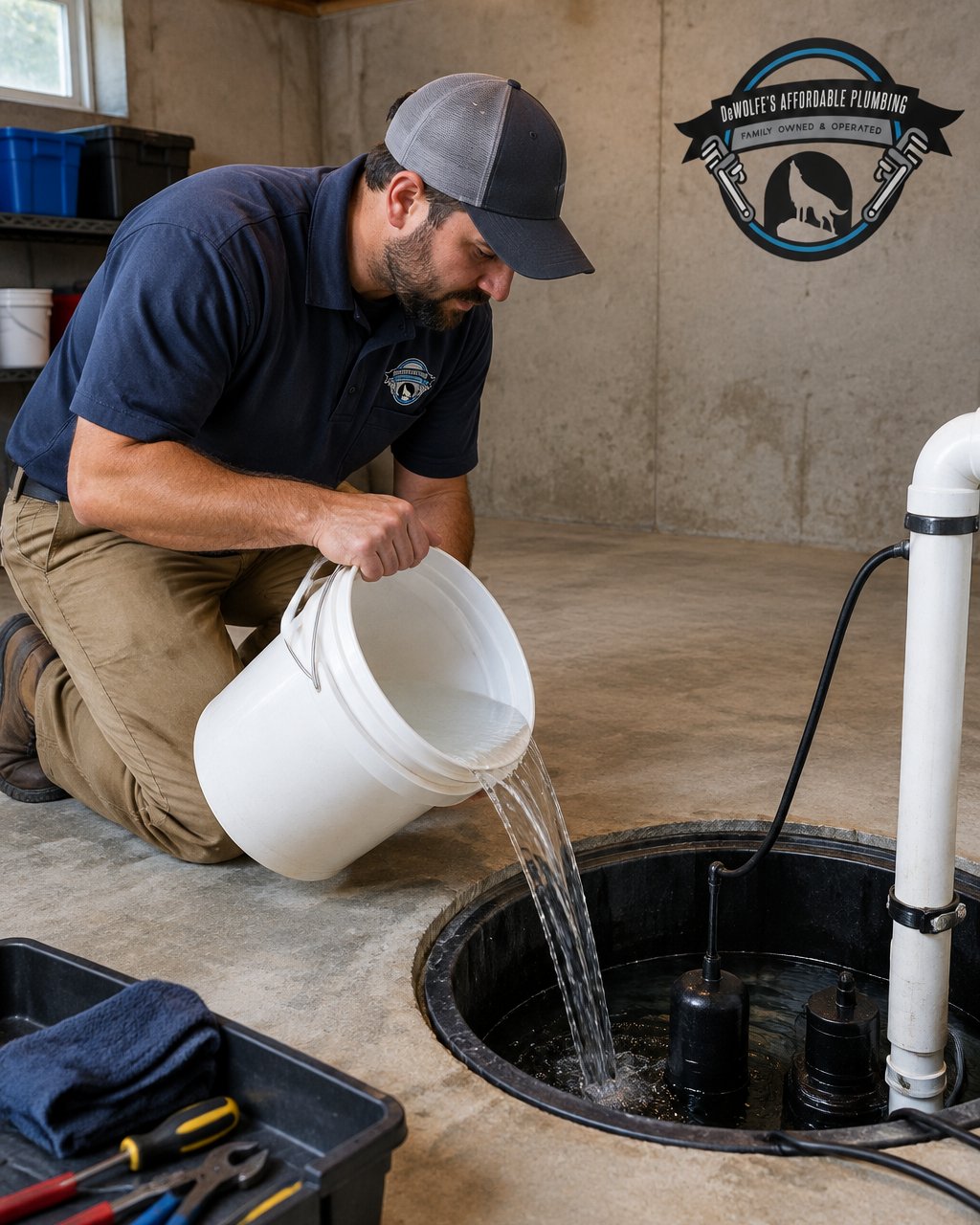
Here is the sequence we walk customers through:
- Unplug the pump before you touch anything in the pit.
- Clear loose debris from the top of the pit so water can flow in.
- Plug the pump back in and pour water until the float lifts.
- Listen for the motor to start and watch the water level drop.
- Note how long the pump runs before it shuts off on its own.
A pump that hums but does not move water has a jammed impeller or blocked discharge line. A pump that never starts has a stuck float switch or a power problem. Both are fixable if caught early.
Cleaning the Sump Pit, Float Switch, and Pump Motor
Sediment is the quiet killer of sump pumps.
Lift the pump out by its handle and set it on a towel.
Watch out: never reach into a pit while the pump is plugged in.
Reinstall the pump, refill the pit with a bucket of water, and confirm it cycles on and off cleanly. If the float still sticks after cleaning, replace the switch.
Sump Pump Battery Backup Installation and Power Checks
A sump pump that loses power during a storm is useless exactly when you need it most.
Backups generally come in two forms: a separate battery-powered pump in the same pit, and an inverter that keeps the existing pump running on battery power.
Either way, the backup connects to its own float switch set slightly higher than the primary float.
Testing the backup is where most homeowners fall short. A monthly test should do more than confirm the pump spins:
- Confirm the charger indicator shows the battery is charged, not just connected.
- Unplug the primary pump so it cannot mask a backup failure.
- Pour water into the pit until the backup float rises and the backup pump starts.
- Time how long the backup runs before the water level drops below the float.
- Plug the primary back in and confirm the backup charger returns to its normal state.
Pay attention to the alarm.
Power checks go beyond the battery:
- Test any GFCI outlet the pump uses by pressing the test and reset buttons
- Confirm the breaker is not tripped and the circuit is labeled correctly at the panel
- Check that the cord is not frayed, pinched, or run through standing water
- Make sure the backup charger shows a full charge after a test cycle
If you are not comfortable with the wiring, hire a licensed plumber or electrician.
Discharge Pipe, Frozen Lines, and Moving Water Away From the Foundation
The discharge line is the part homeowners forget, and the part that fails in cold weather. Water left sitting in an outdoor discharge pipe can freeze solid, blocking the line so the pump runs but cannot move water.
Here is how to protect it:
- Slope the discharge pipe so water drains out and does not pool inside
- Insulate any exposed section that runs through an unheated space
- Remove the outdoor hose connection before the first freeze
- Check that the outlet points at least several feet away from the foundation
Water that dumps right next to the house just flows back into the pit, a cycle you will lose. Aim the discharge toward a slope, dry well, or drainage area that carries water away from the home.
Some towns restrict where sump water can go, so check your local rules before you reroute a line into a sewer or storm drain. The EPA guidance on household water discharge is a good starting point for understanding what is allowed.
Signs of Sump Pump Failure to Watch For During Heavy Rain
During a storm, your pump works harder than at any other time.
Watch for these warning signs and read what each one usually means:
- The pump runs constantly and never shuts off. The pump is undersized for the inflow, the discharge line is partly blocked, or the check valve has failed and water is draining back into the pit. Any of these will burn out the motor if you ignore them.
- It cycles on and off every few seconds. Short cycling almost always means a failed check valve letting discharged water fall back, a float switch set too low, or a pit that is too small for the pump. A check valve is an inexpensive part and a common fix.
- The motor makes grinding, rattling, or humming noises. Grinding suggests grit or a broken impeller; humming without movement suggests a jammed impeller or a seized motor. Humming is the more urgent of the two because the motor is drawing current without doing work and can overheat.
- Water level in the pit stays high even while the pump runs. The pump is moving less water than is coming in. Check the discharge line for a clog or a frozen section before assuming the pump itself has failed.
- The pump runs but no water comes out of the discharge line. A blocked or frozen line, a closed valve, or a disconnected pipe. Shut the pump off before investigating so it does not overheat.
Continuous running worries us most, because it is the symptom homeowners most often dismiss as normal during a storm.
If the pump quits during a storm, unplug it, check the float and discharge line, and clear any obvious obstruction.
Use these thresholds to decide when to stop troubleshooting and call a licensed plumber:
- The pump hums but does not move water after you clear the intake and discharge line
- The float switch will not reset after cleaning
- The motor trips the breaker on every start
- The pit refills faster than the pump can empty it, even with the discharge line clear
- The pump is more than about a decade old and has started short cycling or running constantly
- You smell burning, see scorch marks, or find water around the electrical outlet
A plumber can also check whether your pump is sized right for your pit and water volume.
Your Sump Pump Maintenance Schedule for Wet Season
A sump pump maintenance schedule is a simple calendar that keeps the pump ready all year.
| Task | How Often | Why It Matters |
|---|---|---|
| Bucket test | Monthly | Confirms the pump still activates |
| Float switch check | Monthly | Catches a stuck switch early |
| Pit cleaning | Every 6 months | Removes sediment before it jams the float |
| Backup battery test | Monthly | Proves the backup works when power fails |
| Discharge line inspection | Before wet season | Prevents clogs and frozen lines |
| Full professional inspection | Yearly | Catches wear you cannot see |
Keep a simple log of each test with the date and result. When something starts acting up, the log tells you how long it has been happening.
Spring thaw and fall rains are the two busiest stretches for any sump pump. Schedule your pre-season inspection a few weeks before each one. If you want a broader checklist to cover the rest of your plumbing at the same time, our plumbing inspection checklist for homeowners walks through every fixture and line.
For a full-year routine that folds sump pump care into everything else, our residential plumbing maintenance tips for 2026 lay out the seasonal tasks in order.
When to Call a Licensed Plumber for Sump Pump Help
Some sump pump problems are DIY. Others are not. Knowing the difference saves you time and protects your basement.
Call a licensed plumber when:
- The pump runs but never moves water, even after you clear the line
- The float switch will not reset after cleaning
- The motor trips the breaker every time it starts
- The pit fills faster than the pump can empty it
- You need a backup system wired in
- The pump is old and you are unsure whether to repair or replace it
DeWolfe’s Affordable Plumbing offers residential plumbing service and slab leak location and repair, and provides on-site estimates for residential customers. If you have questions before you call, our plumbing FAQ page answers the ones we hear most often.
Frequently Asked Questions
How often should a sump pump run when it’s raining?
During steady rain, a sump pump typically cycles every few minutes as water collects in the pit. If it runs every 30 seconds or never shuts off, that points to a problem: the pit may be undersized, the float switch could be stuck, or the pump may be struggling to keep up. Check the discharge line for clogs and confirm the float moves freely. If cycling stays constant after the rain stops, call a licensed plumber to inspect the pump.
Can heavy rain overwhelm a sump pump?
Yes. A storm that dumps several inches of rain in a short window can push water into the pit faster than the pump can remove it. Older or undersized pumps are the most vulnerable. Signs of overwhelm include the pump running nonstop, water rising in the pit despite the motor running, and gurgling from the discharge line. A battery backup and a correctly sized pump rated for your basement’s water volume reduce the risk.
What are the signs that a sump pump is failing?
Watch for unusual grinding or rattling noises, the pump running constantly or not at all, visible rust or sediment in the pit, a float switch that sticks, and water pooling near the pit after rain. Another clue is the pump cycling every 30 seconds, which often means a stuck check valve or a clogged discharge line. If you notice any of these signs of sump pump failure, test the unit with a bucket of water before the next storm.
How do I test my sump pump float switch?
Slowly pour a bucket of water into the pit until the float rises. The pump should kick on automatically before the water reaches the top of the pit. If it doesn’t, lift the float by hand to see whether the pump activates. A float that won’t trigger the motor, or one that stays stuck in the up position, needs adjustment or replacement. Test the float switch monthly during rainy season and before spring thaw.
Heavy rain is coming whether your pump is ready or not. If your sump pump is making noise, running nonstop, or has not been tested in a year, do not wait for the next storm to find out it has quit. DeWolfe’s Affordable Plumbing offers on-site estimates, 24/7 emergency service, and a full written warranty on all labor performed. Get started with DeWolfe’s Affordable Plumbing and keep your basement dry this wet season. Call (972) 632-9935.
