

7 Ways to Thaw Frozen Pipes Inside a Wall Safely
Last Updated: November 22, 2026
Quick Summary
To thaw frozen pipes in a wall, shut off the main water valve, open the affected faucet, and warm the room first with a space heater or open cabinet doors. Then apply gentle, moving heat to the wall surface with a hair dryer on low, working from the faucet end toward the coldest spot until water flows.
- Shut off the main water valve before heating, since a pipe that thaws under pressure can split.
- Never use an open flame such as a propane torch near drywall and insulation.
- A space heater warms the room but will not reach a pipe sealed inside a finished wall.
- PEX and CPVC soften at lower temperatures, so warm air and towels beat concentrated heat.
- If thawing reveals a leak, close the main valve, cut power nearby, and call a plumber.
Table of Contents
- How to Tell a Pipe Inside Your Wall Is Frozen
- What to Do If Pipes Freeze and No Water Comes Out
- Step-by-Step: How to Thaw Frozen Pipes in a Wall
- Will a Space Heater Thaw Frozen Pipes?
- How Long for Pipes to Thaw Naturally
- When to Use a Pipe Thawing Machine
- What to Do If Thawing Reveals a Leak or Burst Pipe
- Schedule a Frozen Pipe Inspection in Collin County
- Frequently Asked Questions
How to Tell a Pipe Inside Your Wall Is Frozen
A frozen pipe in a wall shows itself through a sudden drop in water pressure, a faucet that hisses or sputters, and a section of wall colder than the rest. Frost on the drywall or a faint bulge are later signs.
Signs of an Ice Blockage Behind the Wall
An ice blockage forms where cold air reaches the pipe. That usually means an exterior wall, a corner where the wall meets the attic, or a spot behind a cabinet on a north-facing side of the house.
Watch for these clues:
- A faucet that drips instead of flowing
- Low pressure on one fixture while others run fine
- A wall that feels noticeably colder to the touch
One cold spot on the wall is the most useful clue you have. It often sits within a foot or two of the ice blockage.
Narrowing Down Where the Ice Sits Without Opening the Wall
Use these clues in order before cutting anything.
Start with which fixtures lost flow. Plumbing runs in branches.
Use temperature differences as a map. Run your hand slowly along the wall at pipe height.
Watch out: do not open a wall to “find” the ice before narrowing the location with these clues.
If the clues point to a section you cannot reach, or the whole house has lost pressure, stop guessing.
What to Do If Pipes Freeze and No Water Comes Out
When pipes freeze and no water comes out, shut off the main water valve before you do anything else, then open the affected faucet and begin warming the room. Shutting the valve limits the mess if the pipe has already split.
Here is the order we recommend:
- Find the main shutoff valve and close it. It is usually near the meter or where the line enters the house.
- Open the affected faucet, both hot and cold if they share the line.
- Check for cracks or bulges on any pipe you can reach.
- Start warming the room before you apply direct heat.
Watch out: never leave a frozen pipe pressurized while you heat it. Ice expands, and a pipe that thaws under pressure can split at the weakest joint.
Step-by-Step: How to Thaw Frozen Pipes in a Wall
To thaw frozen pipes in a wall, warm the space around the pipe first, then apply gentle heat to the wall surface in short passes until water flows. Rushing with a torch or high heat is how pipes burst and houses catch fire.
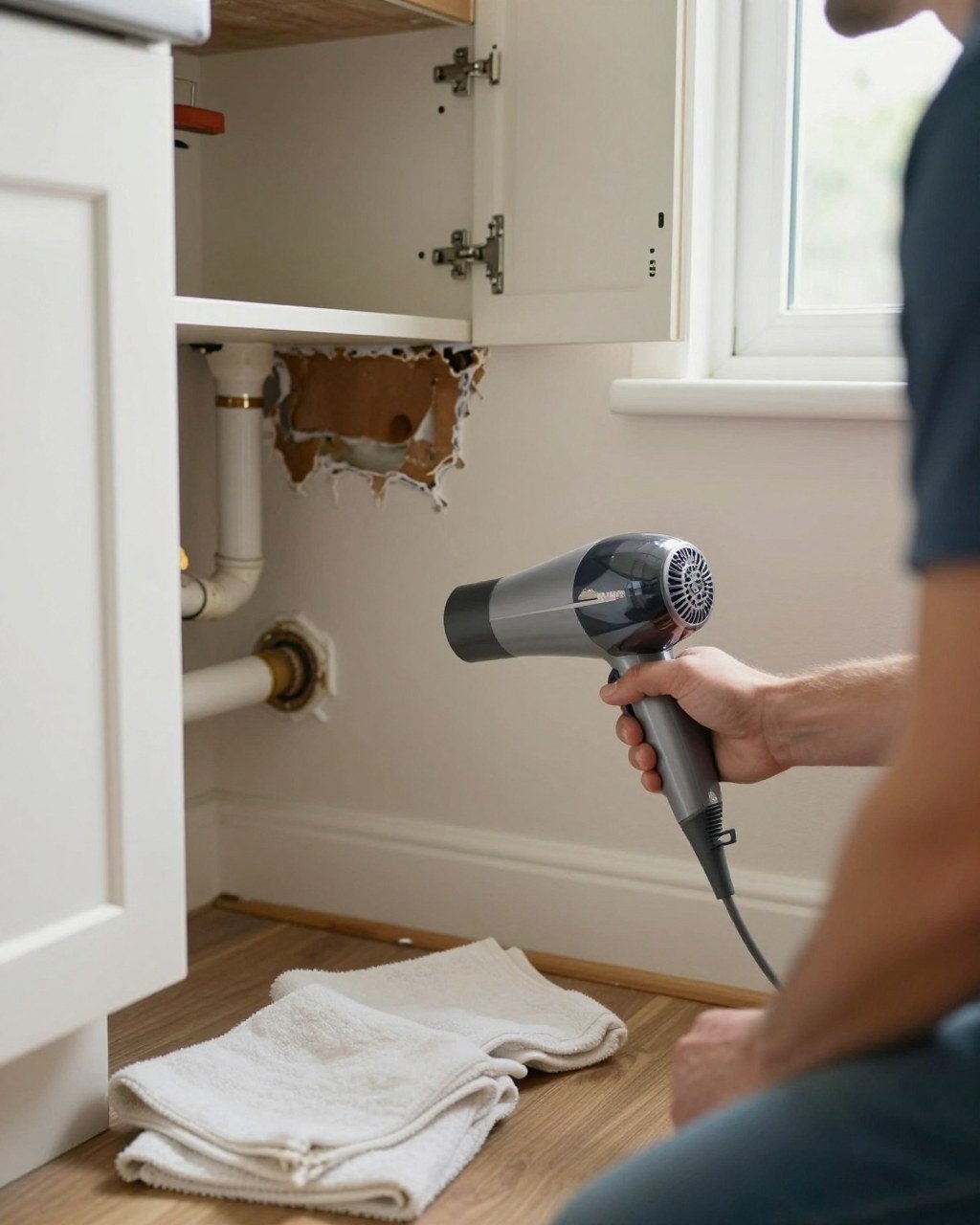
Open the Faucet and Warm the Room First
Start with the room, not the pipe. Open cabinet doors so warm air reaches the plumbing, turn the thermostat up a few degrees, and run a space heater or fan heater nearby, keeping it clear of anything flammable.
Warm air circulating through the cabinet often does most of the work. Give it time before reaching for a tool.
Apply Gentle Heat to the Wall Surface
Work from the faucet end of the run toward the coldest spot. That pushes melting water toward the open tap instead of trapping it.
- Use a hair dryer on the low setting, moving it constantly
- Hold warm towels or a hot water-soaked cloth against the wall
- Use a heating pad rated for the job, never one with a worn cord
Never use an open flame. A propane torch near drywall and insulation is a fire hazard, and it can crack the pipe. For a deeper walkthrough of the same process, see our guide on how to safely thaw frozen pipes without bursting.
Will a Space Heater Thaw Frozen Pipes?
A space heater can thaw frozen pipes when the frozen section sits in an open cavity or behind cabinet doors, but it will not reach a pipe sealed inside a finished wall. Use a space heater to warm the room, keep it clear of water and fabric, and never leave it running unattended.
How Long for Pipes to Thaw Naturally
Pipes can thaw naturally once the room warms up, though a deep freeze in an exterior wall can take longer. Timing depends on how cold it got, how well the wall is insulated, and how much warm air reaches the pipe.
Signs you are making progress:
- The faucet starts to drip
- Pressure builds slowly at the tap
- The cold spot on the wall softens
If nothing changes after several hours, the ice may sit deeper in the wall than warm air can reach. Our article on how long pipes take to freeze in a home explains why timing varies so much from one house to the next.
When to Use a Pipe Thawing Machine
A pipe thawing machine is the right call when the frozen section is sealed inside a finished wall or under a slab and gentle heat cannot reach it. These machines warm a pipe from the inside.
We do not recommend renting one for a weekend project. If you are weighing professional service, our overview of frozen pipe repair services covers what the visit involves.
A Decision Path for Pipes You Cannot Reach
When the ice is behind a finished wall, the question is not “which tool” but “how far should I go.” Work through this in order.
- Warm the room and wait. Open cabinet doors, raise the thermostat, and run a space heater or fan nearby. If the pipe sits in an open cavity or behind a cabinet, this alone often restores flow. Give it a few hours before escalating.
- Try surface heat on the wall. A hair dryer on low, moved constantly over the cold spot, can reach a pipe close to the drywall. Stop if the drywall gets hot to the touch.
- Consider a small access opening only if you can see the pipe. If the run is behind a cabinet back or removable panel, an access opening lets you apply heat directly and safely. Do not cut into a wall to reach a pipe you have not located.
- Call a plumber if the pipe is sealed in, the whole house is affected, or you see any sign of a leak. Electrical thawing and pipe-location equipment belong in trained hands.
- Stop DIY efforts if the pipe has already split. Heat will not fix a burst; it will only release water into the wall. Shut off the main valve and call for repair.
Match the Heat Method to the Pipe Material
The safe method depends on what the pipe is made of, and this is where generic advice goes wrong.
- Copper conducts heat well, so gentle surface heat travels along the run. It also conducts heat to nearby framing and insulation, so keep heat moving and never concentrate it on one spot.
- PEX and other plastic tubing tolerates freezing better than metal in many cases but softens at lower temperatures than copper. Direct high heat, such as a heat gun held close, can deform or weaken it. Warm air and warm towels are safer than concentrated heat.
- Galvanized steel and older iron pipe heats slowly and can be brittle at corroded joints. Avoid sharp temperature changes and watch for weeping at fittings once flow returns.
Whatever the material, the principle is the same: warm air and moving heat are safer than a concentrated source, and the pipe should never be heated while pressurized if you suspect a split.
What Realistic Progress Looks Like
There is no fixed thaw time, and any guide that promises one is guessing. A shallow freeze behind a cabinet may clear in under an hour with warm air. A deep freeze in an insulated exterior wall can take several hours of steady warming, and an inaccessible run may not clear at all without professional equipment. Watch for the faucet beginning to drip, pressure building slowly at the tap, and the cold spot softening.
What to Do If Thawing Reveals a Leak or Burst Pipe
If thawing reveals a leak or burst pipe, close the main shutoff valve immediately, open the lowest faucet in the house to drain the line, and call a plumber. Water behind drywall spreads fast. Every minute counts.
Do this in order:
- Shut off the main valve if it is not already closed.
- Cut power to any circuit near the wet area at the breaker.
- Drain the line by opening the lowest faucet.
- Document the damage with photos for your insurance.
- Call for help rather than opening the wall yourself.
Not every freeze announces itself. If you spot water stains, bubbling paint, or a musty smell after a cold snap, review the signs of a hidden water leak in walls so you know what you are looking at.
| Situation | First Move | Who Handles It |
|---|---|---|
| Faucet sputters, wall is cold | Warm the room, open the tap | Homeowner |
| No water after several hours | Check for cracks, keep warming | Homeowner, then pro |
| Water stains or bulging drywall | Shut off main valve | Licensed plumber |
| Warm spot on a slab floor | Shut off valve, note the spot | Leak detection pro |
Schedule a Frozen Pipe Inspection in Collin County
A thawed pipe is not a solved problem.
DeWolfe’s Affordable Plumbing is family owned and operated, fully licensed and insured under Master License # M39597, and we serve homeowners in Wylie and the surrounding area.
If you want a plan so this does not happen again, read our prevention guide for North Texas homes, then call us at (972) 632-9935 to schedule an inspection.
The next hard freeze is a matter of when, not if. A pipe that froze once will freeze again, and the second time it may split.
Frequently Asked Questions
Do frozen pipes eventually thaw out on their own?
They can, but relying on natural thawing is risky. A frozen pipe inside a wall may thaw within a few hours once outdoor temperatures climb above freezing, but the ice can also expand and split the pipe before it melts. If you have no water and the forecast stays below 32°F, start gentle thawing right away and watch for leaks. If you cannot reach the frozen section or water does not return, call a licensed plumber to thaw frozen pipes safely.
What is the fastest safe way to thaw frozen pipes in a wall?
Open the nearest faucet, raise the thermostat, and warm the room with a space heater or fan. Then apply gentle heat to the wall surface with a hair dryer on low, a heating pad, or warm towels. Never use an open flame, blowtorch, or charcoal. A plumber may use a pipe thawing machine for inaccessible sections. Fastest does not mean hottest: sudden high heat can crack pipes, especially PEX or PVC.
Can you thaw frozen PEX pipes inside a wall?
Yes, but PEX tolerates heat differently than copper. Keep heat sources below the manufacturer’s limit, usually around 200°F, and never point a heat gun directly at the pipe. Warm towels, a hair dryer on low, and a heated room are the safest options. If the frozen section is behind drywall with no access panel, a licensed plumber can locate it and thaw it without cutting blindly into the wall.
How long can pipes stay frozen before they burst?
There is no fixed timer. A pipe can burst within hours if the ice blockage builds pressure between the freeze point and a closed faucet. The risk rises the longer temperatures stay below freezing and the more the ice expands. If you suspect a frozen pipe, open a faucet to relieve pressure and begin thawing. If you see bulging drywall, water stains, or hear a crack, shut off the main valve and call a plumber.
