

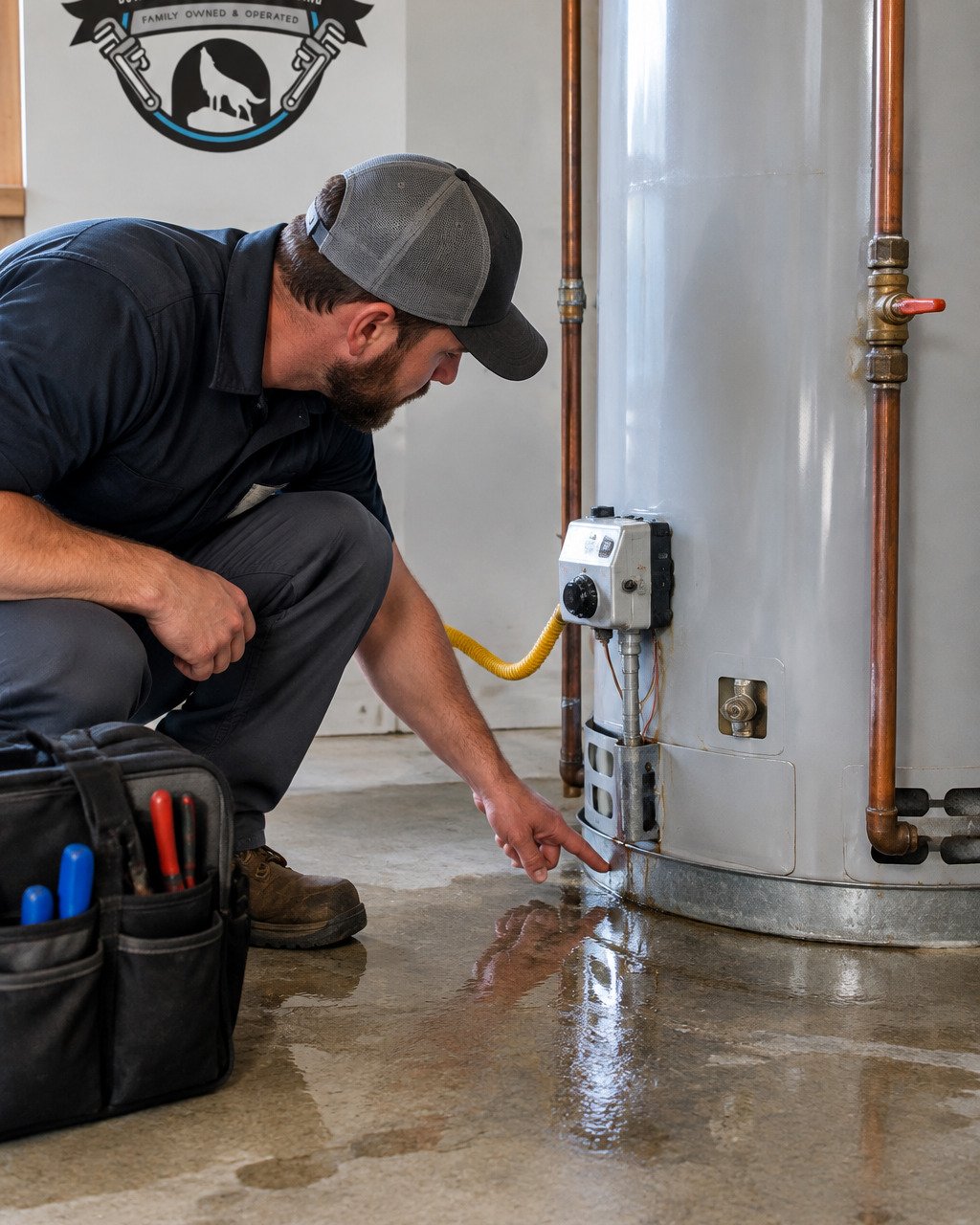
Water Heater Leaking or Sweating: How to Tell the Difference
Last Updated: November 11, 2026
Quick Summary
Condensation is usually a thin film of moisture that dries up on its own, while a real water heater leaking keeps coming back and leaves water pooling. Dry the area completely, place paper towels at the likely origin points, and watch through a full heating cycle to see which pattern you have.
- Sweating appears most in cold weather, high humidity, after a hot water draw, and on new installations.
- Shut off the breaker on electric units and the gas control valve on gas units before touching wet components.
- Wait 2 to 4 hours without drawing hot water, then check the paper towels again.
- A leak is present regardless of use, while condensation follows cold water and heating cycles.
- Water coming through the tank wall means the tank is failing and replacement is the practical call.
Table of Contents
- Water Heater Leaking or Sweating: How to Tell the Difference
- Water Heater Condensation: Why Your Tank Sweats
- How to Find a Water Heater Leak: A Step-by-Step Diagnostic
- Water Heater Leaking From the Top: Connections, Valves, and Flues
- Water Heater Leaking From the Bottom: Drain Valve, Sediment, and Tank Failure
- Safety First: Gas, Electric, and Tankless Systems
- When the Source Is the Tank Itself: Repair vs. Replace
- Schedule a Water Heater Inspection With DeWolfe’s Affordable Plumbing
- Frequently Asked Questions
Water Heater Leaking or Sweating: How to Tell the Difference
If you are wondering “is my water heater leaking or sweating,” the short answer is this: condensation is usually a thin film of moisture that dries up on its own, while a real leak keeps coming back and leaves water pooling.
Below, we walk you through a simple dry-and-watch test, a full list of leak sources, and the safety steps that matter for gas, electric, and tankless systems. A water heater leaking from a fitting is a repair. Water coming through the tank wall is a replacement.
Water Heater Condensation: Why Your Tank Sweats
Water heater condensation is moisture that forms on the outside of the tank when warm, humid air meets a cold surface. It is the same thing that happens to a cold glass of iced tea on a summer day.
Here is what causes it. Cold water enters the tank to refill it after you use hot water. That cold incoming water chills the tank surface. If the air around the heater is warm and humid, moisture from the air condenses on the metal.
Cold Weather and Humidity: When Sweating Is Most Likely
Sweating shows up most in these conditions:
- Cold weather: incoming water is colder, so the tank surface gets colder
- High humidity: damp basements, crawl spaces, and laundry rooms
- A recent hot water draw: a long shower or a laundry load refills the tank with cold water
- A new installation: a freshly filled tank sweats more in its first days
If the moisture shows up right after someone showers and dries within a few hours, it is almost certainly condensation. If it is there every morning no matter what, keep reading.
How to Find a Water Heater Leak: A Step-by-Step Diagnostic
Most guides tell you to “look for water.” That is not a diagnostic.
- Electric: switch off the breaker at the panel. Water near the wiring, the heating elements, or the junction box is a shock hazard, and a wet floor can energize the surrounding area.
- Gas: do not flip switches or unplug anything if you smell gas. Leave the area and call your gas utility or a licensed plumber from outside. If there is no gas smell, shut off the gas control valve to the heater before you touch wet components.
- Tankless: shut off the water supply at the isolation valves and cut power or gas to the unit before opening anything.
Step 2: Shut off the cold water supply to the heater if you see standing water near the base.
Step 5: Observe through a full heating cycle. This is the step most people skip.
Step 6: Read the result.
- Moisture only on the tank body, thin and even, gone within a few hours: condensation.
- Water returns in the same spot after drying, with no hot water use: an active leak.
- Water appears only during or right after a heating cycle: could be condensation from cold incoming water, or a T&P valve discharging from thermal expansion, check the valve outlet.
- Water at the base with no visible source on the tank: suspect the tank seam, or water traveling from somewhere else.
Step 7: Trace upward and outward. Follow any drip trail up the pipes. Water runs along pipe runs, floor joists, and the tank’s own jacket, so the wet spot on the floor is often not the source. Before you blame the heater, rule out these nearby sources:
- Nearby plumbing: supply lines, shutoff valves, and fittings above or beside the heater.
- HVAC condensate: a clogged condensate drain or a sweating air handler can pool water near the heater.
- Floor drains and softeners: a backed-up drain or a leaking water softener connection can send water toward the heater.
- Roof or wall intrusion: a slow leak above can travel down and surface at the base.
Step 8: Confirm the pattern over 24 hours. Check the towels in the morning before anyone showers, then again after heavy hot-water use.
Water Heater Leaking From the Top: Connections, Valves, and Flues
A water heater leaking from the top is usually a plumbing connection problem, not a tank problem. That is good news, because fittings are cheap to fix.
Check these spots:
- Water supply lines: look for drips at the cold inlet and hot outlet
- Loose fittings: a fitting that is hand-tight but not wrench-tight will seep
- The T&P valve: the temperature and pressure relief valve can weep if pressure is high
- The flue collar: on gas units, water streaks near the flue can mean a bad gasket
A common mistake is tightening a leaking fitting as hard as possible. That cracks the fitting or strips the threads. Snug plus thread sealant is the right answer.
If the top of the tank itself is wet with no fitting nearby leaking, the tank may be failing at the top seam. That is a replacement conversation.
Water Heater Leaking From the Bottom: Drain Valve, Sediment, and Tank Failure
A water heater leaking from the bottom has three main suspects, and they range from cheap to serious.
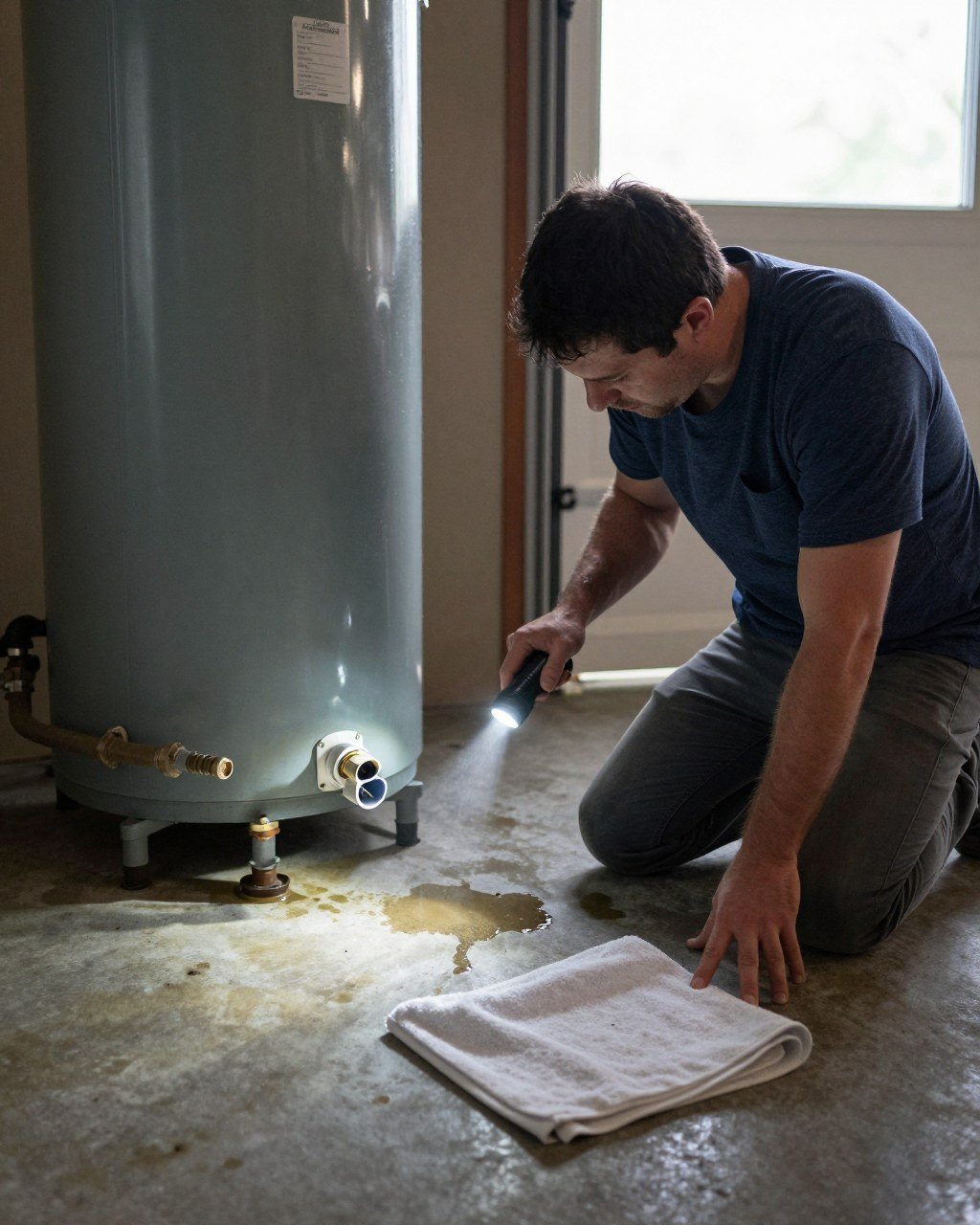
The drain valve. This is the most common and cheapest fix. Sediment collects at the bottom of the tank and can clog or wear the valve.
Sediment buildup. Minerals settle out of hard water and pool at the tank bottom.
Tank corrosion and failure. If water seeps through the tank wall or the bottom seam, the tank is done. No repair seals a rusted tank from the inside.
Watch out: a slow bottom leak that you ignore can rot the floor and feed mold long before the tank fails completely. If you suspect a bottom leak on an electric unit, our guide on an electric water heater leaking from bottom walks through what to do next.
Safety First: Gas, Electric, and Tankless Systems
Water plus electricity or gas is the part of this job where a mistake can hurt you.
Electric water heaters. The risk is shock, and it is real even when the unit seems off.
- Shut off the breaker at the panel before you wipe down a wet tank, open an access panel, or touch wiring.
- Do not touch wet electrical components, the heating elements, the thermostat, or the junction box while the circuit is live.
- If water is pooling near the base and the breaker will not reset, stop and call a licensed plumber or electrician. A tripping breaker with water present points to a component failure, not condensation.
Gas water heaters. The risks are gas leaks and carbon monoxide.
- If you smell gas, leave the area immediately and call your gas utility or a licensed plumber from outside. Do not flip light switches, unplug anything, or use a phone inside.
- If there is no gas smell, shut off the gas control valve to the heater before working around wet components.
- Do not disassemble the flue, the draft hood, or the T&P valve. A corroded flue or vent can push carbon monoxide into the home, and that is a licensed-repair job.
- Water streaking near the flue collar can mean a failed gasket or a venting problem, treat it as a call-a-pro situation, not a tighten-it-yourself fix.
Tankless systems. The leak you see is often not a leak at all.
- Tankless units produce acidic condensate, and a blocked or disconnected condensate drain line frequently looks like a water leak at the base of the unit.
- Check the condensate line, the inlet and outlet connections, and the isolation valves first.
- Shut off the water supply at the isolation valves and cut power or gas before opening any panel.
-, the condensate is acidic and the components are not homeowner-serviceable.
If you are unsure which system you have, what is safe to touch, or whether the water is near a live component, stop and call a plumber.
When the Source Is the Tank Itself: Repair vs. Replace
A leaking tank is not a repair job. Once water comes through the steel, the tank is failing and a patch will not hold.
Age matters here. If the tank itself is the source, replacement is the practical call.
If you want to know what emergency help looks like before you commit, read our guide on emergency water heater repair. If you are weighing an upgrade, explore tankless water heater options and how they compare on space and efficiency.
| Symptom | Likely Cause | What to Do |
|---|---|---|
| Thin moisture, dries on its own | Condensation | Dry and monitor |
| Drip at a fitting | Loose or worn connection | Tighten or replace fitting |
| Steady drip at the drain valve | Worn valve or sediment | Clean or replace valve |
| Water through the tank wall | Tank failure | Plan replacement |
| Water at the base, no visible source | Tank seam or nearby leak | Call a plumber |
Schedule a Water Heater Inspection With DeWolfe’s Affordable Plumbing
Some leaks hide. Water can travel along a floor joist or a pipe run and show up far from the real source, which is why a trained eye saves time and money.
DeWolfe’s Affordable Plumbing is family owned and operated, licensed and insured under Master License #M39597, and we back all labor with a full written warranty. If the source turns out to be the heater itself, our Water Heater Repair and Replacement service covers both fixing the unit and swapping it out when the tank is done, and our Residential Plumbing Service and Repairs team can track down leaks that start somewhere other than the heater. Before you book, our plumbing inspection checklist helps you confirm the rest of your system is sound.
Call (972) 632-9935 and we will find the source, tell you plainly whether it is condensation or a leak, and give you a clear next step.
A water heater that keeps sweating or dripping is trying to tell you something, and guessing gets expensive. Let DeWolfe’s Affordable Plumbing take the guesswork out with honest diagnosis, up-front pricing, and 24/7 emergency availability.
Frequently Asked Questions
How can I tell if my water heater is leaking or sweating?
Dry the tank and the floor completely, then wait a few hours and check again. If the moisture returns only on the tank surface and feels like a fine film of water, it is likely condensation. If water is pooling, dripping from a fitting, or leaving a puddle under the tank, you have a water heater leaking and should shut off the water supply and call a licensed plumber.
Is condensation on a water heater normal?
Yes, water heater condensation is normal, especially in cold weather or when cold incoming water fills a tank that has just finished a heating cycle. The cold tank surface meets warm, humid air and forms sweat, much like a glass of iced tea. It should dry on its own once the tank warms up. If moisture persists for more than a day, investigate further.
Should I turn off my water heater if it is leaking?
Yes. Shut off the water supply valve on the cold inlet line and turn off the gas or electricity to the unit before you inspect further. For a gas water heater, turn the gas control knob to off. For electric, flip the breaker. This prevents water damage and protects you from electrical or gas hazards while you find a water heater leak.
Can a leaking water heater be repaired, or does it need replacement?
Many leaks are repairable, including a loose drain valve, worn fittings, a failed T&P valve, or a leaking supply line. A cracked or corroded tank, however, usually means replacement. A licensed plumber can pressure-test the tank and tell you whether a repair will hold. If the tank itself is the source, plan for a new unit rather than repeated patches.
