

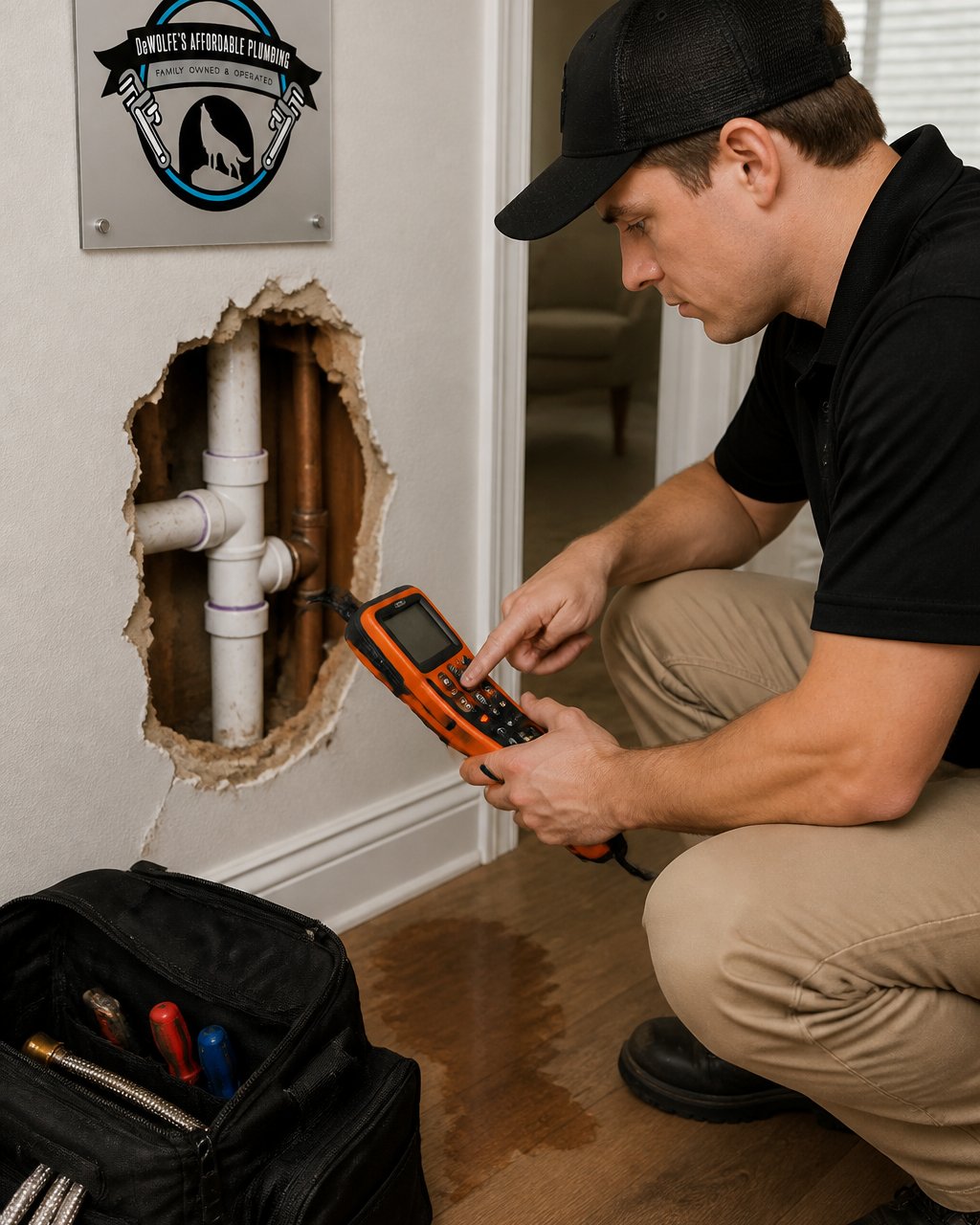
Signs of Hidden Plumbing Leaks: How to Detect Them
Table of Contents
- What Are Hidden Plumbing Leaks and Why They Matter
- Visual Warning Signs: Water Stains, Damp Patches, and Discoloration
- Auditory and Olfactory Clues: Sounds and Odors
- Water Bill Increases and Pressure Changes
- How to Perform a Water Meter Leak Test
- How Plumbers Detect Water Leaks Professionally
- What to Do When You Find a Water Leak
- Distinguishing Leaks from Condensation and Exterior Water Intrusion
- Frequently Asked Questions
Last Updated: October 14, 2026
What Are Hidden Plumbing Leaks and Why They Matter
Hidden plumbing leaks are water escapes inside walls, under floors, or behind fixtures that you can’t see directly. They happen in supply lines, drain pipes, or connections that run through your home’s structure. The danger isn’t just wasted water, it’s the damage that builds silently behind the scenes.
Hidden leaks destroy property. Water seeping into walls creates mold. It rots wood framing. It weakens foundations. The longer a leak goes undetected, the more expensive the repair becomes. A small drip today can mean thousands in structural damage tomorrow.
The real problem is that these leaks stay hidden until they’ve already caused harm. By the time you notice water stains or smell mold, the damage is often extensive. That’s why knowing the warning signs matters. Early detection stops the destruction before it starts.
Hidden plumbing leaks cause damage inside walls and under floors where you can’t see them. Finding them early prevents structural damage, mold, and expensive repairs.
Visual Warning Signs: Water Stains, Damp Patches, and Discoloration
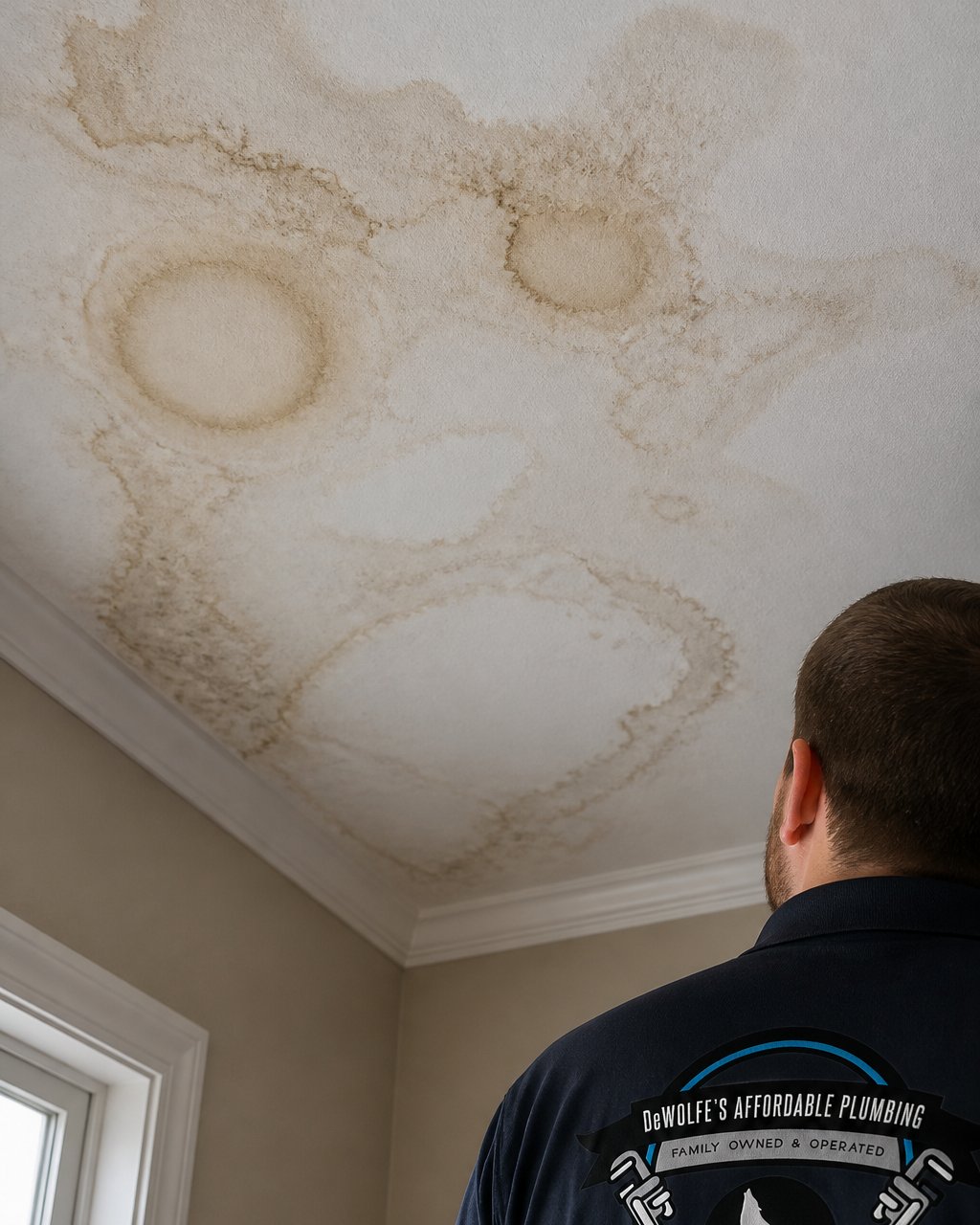
Look for water stains on ceilings and walls first. They appear as yellow, brown, or tan patches. The color deepens over time as water damage worsens. Fresh stains are lighter. Old stains are darker and often have rings around them.
Damp patches feel soft or spongy to the touch. Press your finger gently on a suspected area. If it feels wet or leaves an indent, moisture is present. Damp spots often appear before visible stains form.
Ceiling and Wall Stains
Water stains on ceilings usually mean a leak directly above. Check the room above that stain first. Leaks in supply lines or drain pipes often show up as ceiling marks in the room below.
Wall stains near baseboards or inside corners often indicate leaks in the walls themselves. Look behind furniture and in closets, leaks hide in dark, undisturbed spaces.
Discoloration spreads outward from the leak source. A stain that’s growing larger means water is still flowing. A stain that stays the same size might mean the leak has stopped, but the damage remains.
Water Leak Behind Wall Signs
Water leaking behind walls causes several visible clues. Bubbling or peeling paint appears when moisture pushes from inside the wall outward. The paint separates from the drywall as water builds up behind it.
Wallpaper bubbles and blisters in the same way. If your wallpaper suddenly starts peeling in spots, check for moisture behind it. Wallpaper adhesive fails when it gets wet.
Soft or spongy drywall indicates serious water damage. Press gently on the wall. If it gives way or feels mushy, water has saturated the material. This requires professional attention.
Warped or buckled walls mean water damage has been present for weeks or months. The drywall expands as it absorbs moisture. Once warping appears, structural integrity is already compromised.
Auditory and Olfactory Clues: Sounds and Odors
Listen for water sounds when your home is quiet. Turn off appliances, the TV, and music. Pay attention to walls, under sinks, and near the water heater. A running water sound when nothing is using water means a leak is active.
Dripping sounds come from leaks that have formed holes. Hissing sounds indicate high-pressure water escaping from a crack in a supply line. These sounds are often louder near the leak source but can travel through pipes and walls.
Running, Dripping, and Hissing Water Sounds
Running water sounds like a faucet left on. If you hear this but no faucet is open, a leak is flowing somewhere. Check your water meter, it should be still when no water is running in the home.
Dripping is rhythmic and distinct. It’s the sound of water falling drop by drop. One drip per second adds up to hundreds of gallons per year (Drip calculator: How much water does a leaking faucet waste? USGS Water Science School). Dripping leaks are often in drain lines or at connection points.
Hissing sounds sharp and constant. It means pressurized water is escaping through a small opening. Hissing leaks are usually in hot water supply lines. They can be dangerous if the pressure is high enough to cause damage.
Hissing sounds in walls or under floors need professional attention immediately. Pressurized leaks can damage structures quickly and create safety hazards.
Musty Odors and Mold Growth
Musty smells mean mold is growing. Mold thrives in wet environments. If you smell mold but can’t see it, it’s likely growing inside walls where a hidden leak exists.
Mold odors are strongest in bathrooms, basements, and crawl spaces. They’re also common near water heaters and under sinks. Trust your nose, if something smells wrong, investigate.
Visible mold growth appears as black, green, or white spots. It grows on surfaces where moisture is present. Mold on walls or ceilings near plumbing fixtures signals a nearby leak.
Health risks from mold include respiratory issues, allergies, and asthma triggers (the CDC). Some people are more sensitive than others. Long-term exposure to mold is harmful for everyone.
Water Bill Increases and Pressure Changes
Your water bill tells a story. Compare this month to the same month last year. A sudden jump without explanation suggests a leak. Even small leaks add up, a leak that wastes one gallon per hour uses 8,760 gallons per year.
Reduced water pressure is another sign. If your shower suddenly feels weak or your kitchen faucet has less flow, a leak might be the cause. Water escaping through a crack reduces the pressure available at your fixtures.
Pressure drops are most noticeable at one fixture first. If only your shower is weak but the kitchen sink is fine, the leak is likely in the line serving the shower. If all fixtures lose pressure equally, the main supply line might be leaking.
Track your water usage each month. Set a baseline for normal usage. Any increase of 10% or more without explanation warrants investigation.
How to Perform a Water Meter Leak Test
Your water meter is the most reliable tool for detecting hidden leaks. It measures every drop of water entering your home.
Step 1: Turn off all water in your home
Close every faucet. Stop all appliances that use water.
Step 2: Check your water meter reading
Locate your water meter outside your home or in a basement. Write down the number displayed. This is your starting reading.
Step 3: Wait and check again
Do not use any water for one hour. Keep all faucets off. After one hour, check the meter reading again.
Step 4: Interpret the results
If the meter reading is the same, you have no active leaks. If the reading increased, you have a leak.
What the numbers mean:
- No change = no active leak
- Small change (less than 1 gallon per hour) = minor leak, monitor closely
- Moderate change (1-5 gallons per hour) = active leak, needs repair soon
- Large change (more than 5 gallons per hour) = serious leak, call a professional immediately
This test is your first line of defense. It confirms whether a leak exists before you call a plumber.
How Plumbers Detect Water Leaks Professionally
Professional plumbers use tools and techniques that go beyond what homeowners can do. They locate leaks with precision and identify the exact problem.
Acoustic detection uses sensitive listening devices. Plumbers place special equipment on pipes and walls. The device picks up the sound of water escaping.
Thermal imaging cameras detect temperature changes. Water leaking from a pipe creates a temperature difference on the wall or floor surface. The camera shows this difference as a heat map.
Pressure testing involves introducing air into the plumbing system. If pressure drops, there’s a leak. This method narrows down which section of pipe is damaged.
Visual inspection combines experience with careful observation. Plumbers look for the same signs you do, stains, damp patches, soft walls, mold, but they know where to look and what patterns indicate leaks.
Professional leak detection saves time and prevents unnecessary damage. Whether the leak is in a supply line, a drain pipe, or under your foundation, our Slab Leak Location and Repair and Residential Plumbing Service and Repairs teams have the expertise to handle it.
What to Do When You Find a Water Leak
Once you suspect a leak, take immediate action. The steps you take in the first few hours prevent additional damage.
Immediate Steps to Prevent Damage
Shut off the water supply immediately if the leak is active and visible. Locate your main water shut-off valve.
If the leak is behind a wall, shut off water to that section if possible. Most homes have shut-off valves under sinks and behind toilets.
Dry the area if water is pooling. Use towels to soak up standing water. Move furniture and belongings away from the wet area. Open windows to increase air circulation.
Document the damage by taking photos. These images help your insurance company understand the extent of the problem. They also help your plumber understand what happened.
Turn off electricity to the affected area if water has reached outlets or light switches. Wet electrical systems are dangerous. Leave them off until a professional confirms they’re safe.
When to Call a Professional
Call a professional plumber immediately if:
- The leak is behind a wall or under the floor
- Water is pooling in your basement or crawl space
- You smell mold or see mold growth
- The leak is in the main supply line
- You’re unsure where the leak is located
- The leak has caused visible structural damage
- You’ve shut off water but can’t locate the leak
DeWolfe’s Affordable Plumbing offers same-day or 24-hour response to inquiries. We locate the leak, assess the damage, and repair it right. Our licensed professionals carry the tools needed for fast, accurate detection. We provide transparent, up-front pricing so you know the cost before work begins.
Homeowners who need fast leak detection and repair without surprises. Our team handles everything from minor drips to major slab leaks with a full written warranty on all labor performed.
Distinguishing Leaks from Condensation and Exterior Water Intrusion
Not all moisture means you have a plumbing leak.
Condensation forms when warm, humid air meets cold surfaces. It’s common on pipes, windows, and bathroom mirrors.
To test for condensation: place a piece of tape over the wet spot for 24 hours.
Exterior water intrusion happens when rain or groundwater enters through walls, foundations, or windows.
Plumbing leaks are localized. They appear in specific spots, not across large areas. They’re constant, not tied to weather or humidity.
The location tells you a lot. Leaks near fixtures, under sinks, behind toilets, near water heaters, are usually plumbing issues.
When in doubt, call a professional. Plumbers can distinguish between these issues quickly and recommend the right fix.
Water leaks hiding in your walls and under your floors damage your home silently.
Frequently Asked Questions
How do I know if I have a hidden plumbing leak?
Look for unexplained increases in your water bill, damp patches on walls or ceilings, musty odors, or sounds of running water when all fixtures are off. Water stains, peeling paint, and bubbling wallpaper also signal hidden plumbing leaks. If you notice any of these signs, a water meter test can confirm whether water is being lost through your plumbing system.
Can I use my water meter to detect a leak?
Yes. Turn off all water-using appliances and fixtures, then check your water meter. If the meter continues to move or the reading increases after 30 minutes with no water in use, you likely have a leak. This water meter leak test is a simple first step before calling a professional plumber for detailed leak detection.
How do plumbers detect water leaks I cannot see?
Professional plumbers use acoustic listening devices, thermal imaging cameras, and dye tracing to locate hidden leaks. Some use pressure testing to isolate which section of your plumbing system is leaking. These methods allow plumbers to detect water leaks without breaking into walls or digging up your yard unnecessarily.
What should I do immediately if I find a water leak?
First, shut off the main water supply valve if the leak is severe or inside your home. Locate the leak source if possible and place a bucket underneath to catch water. Dry the area to prevent mold and water damage. Then contact a licensed plumber to assess and repair the issue. For emergency situations, 24/7 Emergency service is available to prevent structural damage.